Answering 24/7 from 14th Street NW
Solar and batteries for Washington, DC roofs, flat or pitched
Most DC roofs can carry solar. The real question is how. A flat rowhouse roof behind a parapet takes different racking than a pitched roof, and a house in a historic district needs a layout the preservation office will approve. We design for the roof you have, pull the permits, file with Pepco and register the system for DC SRECs.
- Phones answered 24/7
- Flat rowhouse and pitched roofs
- Permit, Pepco and SREC paperwork handled
How a solar home with a battery runs
In daylight the panels cover the house first, top up the battery and send the surplus to the grid for credit. After sunset the battery carries the evening.
Short answer
Rooftop solar in Washington, DC is still worth pricing after the federal tax credit ended, because DC SRECs sold for $360 to $455 each in 2026 and only systems inside the District can earn them. We install on flat and pitched roofs, add batteries, and fix systems another installer left behind.
Roof check
Will solar work on your roof?
Four quick questions. Your answers point to the right job before you pick up the phone. Nothing is sent anywhere.
What kind of roof do you have?
How much shade reaches it around midday?
Is the house in a DC historic district?
How old is the roof covering?
What this means for your roof
Pick an answer on the left and the notes appear here.
Solar and storage services
Every job we take on, grouped the way the work runs
Installs, batteries, repairs, upkeep and commercial work. Each page covers what the job involves on DC roofs and what moves the price.
Solar installs
6 jobsBatteries & power
6 jobsRepairs
8 jobsCare & paperwork
5 jobsCommercial & multifamily
4 jobsOn the panel side we install and service REC, Qcells, Panasonic and Silfab modules; for electronics, Enphase microinverters and SolarEdge optimizers; and for storage, batteries such as Tesla Powerwall and FranklinWH.
DC numbers, 2026
What still pays for solar in DC this year
The federal homeowner credit is gone. DC's own programs are not, and they keep the District among the strongest SREC markets in the country.
$360 to $455
What one DC SREC sold for in 2026, depending on vintage and contract
Source: City Renewables
Two details matter more than people expect. Only systems physically inside the District earn DC SRECs, and each credit can be sold for five years after it is generated. A DC system that was registered late, or never registered, leaves money on the roof. We file the certification on every DC install and can register an older system too.
Local conditions
DC roofs, and what they change about a solar job
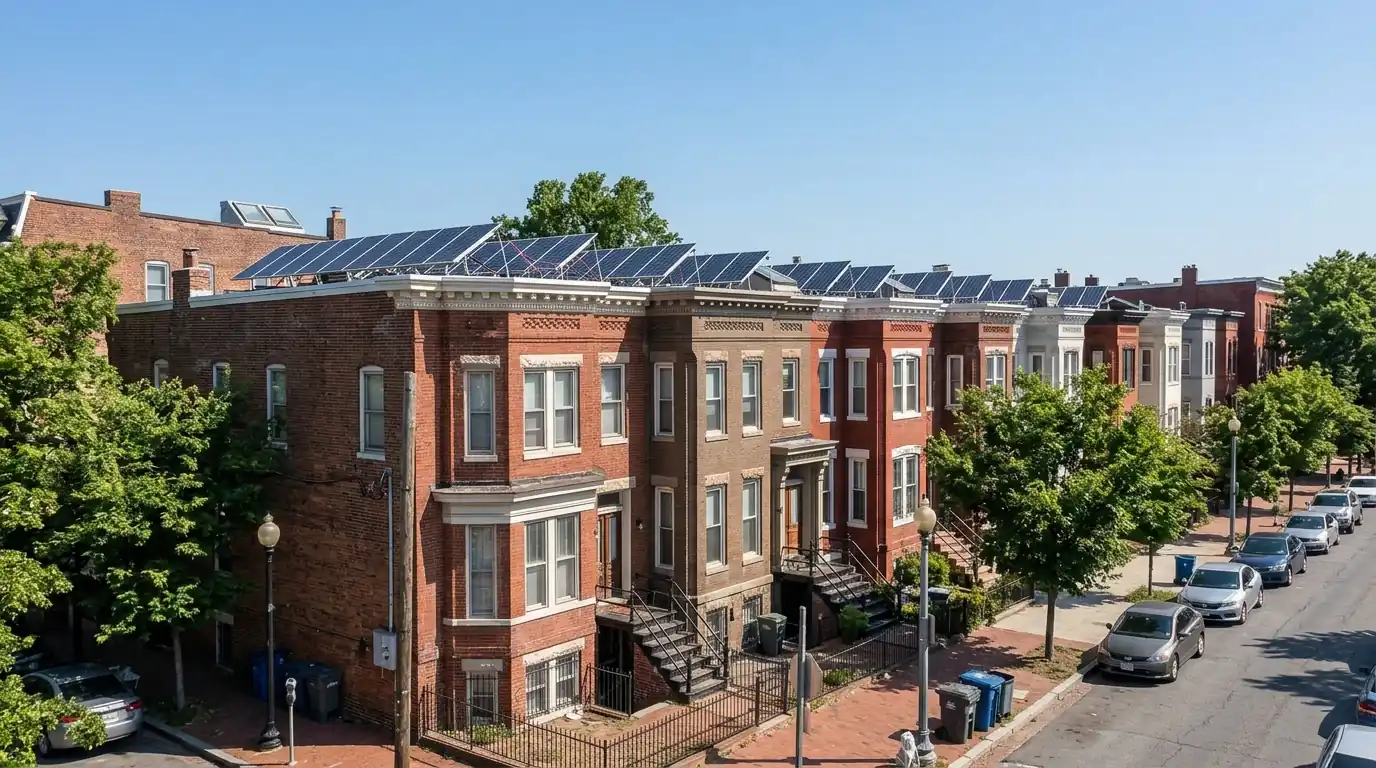
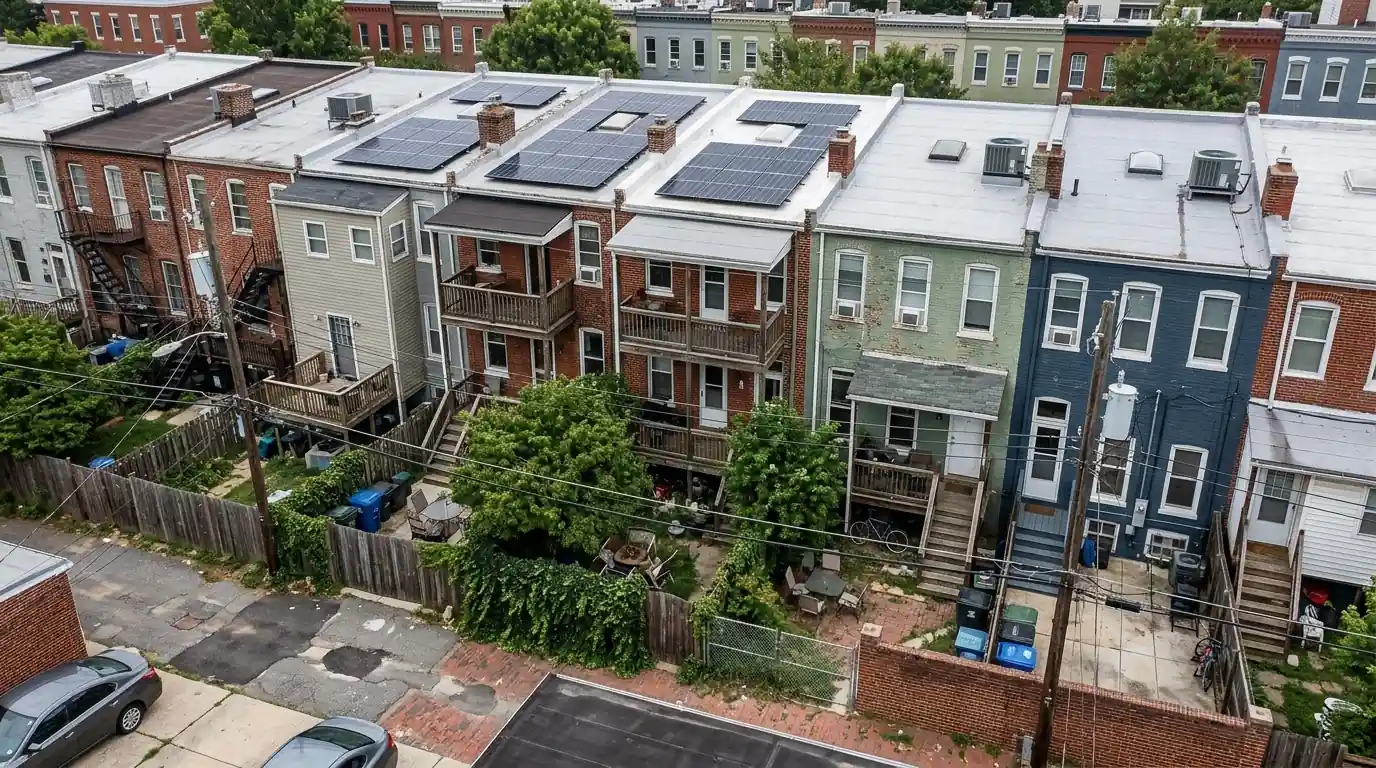
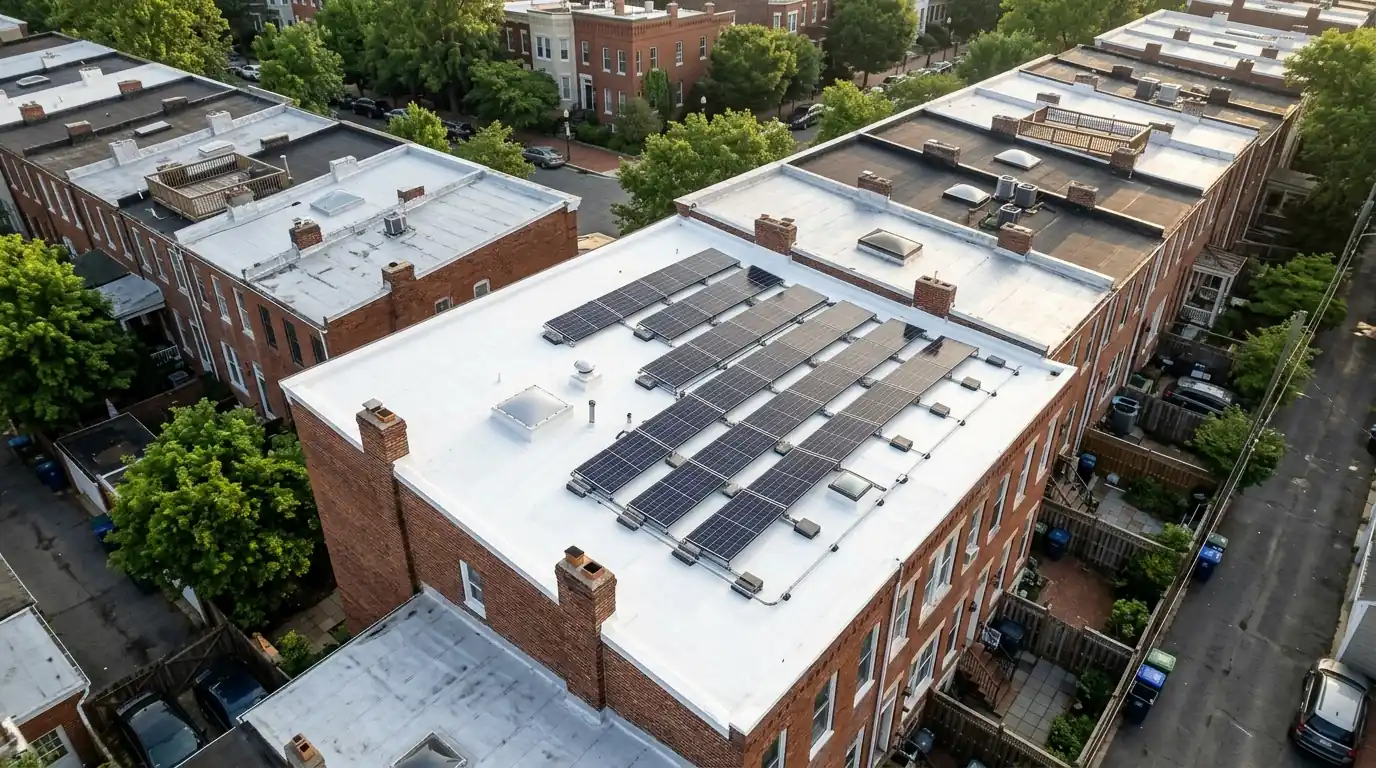
About a quarter of DC homes are row houses, and most of them carry flat or low-slope roofs behind a brick parapet. That suits solar: tilted panels sit below the parapet line, out of street view, and ballasted racks can hold them down without drilling the membrane. The tradeoffs are the party walls, the shared drains, and the roof hatch nobody remembers until the layout covers it.
The housing is old, too. Roughly 35 percent of DC homes were built in 1939 or earlier, which often means a 100 amp electrical service and a roof that has been patched more than once. We check the service panel and the roof structure on the first visit, before a panel count goes on paper.
Historic districts add a review step, not a ban. DC's Historic Preservation Office says thousands of buildings in its districts already carry solar, and panels visible from the street can still be approved under the city's sustainability guideline. On Capitol Hill, in Georgetown and in Kalorama we plan for that review from the first drawing.
How a job runs
From the first call to the first SREC
We run DC jobs from the EvoGen Solar service office on 14th Street NW in 16th Street Heights. Every install follows the same six steps.
You call
Tell us the address, what Pepco bills you in a typical month and what you want the system to do. We answer around the clock.
Roof and service check
We look at the roof covering, the structure, shade, the main electrical panel and where conduit can run.
Layout and price
You get a panel layout, the equipment list and a written price. Nobody asks you to sign on the spot.
Permits and reviews
We file the DC building permit, the Pepco interconnection application and, where it applies, historic preservation review.
Install day
The crew sets racking, panels and wiring, protects the stairs and roof hatch, and leaves the roof clean.
Turn on and register
After inspection and Pepco's permission to operate, we commission the system and file the SREC certification.
Out on the roof
Roofs you can walk on, and roofs you cannot
Flat rowhouse roofs let the crew work behind the parapet. Steeper slate and shingle roofs call for fall protection and flashing that will outlast the panels. Either way, it starts with the same phone number.
Call (202) 978-0232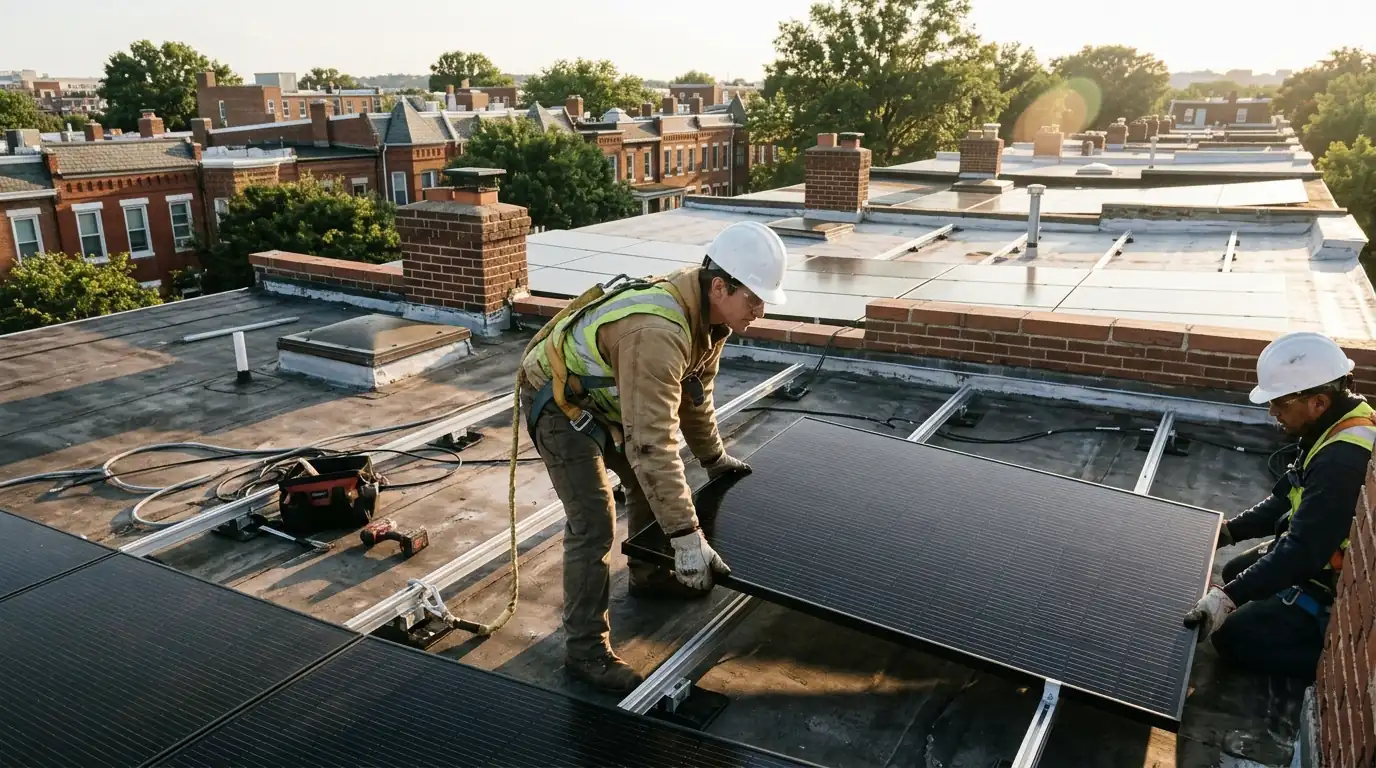
How we work
Four habits that keep a solar job from going sideways
The roof gets checked before panels get priced
If the covering needs replacing in the next few years, you hear it first. Lifting panels later costs far more than doing the work in order.
The paperwork is part of the job
Building permit, Pepco interconnection, historic review where it applies, and the SREC certification are filed by us, not handed back to you.
Batteries sized to what you want running
A battery that keeps the fridge, lights and internet on is a different system from one that runs the whole house. We size it to your list.
We fix systems we did not install
Inverter faults, dead microinverters, pigeons, leaks at old mounts. If your installer is gone, we can take the system over.
Where we install
Washington first, with Maryland and Virginia close behind
DC is home base. These pages cover how incentives, permits and utilities change once you cross the District line.
Capitol Hill, DC
DC's largest historic district, where low racks behind the parapet move review fastest.
Georgetown, DC
Reviewed by the Old Georgetown Board and the Commission of Fine Arts, not the HPRB.
Petworth, DC
Porch-front rowhouses right next to our 14th Street NW office.
Columbia Heights, DC
Rowhouses built a block at a time, many now split into condo units.
Brookland, DC
Bungalows and Victorians under mature trees, where shade drives the design.
Anacostia, DC
A historic district of frame houses with front porches east of the river.
Chevy Chase, DC
Detached homes that earn DC SRECs, unlike Chevy Chase across the Maryland line.
American University Park, DC
Owner-occupied detached homes west of Rock Creek Park, designed around tree shade.
Spring Valley, DC
Single-family homes on larger lots, suited to big arrays and whole-home batteries.
Shepherd Park, DC
Family homes north of Walter Reed, with battery backup and EV charging.
Brightwood, DC
Starter homes where panel checks and the income-qualified rebate matter most.
16th Street Heights, DC
Home of our 14th Street NW office, the quickest place for repairs.
Michigan Park, DC
Long-time owners and battery backup for heat, fridge and medical needs.
Woodridge, DC
High homeownership and right-sized systems on starter and family homes.
Riggs Park, DC
Repairs, monitoring fixes and SREC transfers along the Maryland line.
Hillcrest, DC
About 80 percent owner-occupied, the anchor of homeownership east of the river.
Montgomery County, MD
Pepco territory, with full retail net metering open to new Maryland customers until July 1, 2027.
Prince George's County, MD
The county offers a local tax credit of up to $5,000 for residential solar installations.
Arlington, VA
Dominion net metering stayed one to one under Virginia's April 30, 2026 order.
Alexandria, VA
Dominion applications approved before May 1, 2027 keep today's net metering terms.
Fairfax County, VA
Residential solar permit fees are waived, with a five year equipment tax exemption.
Bethesda, MD
Maryland SRECs pay a fraction of DC's, so the math leans on net metering instead.
Takoma Park, MD
Right over the line from 16th Street Heights, with Montgomery County Green Bank solar loans.
College Park, MD
Prince George's County's tax credit plus Maryland's sales tax exemption on solar equipment.
Falls Church, VA
A small city on Dominion's grid, covered by the April 2026 net metering order.
Camden County, NJ
Home of our Berlin head office, with New Jersey's 15 year SREC-II payments.
City of Fairfax, VA
An independent city with its own ten year solar equipment exemption.
Hyattsville, MD
Prince George's County credit, Maryland net metering and the sales tax break stack here.
From the blog
Plain answers before you sign anything
DC SRECs in 2026: What a Credit Pays and How to File
What a DC SREC sells for now, how certification works, and why an unregistered system leaves money on the roof.
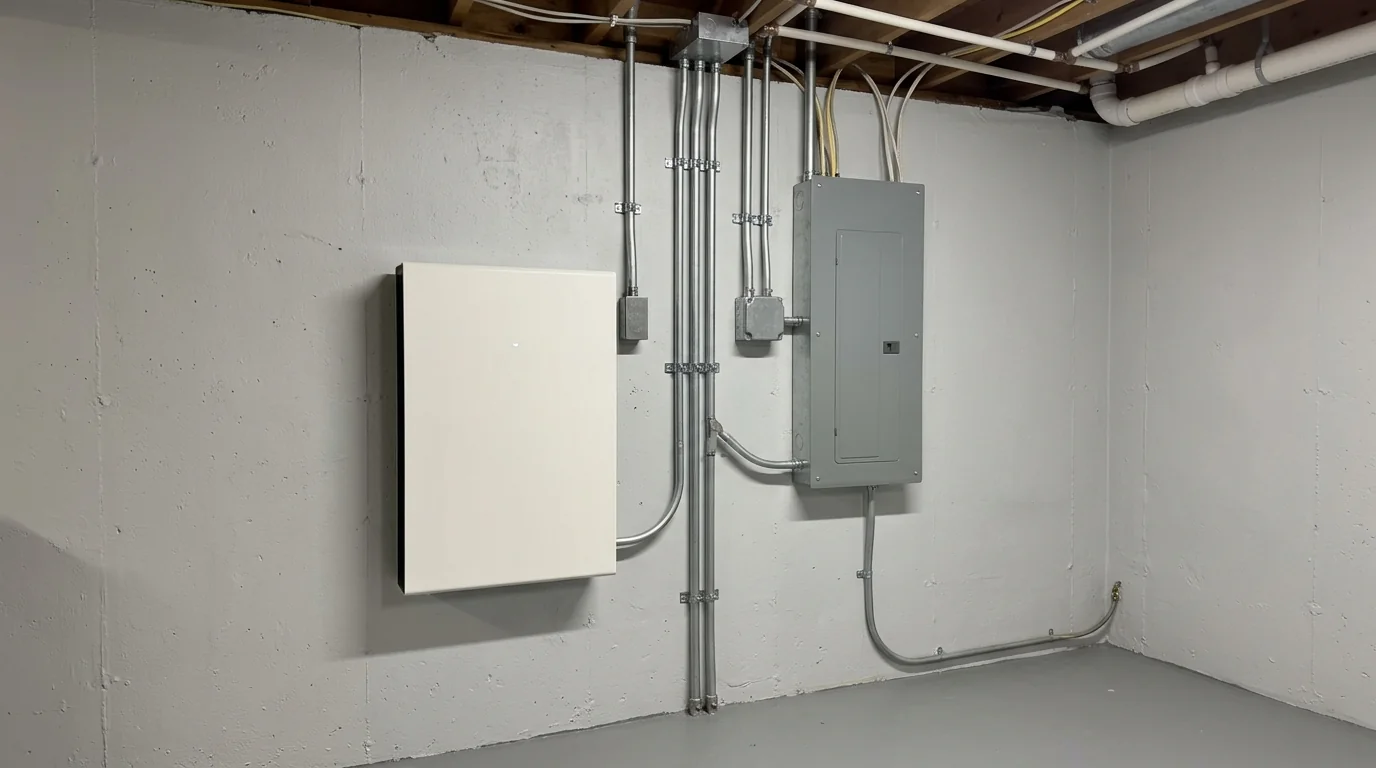
Pricing a Solar System in Washington, DC This Year
Price per watt in DC, what pushes a quote up, and how SRECs change the payback after the federal credit.
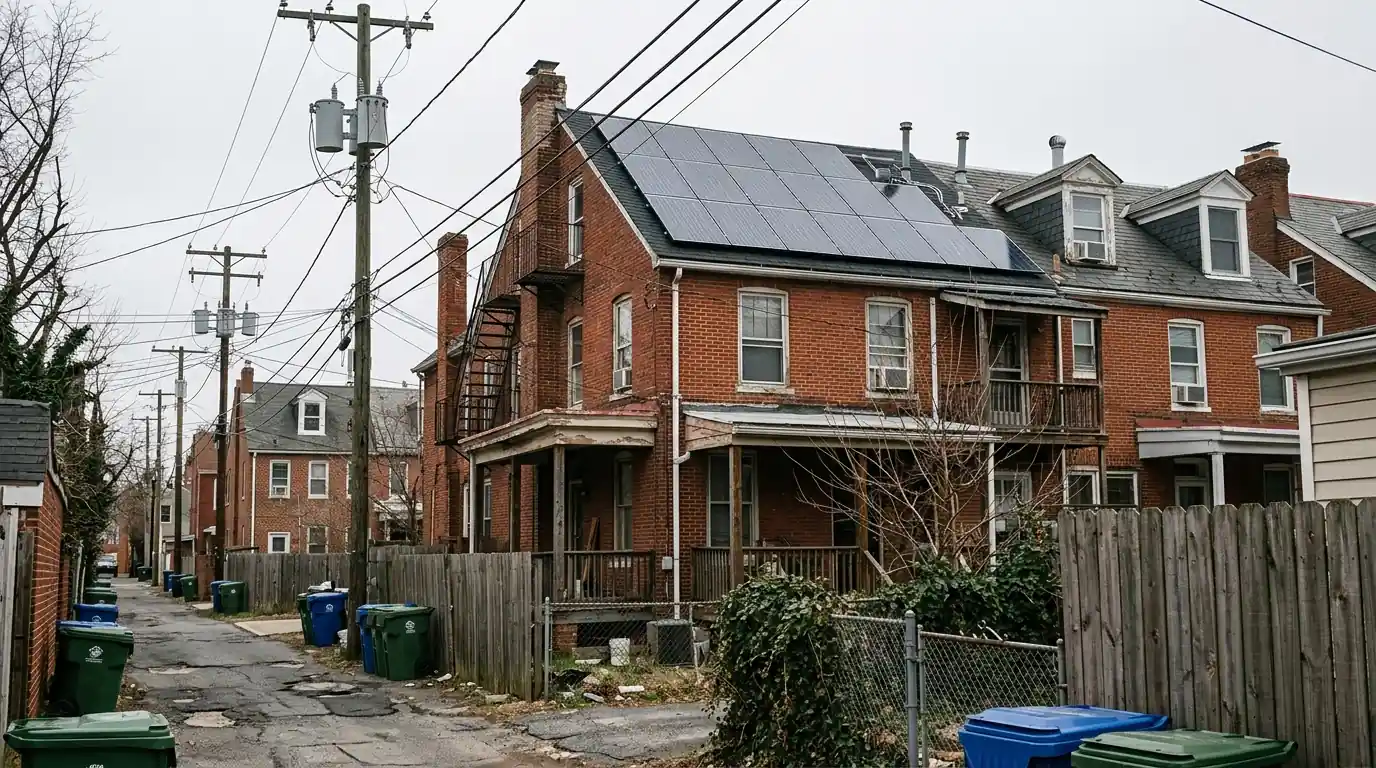
Battery or No Battery? How DC Net Metering Decides
Full retail net metering changes the battery question in DC. Here is when one earns its place.
Straight answers
Questions people ask us
For many DC homes, yes. The federal credit for homeowner-owned systems ended on January 1, 2026, but DC SRECs sold for $360 to $455 each in 2026 and a typical home system earns $2,200 to $3,200 a year from them. With Pepco's full retail net metering on top, the payback still works on a lot of roofs. We run the numbers for yours before you commit.
Yes, and flat roofs are often the simpler DC jobs. Panels sit on tilted racks set back behind the parapet, which keeps them out of street view, and the racks can be ballasted so the membrane is not drilled. We check the roof covering and the drains first.
Usually, yes. DC's Historic Preservation Office says thousands of buildings in its historic districts already have solar. Layouts kept out of street view move through review fastest, and visible panels can still be approved when they follow the city's sustainability guideline. We prepare the review package with the permit.
Not to save money in DC, because Pepco credits exported solar at the full retail rate. A battery earns its place if you want power during outages. We size it to the circuits you want running, not to the biggest cabinet on the market.
We do. Every DC install needs a building permit and a Pepco interconnection agreement, and historic district homes also need preservation review. We file all of it, then register the system for SRECs once it is approved to operate.
Yes. We troubleshoot inverters, microinverters, batteries, wiring and roof leaks on systems from other installers, including companies that have closed. Have your monitoring login and any paperwork handy when you call.
Yes, in the nearby Maryland and Virginia suburbs and around our head office in Berlin, NJ. Incentives change a lot at the District line, so we walk you through what applies at your address.
Tell us what you want the system to do
Give us the address and the goal: lower bills, backup power, an EV charger or a fix. We will say plainly whether it fits and what the job involves.
Phones answered 24/7 from our 4702 14th St NW office.
Call us, or find the office
- Phone
- (202) 978-0232
- Hours
- Answered 24 hours a day, every day
- Service office
- 4702 14th St NW, Washington, DC 20011
- Head office
- 743 South Route 73, Berlin, NJ 08009
Map of our service office at 4702 14th St NW, Washington, DC. It loads only when you ask for it.