Short answer
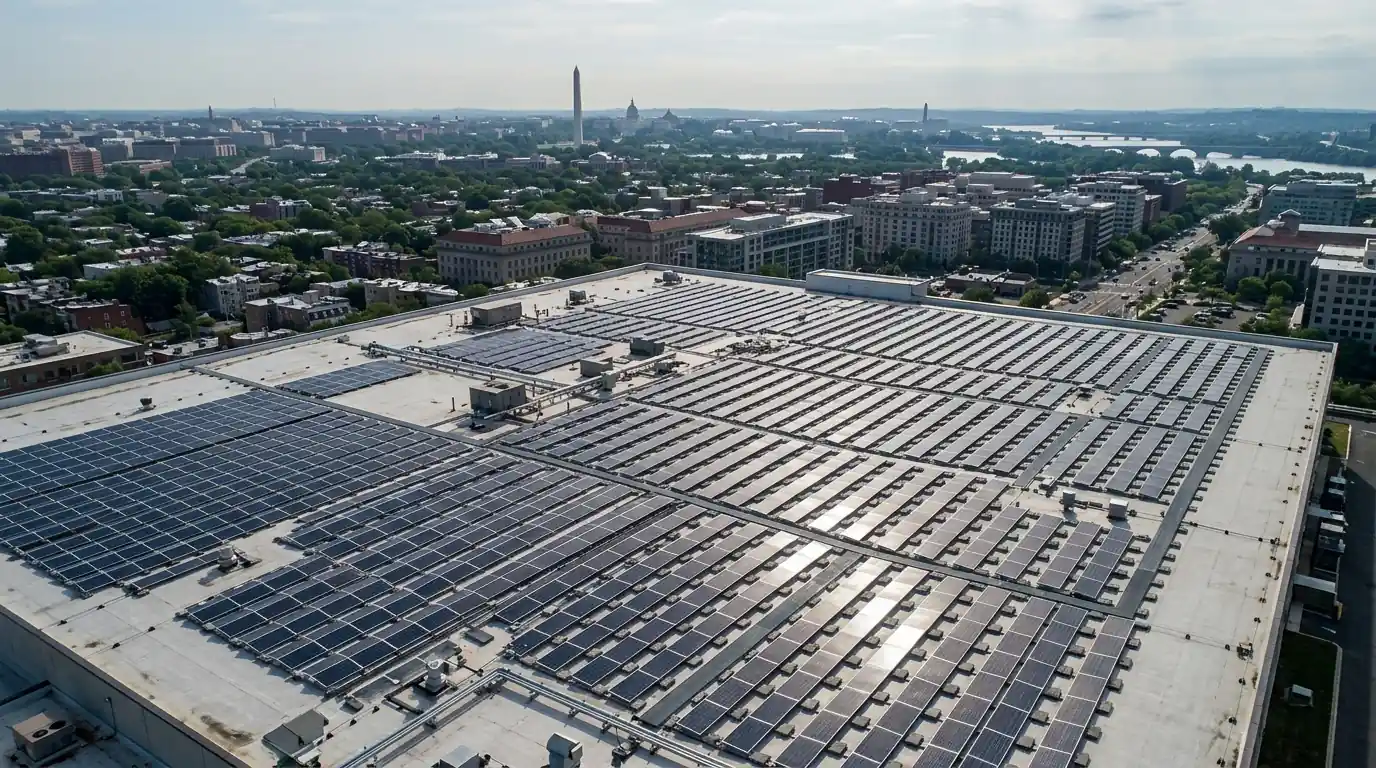
Commercial solar maintenance in Washington, DC combines monitoring, scheduled site visits and fast inverter service so a business system does not sit underproducing for months. Each DC megawatt-hour lost is also a lost SREC, so an O&M plan pays for itself mostly by catching failures early rather than by cleaning panels.
What the job is
What an O&M plan covers
Commercial systems fail differently from homes. There are more inverters, longer DC runs, larger roofs and usually nobody on site who looks at the monitoring. A single tripped inverter on a flat roof can go unnoticed until someone reads the electric bill.
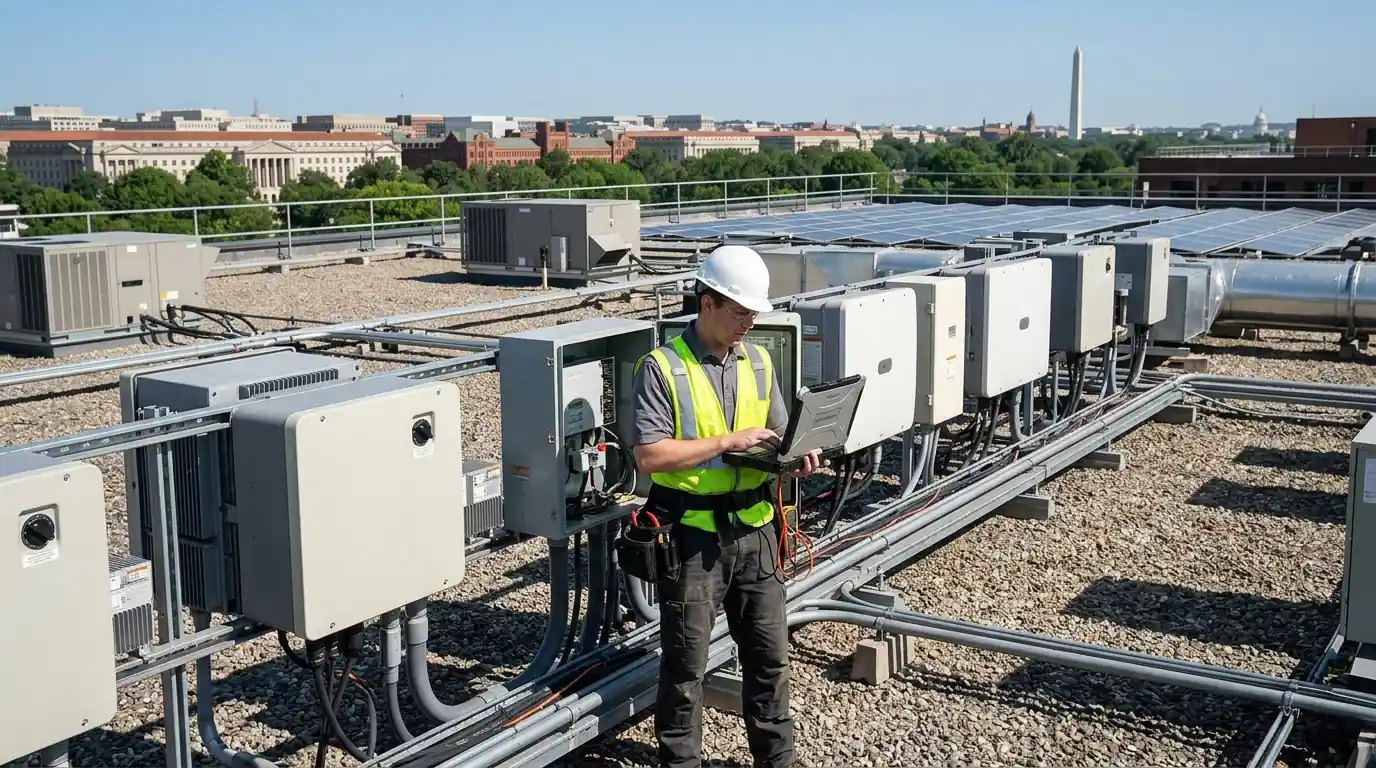
Our plans start with the monitoring: alerts routed to us, not just to an inbox at the building. Visits then follow a schedule set by the system's size and age, with inverter checks, thermal and electrical testing, racking and roof inspection, and a written report the building manager can file.
Inside this job
Scheduled O&M visits
A visit walks the whole system: inverters and their logs, combiner boxes, disconnects, conduit, racking and ballast, roof membrane around the array, and grounding. We torque-check connections that loosen with heat cycles, clear debris from inverter vents and note anything that will need work before the next visit. Findings go into a report with photos, and repairs are quoted separately so nothing is done without approval.
Performance monitoring
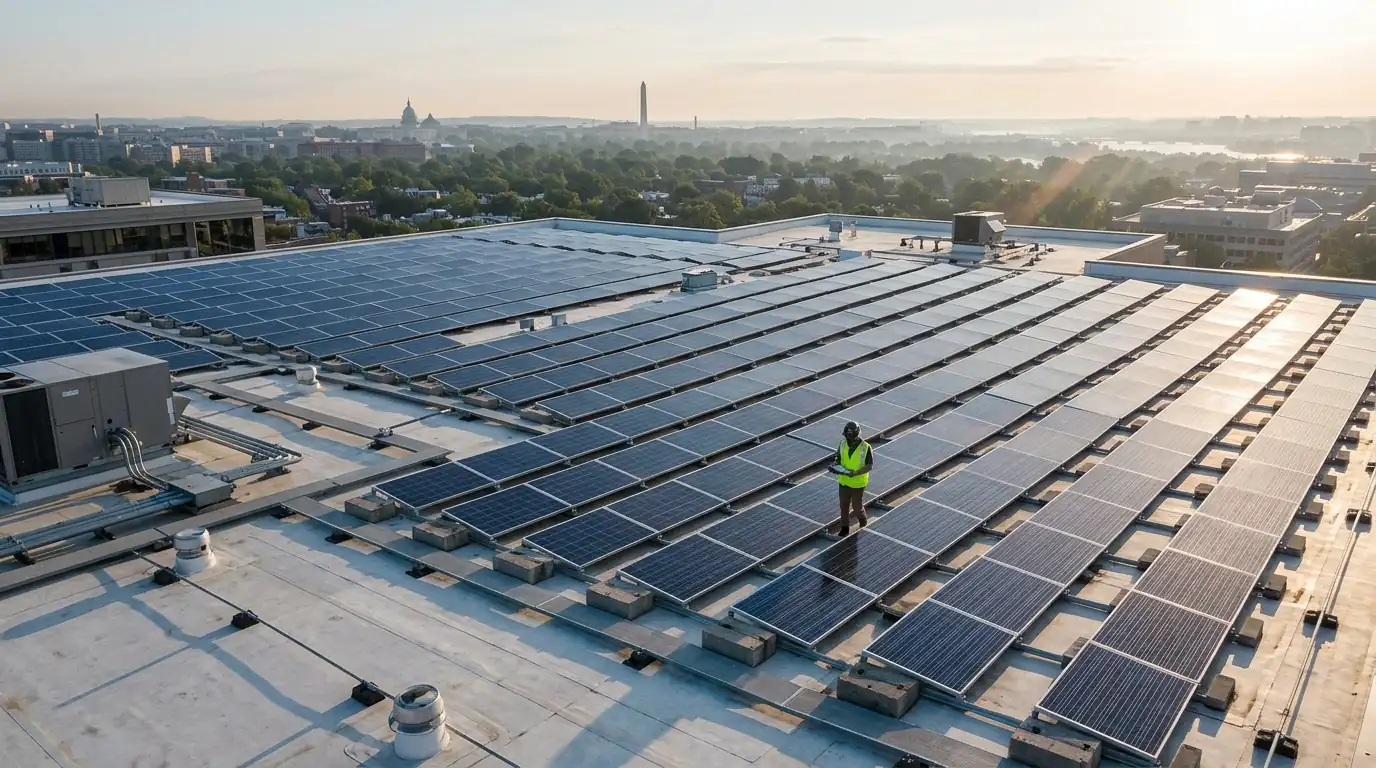
Monitoring compares each inverter against the others and against what the weather should have produced. A string that has slipped a few percent, an inverter that drops out every afternoon, or a meter that stopped reporting gets flagged before it becomes a month of lost production. We set alert thresholds with you and send a short monthly summary, not a pile of raw data.

Inverter fleet service
Larger systems run several string inverters or many microinverters, and they age at different rates. We track fault history across the fleet, handle firmware updates, file warranty claims and keep a replacement plan so a failure late in an inverter's life does not catch the budget off guard. Where the original installer is gone, we take over the warranty paperwork too.
What is included
What a maintenance visit includes
- Monitoring review before arriving
- Inverter inspection, logs and firmware
- Combiner, disconnect and conduit check
- Connection torque and thermal check
- Racking, ballast and roof membrane inspection
- Debris and vent cleaning around equipment
- Written report with photos and quotes
Washington conditions
Why lost output costs more in DC
DC's solar carve-out climbs from 5 percent in 2026 toward 9 percent by 2032, which keeps demand for DC SRECs strong, and each credit can be sold for five years after it is generated. For a commercial array inside the District, that makes downtime expensive in two ways: the building buys back power it should have produced, and the credits it would have earned never exist. Catching a failed inverter in a week instead of a quarter is the whole point of the plan.
What moves the price
What sets the price of a maintenance plan
- System sizeMore inverters and a bigger roof mean longer visits.
- Visit frequencyOlder or critical systems may need more visits per year.
- AccessRoof hatches, ladders, lifts and building security rules add time.
- Equipment ageSystems near the end of inverter warranties need more attention.
Step by step
How we set up an O&M plan
Call about the building
System size, age, who installed it and who manages the property.
Baseline visit
A full inspection and test to see where the system stands today.
Monitoring access
Alerts routed to us and thresholds agreed with you.
Plan and schedule
Visit frequency and scope set in writing.
Visits and reports
Each visit ends with a report the building can file.
Repairs on approval
Fixes are quoted and scheduled only when you approve them.
Commercial fleets we service include SMA, SolarEdge and Fronius string inverters and Enphase microinverter arrays, on IronRidge and Unirac ballasted racking.
Choosing between options
Which level of service fits your building
| Monitoring only | Scheduled O&M | Full service plan | |
|---|---|---|---|
| Alerts watched | Yes | Yes | Yes |
| Site visits | When a fault shows | On a set schedule | On a set schedule |
| Repairs | Quoted per call | Quoted per call | Priority scheduling, quoted |
| Best for | Small, newer systems | Most business systems | Large or older systems |
Straight answers
Commercial Solar Maintenance questions we hear in DC
It depends on size and age. Most business systems get scheduled visits plus continuous monitoring; we set the frequency with you after a baseline visit.
Yes. A large share of our commercial work is on systems built by other installers, including ones that have closed.
Only when testing shows soiling is costing output. Cleaning is quoted separately so you are not paying for it when rain does the job.
Yes. We schedule visits with property management and plan around access rules and quiet hours.
We review the data, call the building contact and schedule a visit. Repairs are quoted before work starts.
Yes. We test the failed unit, gather the serial numbers and data, and file the claim with the manufacturer.
Related work
Jobs that often come up alongside this one
Commercial Solar Installation
Rooftop systems for offices, shops and nonprofits.
See this job about Commercial Solar InstallationMultifamily & Condo Solar
Solar for condo buildings and converted rowhouses.
See this job about Multifamily & Condo SolarResidential Solar Panel Installation
Pitched roof systems, from layout and permits to Pepco sign off.
See this job about Residential Solar Panel Installation