Short answer
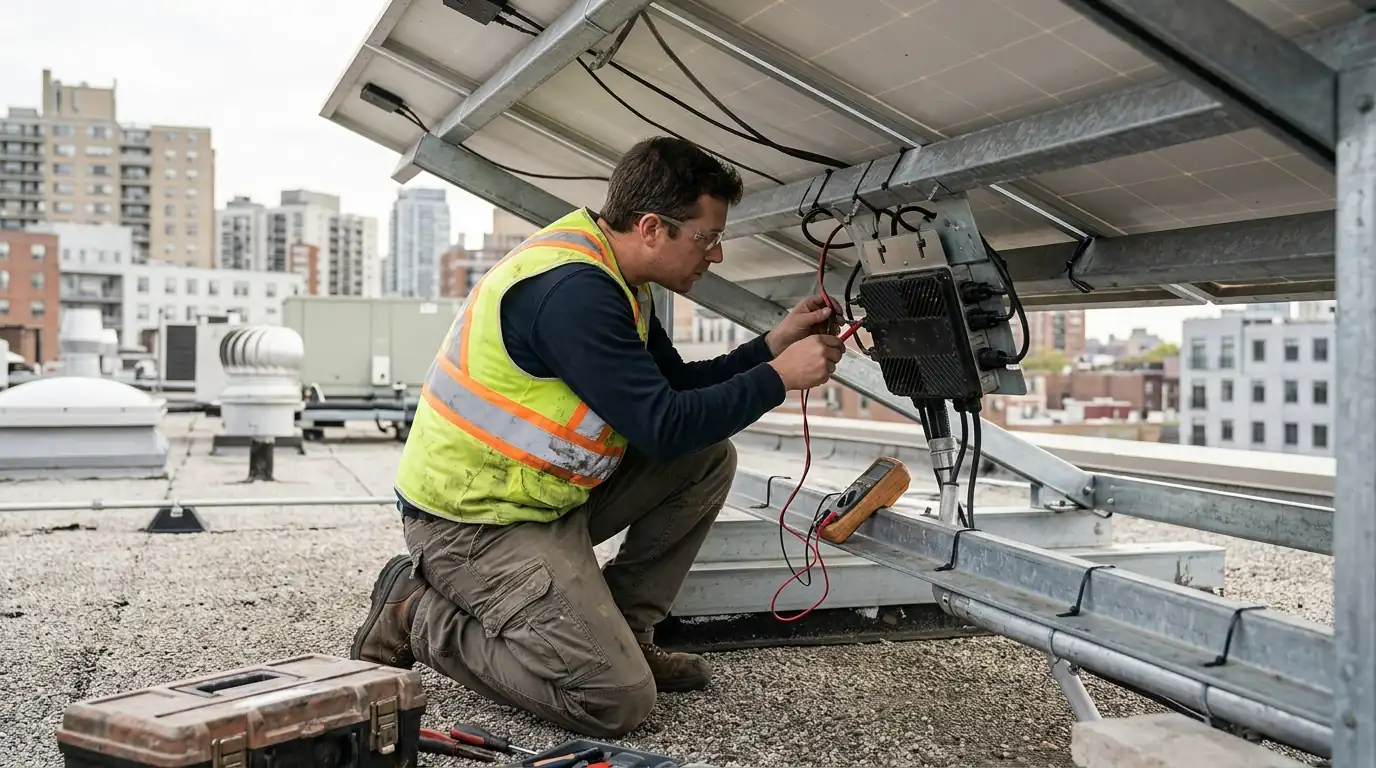
When solar monitoring in Washington, DC stops reporting, the system is often still producing while the gateway has lost its Wi-Fi link or failed. Reconnecting or replacing the gateway restores the app, and checking the production meter and the SREC account confirms that every megawatt-hour is being counted toward credits.
What the job is
What monitoring repair covers
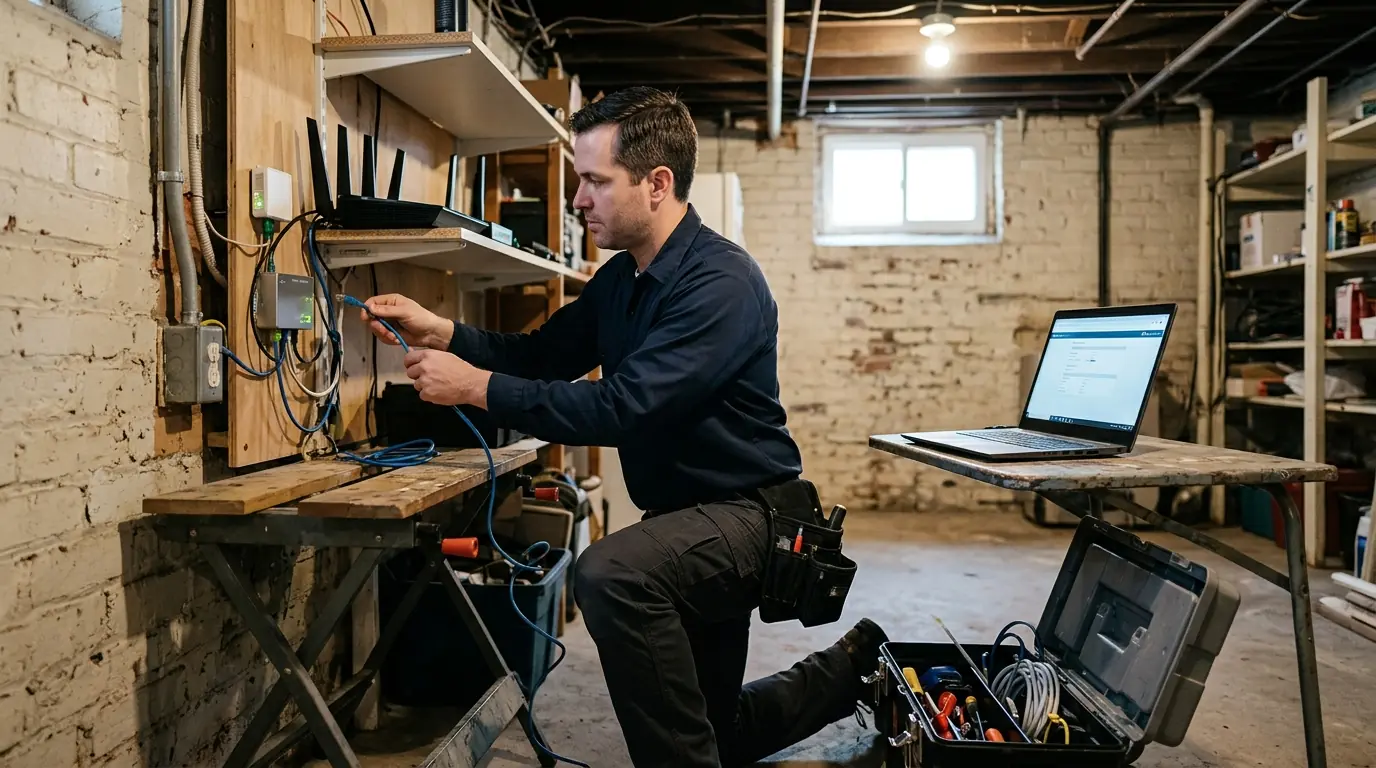
Most systems report through a small gateway or communications card that talks to the inverters and sends data over your home internet. When the network changes, the gateway loses its connection. When the gateway itself fails, or a current sensor comes loose, the data stops or goes wrong.
We check the inverters first to confirm the system is producing, then work through the chain: gateway, network link, current sensors and, where SRECs depend on it, the production meter and the reporting to the credit tracking account.
What you might notice
Signs your monitoring has dropped out
App shows zero or no data
While the inverter lights look normal.
Last update was days ago
The app shows an old timestamp.
New router or internet provider
The gateway was never moved to the new network.
SREC payments stopped
Credits have not arrived for a month or more.
Some panels missing from the map
Panel-level data shows gaps.
Step by step
How a monitoring repair runs
Call with a screenshot
What the app shows and when the data stopped.
Check production
We confirm the inverters are actually producing.
Trace the link
Gateway, network, sensors and meter checked in order.
Reconnect or replace
Link restored or failed hardware replaced and registered.
Confirm reporting
App data and SREC reporting checked against the meter.
Catch up the credits
Readings gathered for any gap in the SREC account.
Inside this job
Wi-Fi and gateway reconnection
The most common fix is the simplest: the gateway lost its Wi-Fi after a new router, a password change or a switch of internet provider. We reconnect it, or run a wired connection where Wi-Fi is weak, and confirm data is reaching the app. Where the gateway sits in a basement far from the router, a wired link or a small network extender keeps the problem from coming back.
Failed gateways and meters
Gateways and communication cards fail like any electronics, and current sensors can come loose inside the panel, which makes consumption and production numbers look wrong. We test the hardware, replace failed units with compatible models, re-register them to the system and file the warranty claim where the part is covered.
Fixing SREC production reporting
In DC, production readings are what create SRECs. If reporting to the tracking account stopped while the system kept running, credits may not have been issued for that period. We check the production meter against the inverter totals, restore the reporting link and help gather the readings needed to bring the account up to date.
Do it yourself or call
What you can try first
| Task | Safe for an owner | Needs our crew |
|---|---|---|
| Check the inverter lights | Yes, green usually means it is producing | Opening the inverter |
| Restart the router and the gateway | Yes, if the maker's guide describes it | Rewiring the gateway |
| Reconnect the gateway in the app | Yes, if the app offers a setup mode | Current sensors inside the panel |
| Note when the data stopped | Yes, it helps with the SREC catch-up | Correcting tracking account records |
Time on site
How long a monitoring repair takes
A reconnection is usually a short visit. Replacing a gateway or current sensors takes longer, and warranty replacements depend on the manufacturer's shipping.
Bringing an SREC account up to date after a reporting gap can take a few weeks of back and forth with the tracking system, which we handle with you.
Washington conditions
Why reporting matters more in the District
DC's solar requirement for electricity suppliers is 5 percent in 2026, with a $440 alternative compliance payment, and it rises toward 9 percent by 2032. That demand is what makes District credits valuable, but a credit only exists once the production behind it is reported. A gateway that dropped off Wi-Fi in March can quietly leave a season of megawatt-hours uncounted, which is why we treat a dead monitoring app in DC as more than a cosmetic problem.
We work on Enphase IQ Gateways, SolarEdge communication boards, Tesla gateways and production meters from most residential installs.
What moves the price
What decides the cost of a monitoring repair
- Reconnect or replaceA network fix costs far less than new hardware.
- Warranty statusGateways under warranty are claimed with the maker.
- Network setupA wired run to a distant basement adds labor.
- SREC catch-upReporting gaps take paperwork to close.
Straight answers
Solar Monitoring Repair & Reconnection questions we hear in DC
Often not. Check the inverter lights; if they are normal, the monitoring has probably lost its connection while the panels keep producing.
It can. If production reporting stopped, credits may not have been issued for that period until the readings are submitted.
The gateway has to be reconnected to the new network. Some apps allow it; otherwise we do it on a short visit.
Yes, including systems whose installer has closed.
Often, as part of the inverter maker's warranty. We check and file the claim.
Yes. A wired link is more reliable where Wi-Fi is weak in a basement.
Related work
Jobs that often come up alongside this one
Solar Panel Repair
Cracked glass, hot spots and wiring faults on the array.
See this job about Solar Panel RepairSolar Inverter Repair & Replacement
String and hybrid inverters with faults or no output.
See this job about Solar Inverter Repair & ReplacementMicroinverter & Optimizer Replacement
Swapping failed electronics under individual panels.
See this job about Microinverter & Optimizer ReplacementLow Solar Production Diagnostics
Finding out why production dropped or monitoring went dark.
See this job about Low Solar Production Diagnostics