Short answer
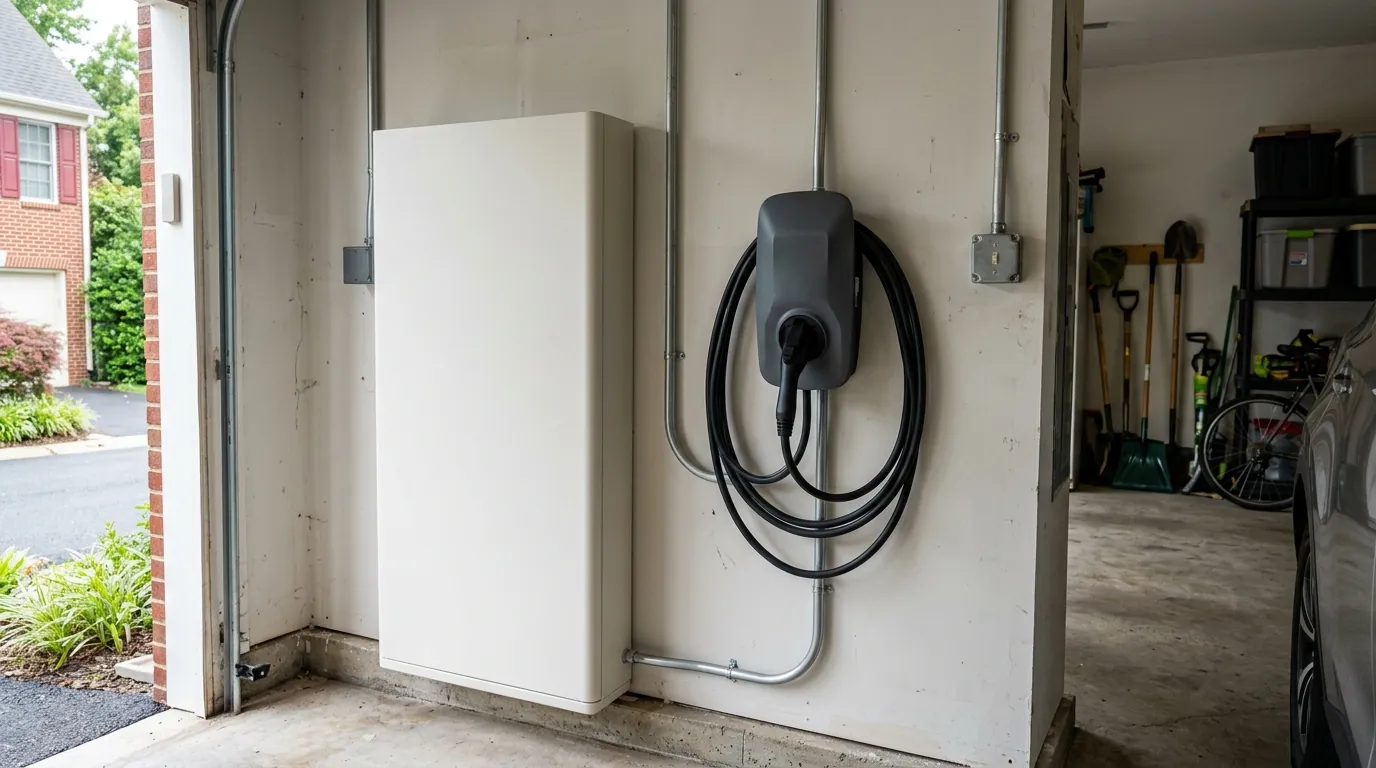
A home battery without solar in Washington, DC charges from the grid, keeps chosen circuits running during an outage through a backup gateway, and can be paired with panels later. A 10 kWh class battery typically costs $12,000 to $16,000 installed in 2026, the same hardware as a solar battery without the panels.
What the job is
How a battery works without solar
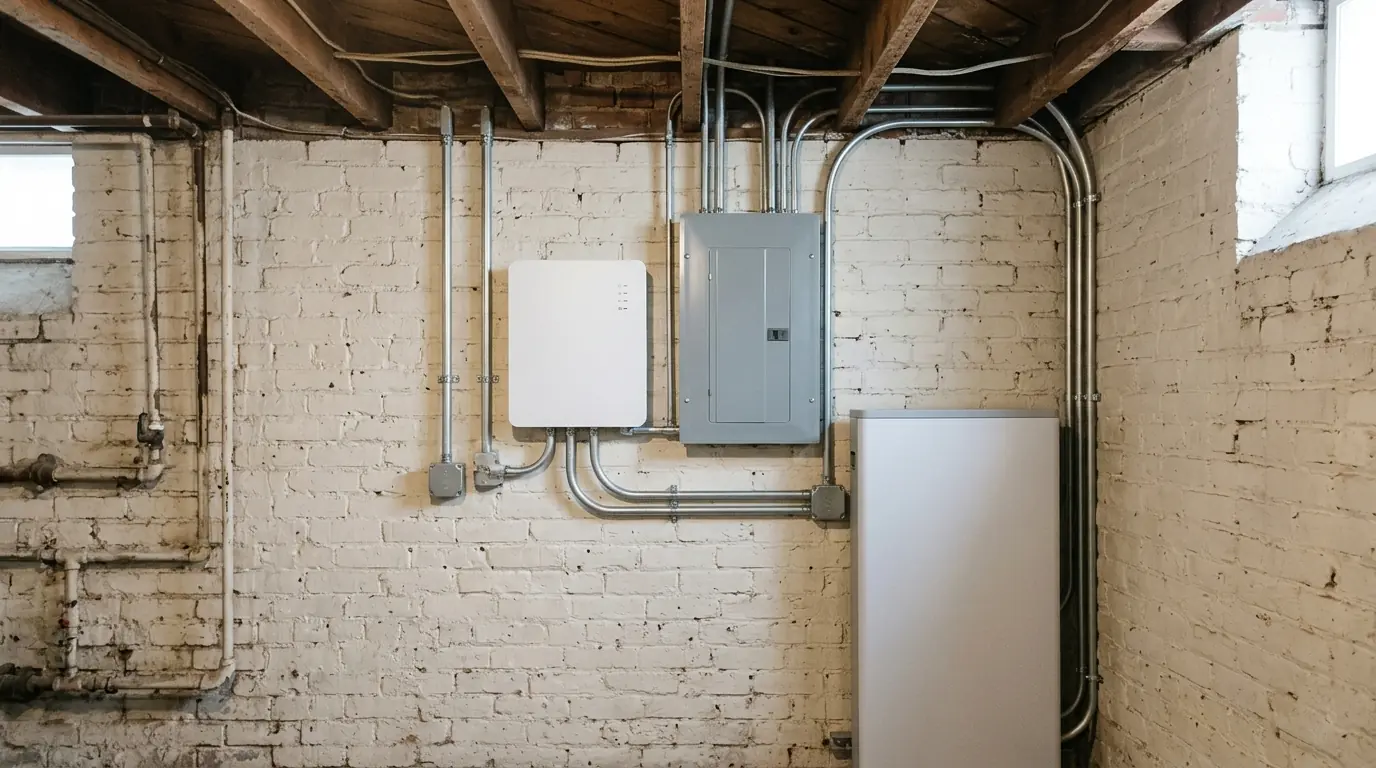
A standalone battery stays charged from the grid. When the power fails, a backup gateway disconnects the house from the utility lines and the battery takes over the circuits on a backup panel. When the grid returns, the gateway reconnects and the battery recharges.
Without panels, the battery cannot refill itself during a long outage, so its size sets how long backup lasts. That makes the circuit list the heart of the design: the fridge, sump pump, internet, some lights and outlets, and anything medical. We size the battery to that list and tell you plainly how many hours it will cover.
What moves the price
What moves the price of a battery-only install
- Battery sizeMore storage means a bigger battery or a second unit.
- Backup scopeA small essentials panel costs less than whole home backup.
- Panel workMoving circuits or upgrading a full panel adds cost.
- Solar readinessPlanning for panels later can mean a different inverter choice now.
2026 planning ranges
- 10 kWh class home battery, installed$12,000 to $16,000 installedSource: a1solarstore.com
- Tesla Powerwall 3, installed$13,000 to $16,500 installedSource: a1solarstore.com
Published market ranges, not our quote. Your price depends on the roof, the equipment and the permit path.
Inside this job
Essentials backup
Most standalone batteries run a small backup panel holding the circuits that matter in an outage. One battery can usually carry a refrigerator, internet, lights, a few outlets and a gas furnace blower through a typical outage, longer if usage is kept light. Large loads such as central air or an electric range usually stay off the backup panel, because without solar to recharge, every hour they run is an hour of backup lost.
Battery now, solar later
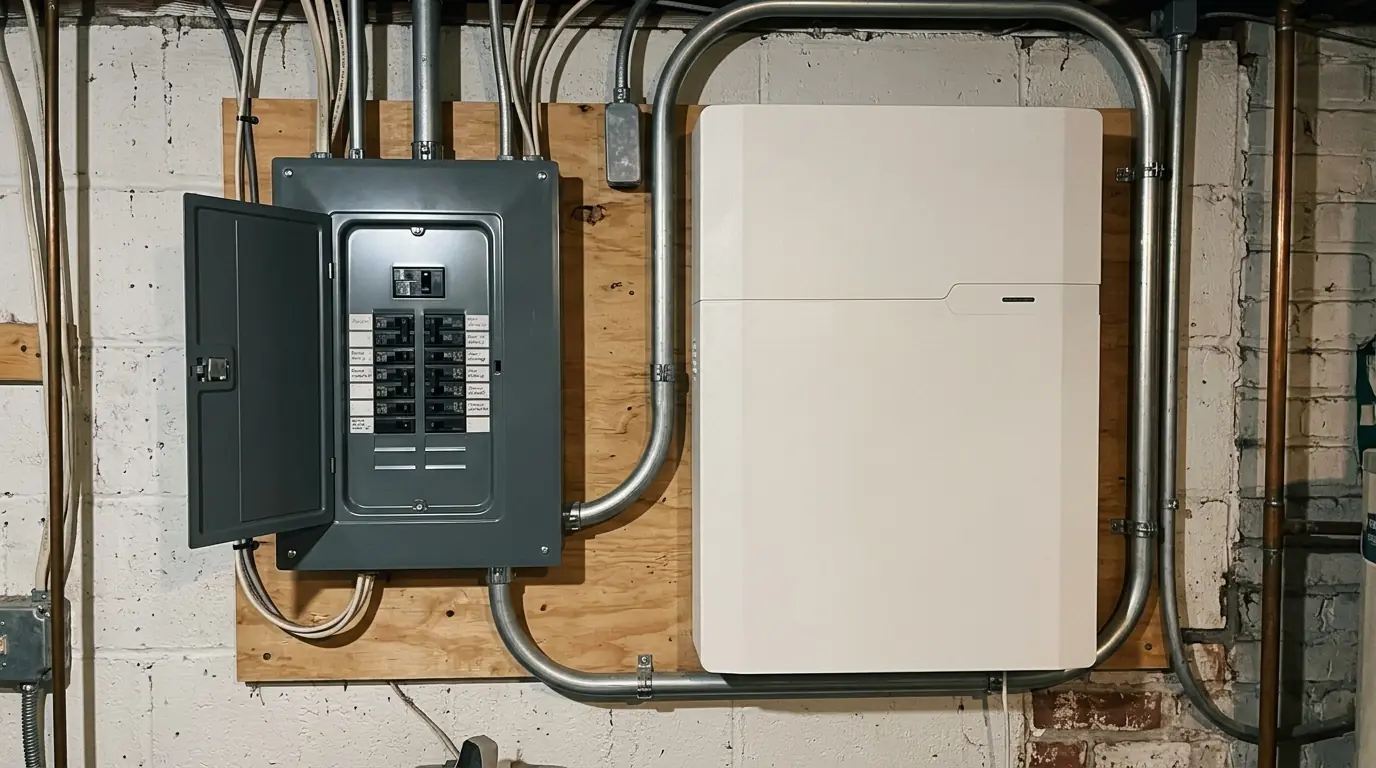
Many owners start with a battery because a roof replacement, a historic review or the budget puts solar off for now. We choose a battery and gateway that can accept panels later, either through a hybrid inverter or an AC-coupled connection, and leave room in the main panel. When solar does go on, the battery starts recharging from the roof and the outage protection gets much longer.
Battery or standby generator
A gas standby generator can run for days as long as fuel lasts, but it needs a gas line, regular exercise runs and maintenance, and it is noisy in a rowhouse alley. A battery is silent, needs almost no upkeep and switches over instantly, but it runs for hours rather than days without solar. For short outages and quiet streets, a battery usually fits better; for long ones in a detached house, a generator may.
Choosing between options
Battery or generator for backup?
| Home battery | Standby generator | |
|---|---|---|
| Switch-over | Instant | A few seconds |
| Runtime | Hours, longer with solar added | Days, while fuel lasts |
| Noise and upkeep | Silent, little upkeep | Audible, needs regular service |
| Works with solar later | Yes | Not directly |
Washington conditions
Batteries around the District
Across the river, Dominion runs a Virtual Power Plant pilot that can pay enrolled battery owners in places like Arlington and Alexandria for help at peak times. In the District itself a battery's job is backup, and DC's Solar Advantage Plus rebate is written for solar or solar plus storage for households at or below 80 percent of area median income. That is worth knowing before you decide: adding even a small array alongside the battery may change which programs apply.
Step by step
How a battery-only install runs
Call with your list
What has to stay on in an outage, and for how long.
Load and panel check
We measure the circuits and read the main panel.
Design and price
Battery, gateway and backup panel, with a written price.
Permit
Electrical permit filed and inspection booked.
Install day
Battery, gateway and backup panel installed, circuits moved.
Outage test
We cut the grid under control and show you the backup working.
What is included
What a standalone battery install includes
- Load list and runtime estimate for your essentials
- Main panel and service check
- Battery and backup gateway installed
- Backup loads panel with chosen circuits moved
- Permit, inspection and utility notification
- App setup and reserve settings
- Controlled outage test before we leave
Standalone backup systems we install include Tesla Powerwall, Enphase IQ Battery and FranklinWH, chosen with future solar in mind.
Straight answers
Home Battery Backup Without Solar questions we hear in DC
Yes. The battery charges from the grid and powers your backup circuits when the grid fails.
It depends on what is running. With essentials only, one battery often covers a typical outage; large loads drain it much faster.
Yes, if the battery and gateway are chosen with that in mind. We plan for it from the start.
For short outages and quiet streets, usually yes. For multi-day outages without solar, a generator runs longer.
Not much in DC. Its value is backup power, not savings.
Yes. A battery and backup gateway need an electrical permit and an inspection, which we handle.
Related work
Jobs that often come up alongside this one
Solar Battery Installation
Backup power for outages, sized to the circuits you need.
See this job about Solar Battery InstallationBattery Retrofit for Existing Solar
Adding a battery to a system that is already producing.
See this job about Battery Retrofit for Existing SolarSolar Battery Repair
Batteries that stopped charging or did not switch over.
See this job about Solar Battery RepairEV Charger Installation
Level 2 charging at home, set up to use your solar.
See this job about EV Charger Installation