Short answer
Residential solar installation in Washington, DC runs about $3.00 to $3.40 per watt in 2026, or roughly $15,000 to $18,000 for a 6 kW system before incentives. With the federal homeowner credit gone, DC's SRECs and Pepco's full retail net metering carry the payback, so we design every system to be certified and credited from day one.
What the job is
What a home solar installation includes
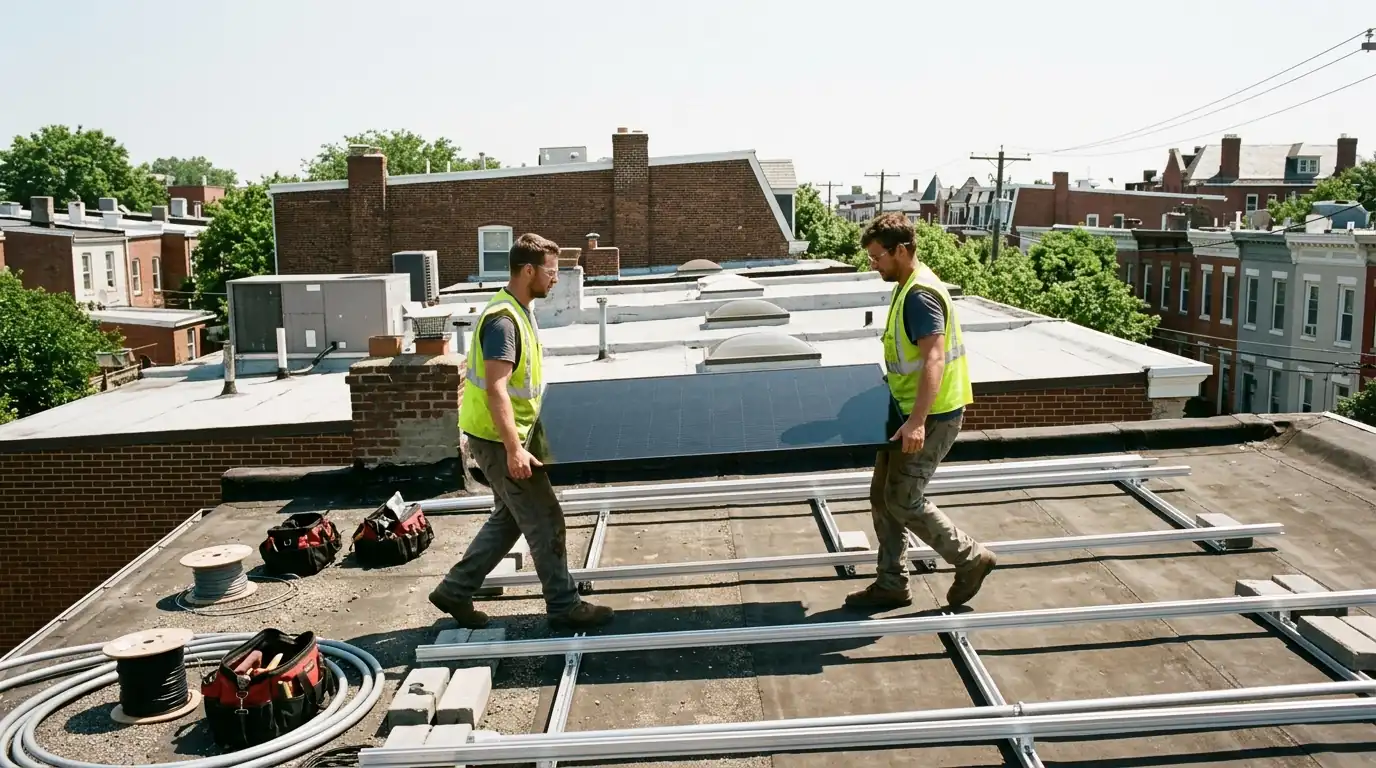
Every install runs through the same stages: a site visit, a design, permits, installation, inspection and turn-on. The site visit checks the roof covering and structure, shade, the main electrical panel and where conduit can run. The design fits panels to the usable roof and picks the inverter setup that suits the shade and your plans.
The paperwork is part of the job. We file the DC building permit and the Pepco interconnection application, add historic preservation review where it applies, schedule the inspection, and register the system for SRECs after Pepco grants permission to operate.
What moves the price
What decides the price of a home system
- System sizeMore panels cost more in total and usually less per watt.
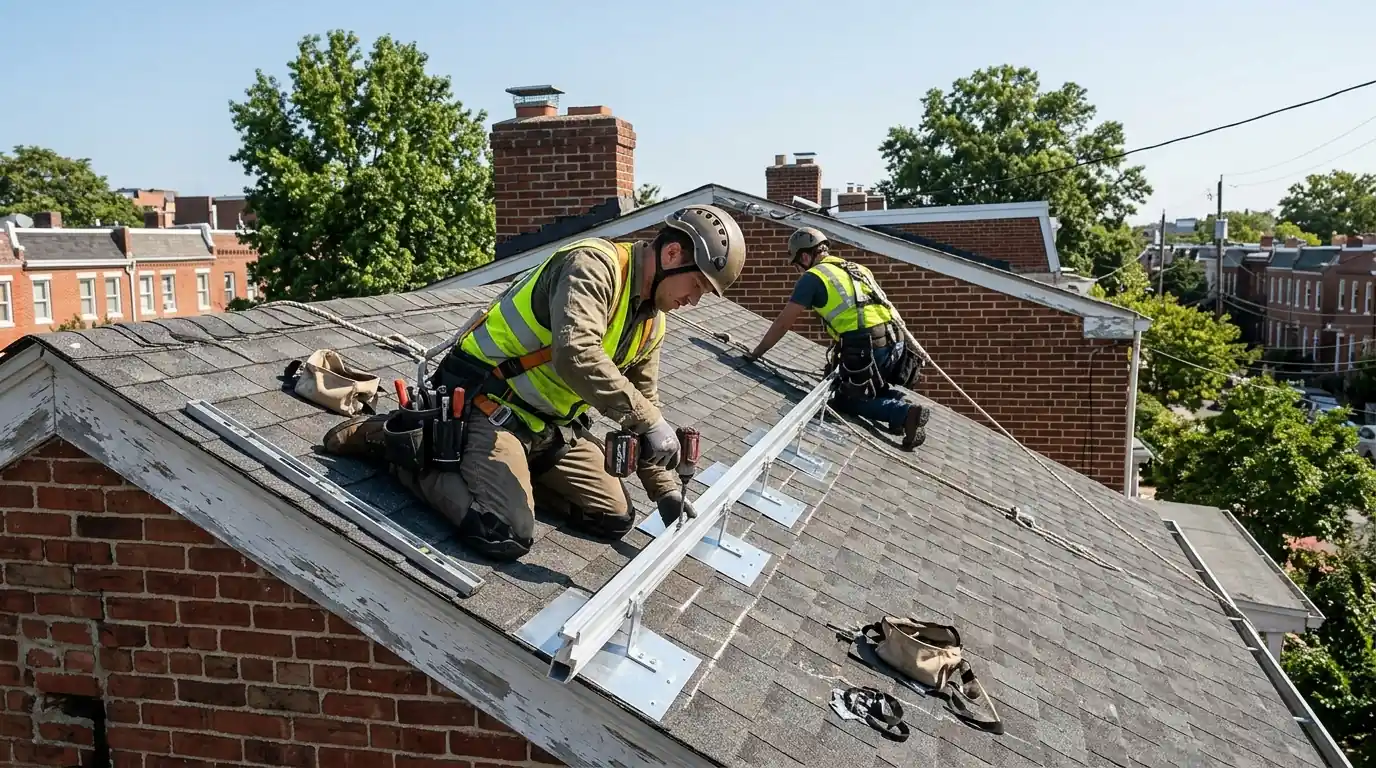
- Roof complexitySeveral roof planes, steep pitches, slate or flat-roof racking add labor.
- EquipmentMicroinverters, optimizers and premium panels cost more than basic setups.
- Electrical workA panel upgrade or a long conduit run adds to the job.
2026 planning ranges
- Residential solar in DC, installed$3.00 to $3.40 per watt installedSource: cityrenewables.com
- A 6 kW system before incentives$15,000 to $18,000 installed before incentivesSource: cityrenewables.com
Published market ranges, not our quote. Your price depends on the roof, the equipment and the permit path.
Inside this job
Pitched roof attachments and flashing
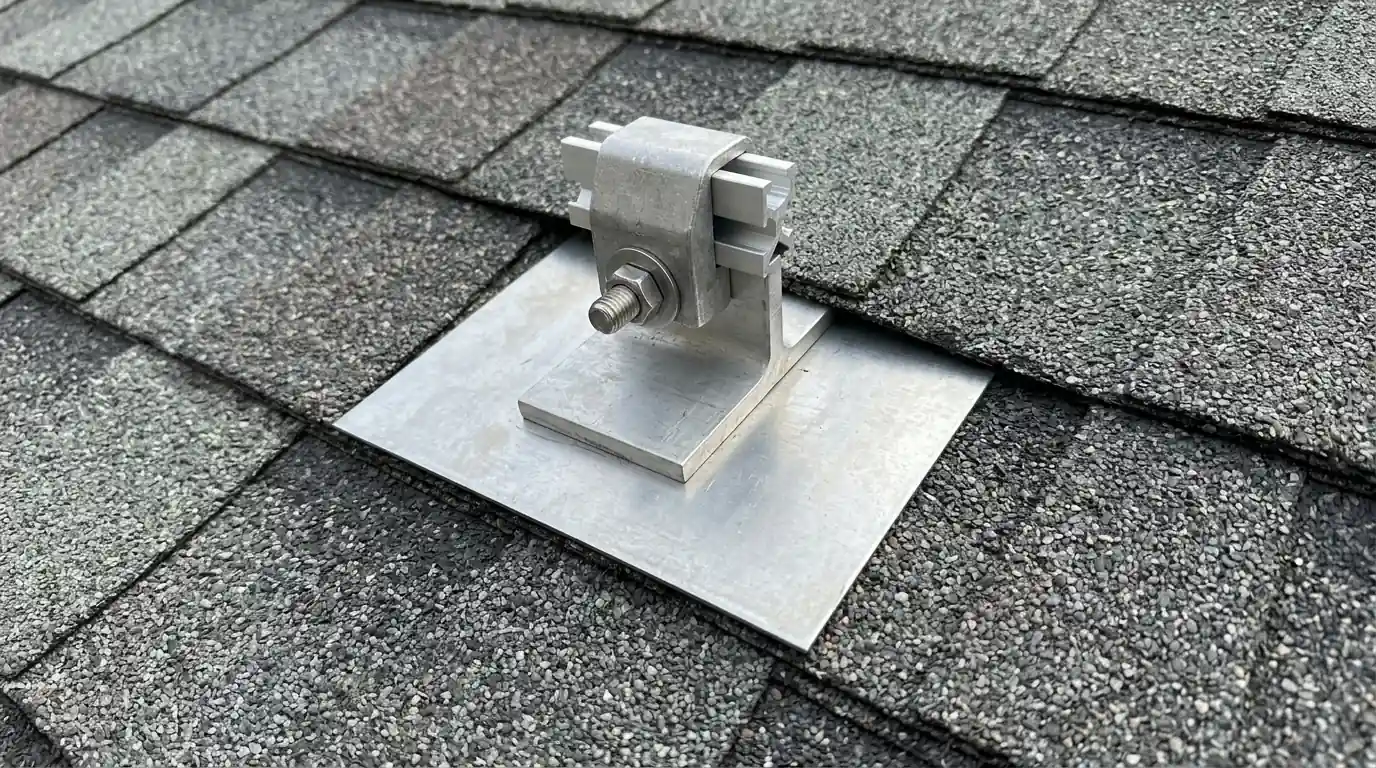
On a shingle or metal roof, rails attach to the rafters through flashed mounts that keep water out for the life of the system. Each attachment is located on a rafter, sealed and flashed, and the rails are set to keep panels a few inches off the roof for airflow. Slate and older roofs need extra care or a conversation about the roof first, because a cracked slate around a mount is a leak waiting to happen.
Choosing panels and inverters
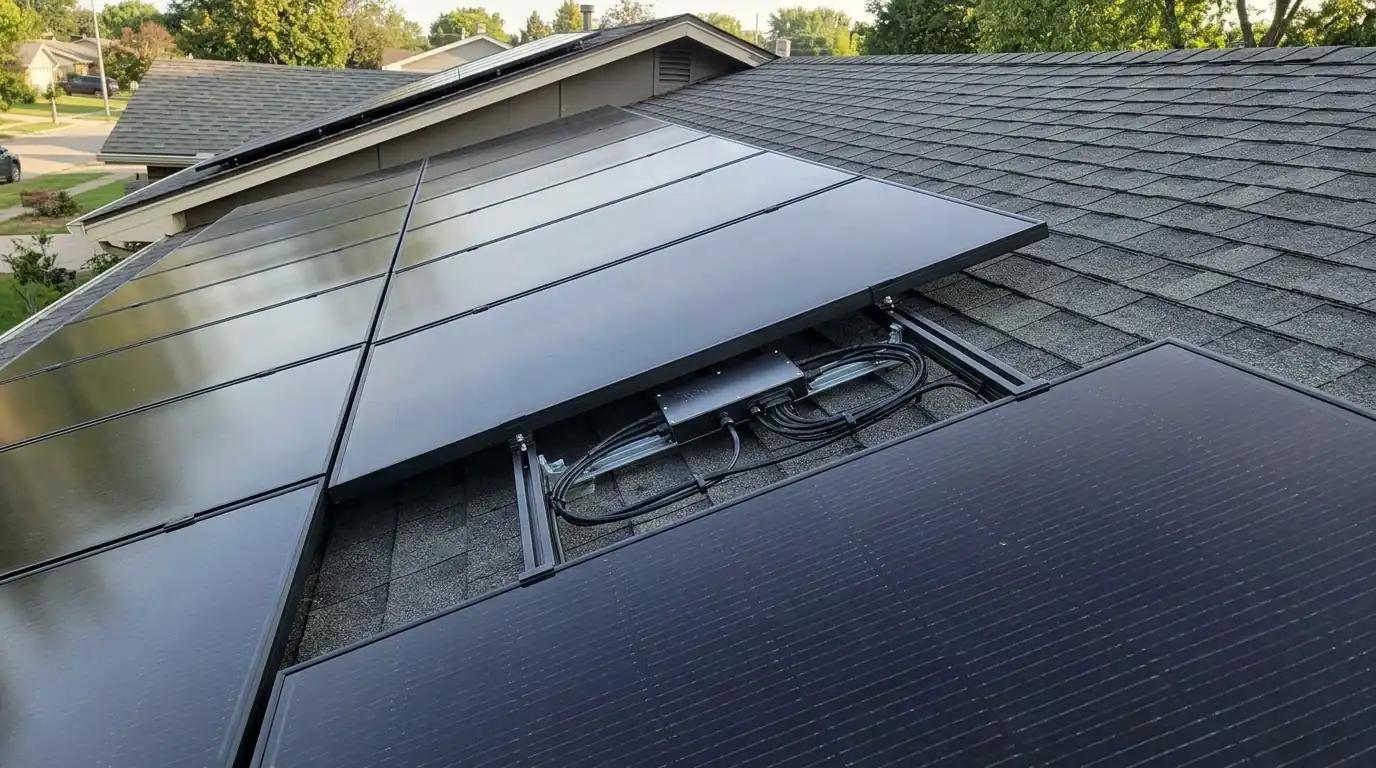
Panels differ in efficiency, appearance and warranty more than in basic function. All-black panels suit visible roofs; higher efficiency panels help on small roofs. For inverters, microinverters or optimizers handle partial shade and give panel-level monitoring, while a single string inverter can cost less on an open, unshaded roof. If a battery is in the plans, we pick an inverter setup that makes adding one simple.
Permits and Pepco interconnection
Every DC install needs a building permit and a Pepco interconnection agreement, and houses in historic districts also need preservation review. After installation and inspection, Pepco installs or programs the meter and grants permission to operate. Only then can the system be switched on for good and certified for SRECs, so we track each step and tell you where things stand.
Choosing between options
String inverter, optimizers or microinverters?
| String inverter | String with optimizers | Microinverters | |
|---|---|---|---|
| Partial shade | Weakest | Good | Good |
| Panel-level monitoring | No | Yes | Yes |
| Where the electronics are | One box on the wall | On the roof and one box | On the roof under each panel |
| Suits | Open, unshaded roofs | Mixed shade, lower cost | Complex roofs, easy expansion |
Washington conditions
Solar math in Washington after the federal credit
The federal 25D credit for homeowner-owned systems ended on January 1, 2026, so DC owners now price solar at about $3.00 to $3.40 per watt installed without it. Every system still needs a DC building permit and a Pepco interconnection agreement, plus preservation review for houses on Capitol Hill, in Georgetown, in Kalorama and in the city's other historic districts. What makes the numbers work here is that a certified DC system earns SRECs that other states cannot match.
Step by step
How a home solar install runs
Call
Address, typical Pepco bill and what you want the system to do.
Site visit
Roof, structure, shade, main panel and conduit route checked.
Design and price
Layout, equipment list and a written price.
Permits and Pepco
Building permit, interconnection and any historic review filed.
Install
Racking, panels, inverter and wiring installed and tested.
Turn on and register
Inspection, permission to operate, then SREC certification.
What is included
What every install includes
- Roof, structure, shade and electrical check
- System design and layout drawing
- DC building permit and Pepco interconnection
- Historic review where it applies
- Racking, panels, inverter and wiring
- Inspection, permission to operate and turn-on
- SREC certification and monitoring setup
On most DC homes we install REC, Qcells, Panasonic or Silfab panels on IronRidge or Unirac racking, with Enphase microinverters or SolarEdge optimizers.
Straight answers
Residential Solar Panel Installation questions we hear in DC
About $3.00 to $3.40 per watt installed in 2026, or roughly $15,000 to $18,000 for a 6 kW system before incentives. Your price depends on the roof, the equipment and the electrical work.
Most of the time goes to permits and Pepco's interconnection, not the install itself. We give you a realistic timeline after the site visit.
Not for homeowner-owned systems. The 25D credit ended on January 1, 2026. DC's SRECs and net metering are now the main drivers.
Not when it is attached correctly. Pitched roof mounts are flashed into the roofing, and flat-roof racks sit on protection pads. We check the roof first.
No. A battery is for backup during outages. Net metering credits daytime solar without one.
We do, after Pepco grants permission to operate.
Related work
Jobs that often come up alongside this one
Rowhouse & Flat Roof Solar
Tilted racks behind the parapet on DC's flat rowhouse roofs.
See this job about Rowhouse & Flat Roof SolarHistoric District Solar
Layouts and review packages for homes under preservation rules.
See this job about Historic District SolarRoof Deck Solar Canopies
Panels on a raised frame over a roof deck or patio.
See this job about Roof Deck Solar CanopiesGround-Mount Solar
Arrays on posts in the yard where the roof will not work.
See this job about Ground-Mount Solar