Short answer
Critter guard for solar panels in Washington, DC is a mesh barrier or solid skirt fitted around the edge of the array so pigeons and squirrels cannot nest underneath. Installed on an existing system it typically runs $500 to $1,500, and nests and droppings are cleared first so nothing is sealed in.
What the job is
What critter guard work involves
The job has two halves: clean out, then close up. Nests, debris and droppings come out from under the panels first, because guarding over them traps fire fuel and moisture against the roof and the wiring. Then we fit a barrier around the full perimeter of the array.
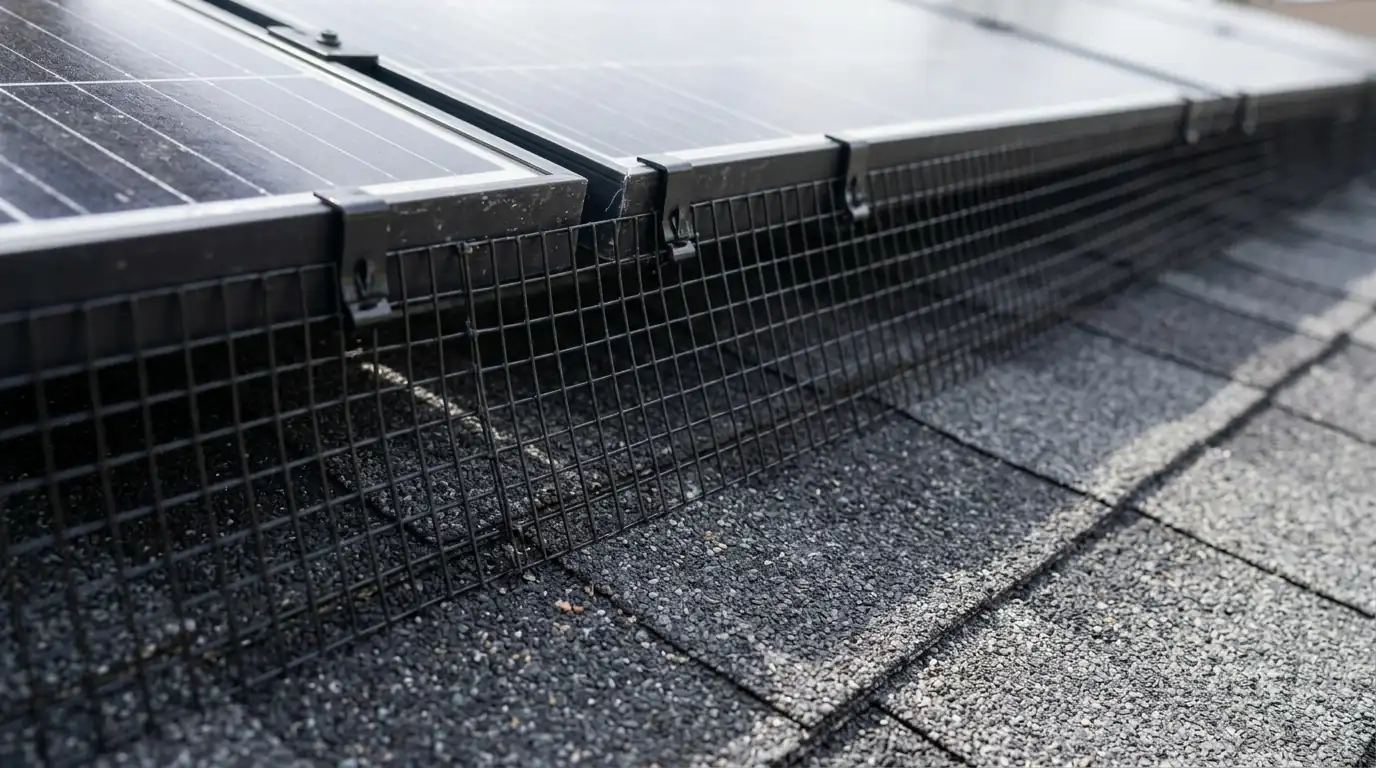
The barrier clips to the panel frames rather than screwing through the roof, so it adds no new roof penetrations and does not void panel warranties when fitted with the right clips. We also check the wiring we can see for chew damage while the guard is open.
Inside this job
Mesh guards
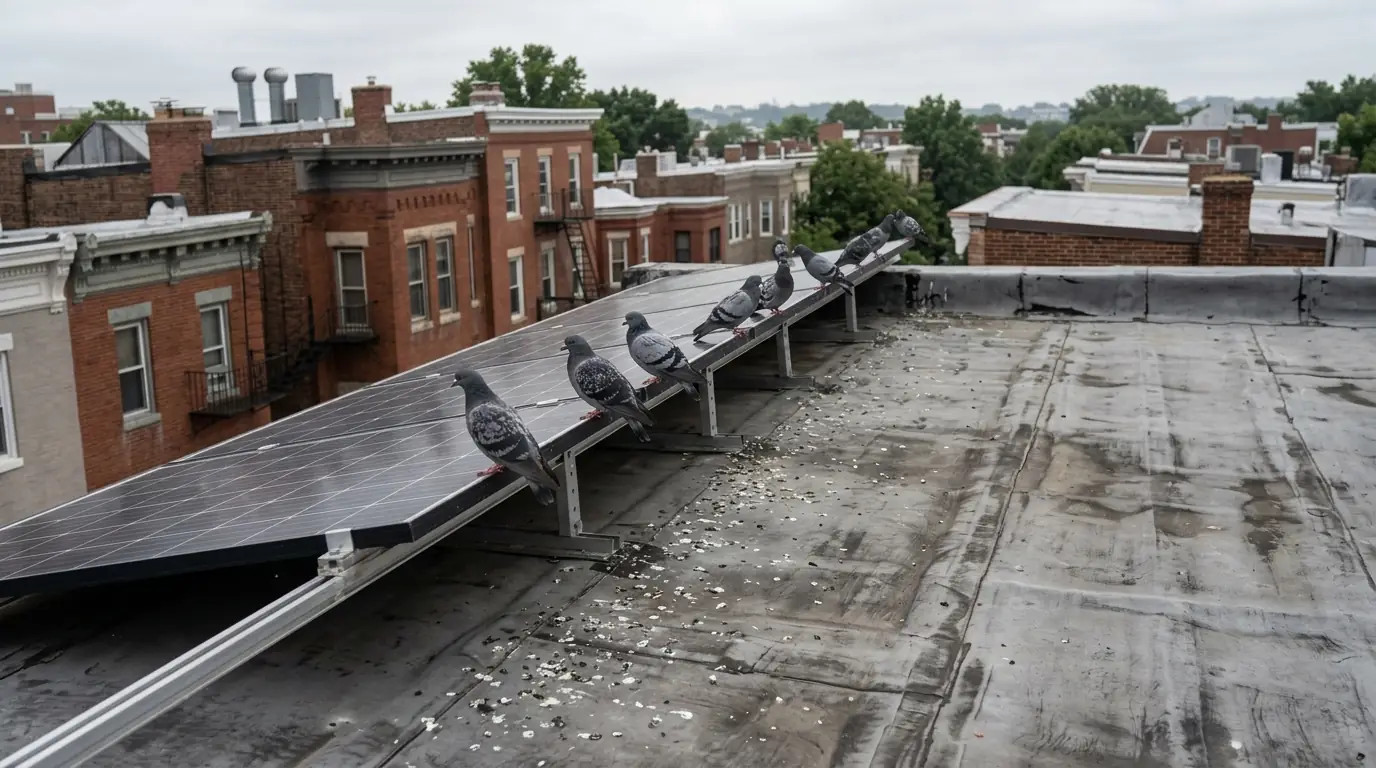
Coated steel mesh is the standard: a roll cut to fit the array perimeter, held to the panel frames with clips and bent to meet the roof surface. It is durable, nearly invisible from the ground and leaves room for air to move under the panels. On flat rowhouse roofs with tilted racks, the open back and sides need guarding too, not only the low edge.
Solar skirts
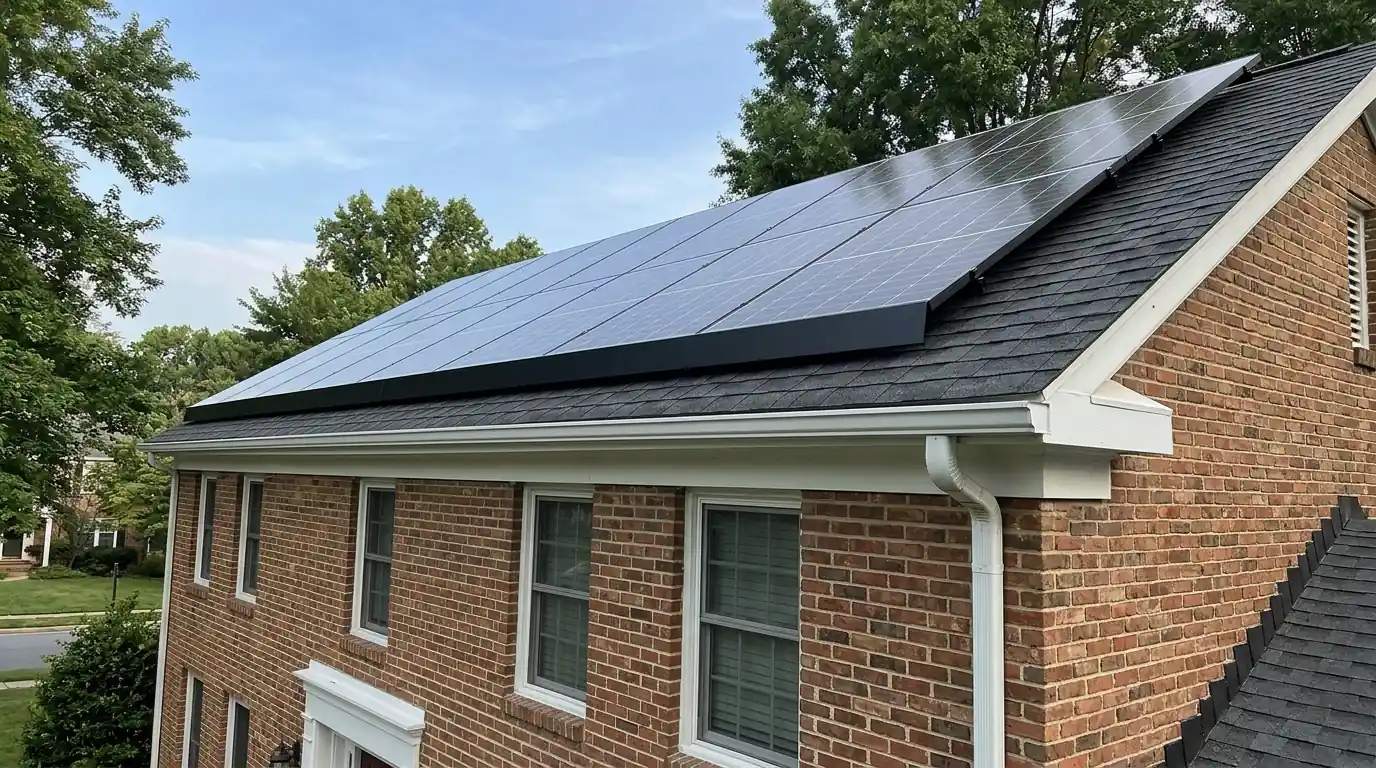
A skirt is a solid trim piece that clips to the front edge of the array and closes the gap with a finished look. It suits the street-facing edge of a visible array, where a clean line matters, and is often combined with mesh on the sides and back where nobody sees it. Skirts cost more than mesh for the same length.
Nest removal and cleanup
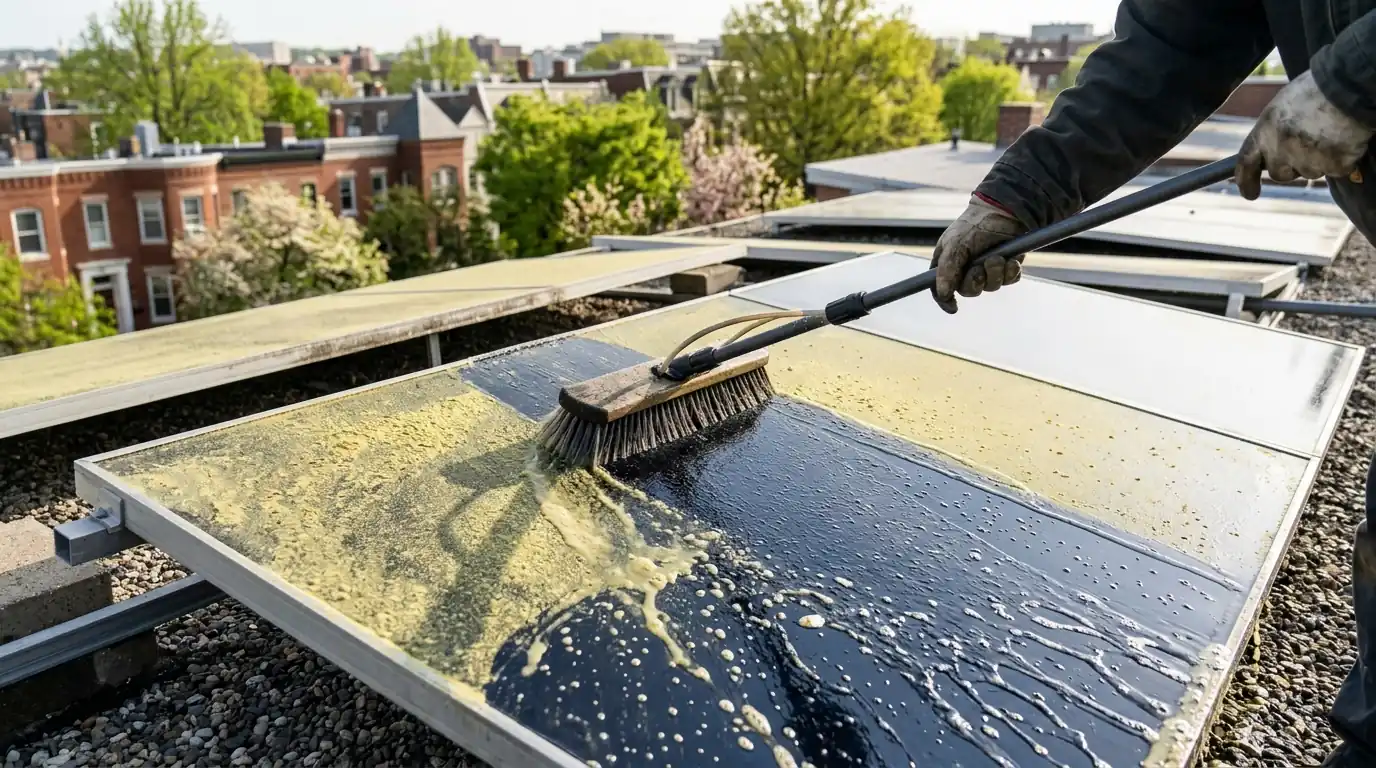
Before anything is sealed, nests come out and droppings are cleaned off the roof and the panel undersides. Bird droppings are a health hazard, so we work with protective gear and bag the waste. If a panel has to be lifted to reach a nest or damaged wiring, we shut the system down first and restore it after.
What is included
What a critter guard visit includes
- Safe shutdown when panels need lifting
- Nest and debris removal
- Droppings cleanup on roof and panels
- Visible wiring check for chew damage
- Mesh or skirt fitted around the full perimeter
- Clips that do not penetrate the roof
- Photos of the finished guard
Washington conditions
Why DC rowhouse arrays attract birds
About a quarter of DC homes are row houses, and their flat roofs usually carry tilted racks behind the parapet. That layout keeps panels out of street view, but it also leaves an open back and sides under every row, a sheltered pocket on a roof nobody walks on. On these arrays we guard all four sides of each rack, not just the low front edge that a pitched roof would need.
What moves the price
What decides the cost of critter guard
- Array perimeterPricing follows the length of edge to be guarded; flat-roof racks have more of it.
- CleanupLarge nests and heavy droppings take time and protective gear.
- Skirts or meshSolid skirts cost more than mesh for the same length.
- Wiring repairsChewed cables add repair work before the guard goes on.
2026 planning ranges
- Critter guard, existing system$500 to $1,500 installed; $300 to $800 when added during the installSource: nuwattenergy.com
Published market ranges, not our quote. Your price depends on the roof, the equipment and the permit path.
Step by step
How pigeon proofing runs
Call with what you see
Where the birds go and roughly how big the array is.
Roof check
We look under the array edges and at the wiring.
Clean out
Nests, debris and droppings removed and bagged.
Repairs if needed
Chewed wiring repaired before anything is sealed.
Guard fitted
Mesh or skirts clipped around the whole array.
Photos and notes
You see the finished guard and anything we found.
What you might notice
Signs something is living under your panels
Cooing or scratching
Bird sounds from the roof, especially early morning.
Droppings on the roof or gutters
Streaks below the array edge, or on the sidewalk in front of the house.
Twigs and feathers at the edges
Nest material poking out from under the panels.
Chewed or hanging wires
Squirrel damage shows as frayed insulation or loose cables.
A sudden output drop
Damaged wiring can take a panel or string offline.
Do it yourself or call
Can you do it yourself?
| Task | Safe for an owner | Needs our crew |
|---|---|---|
| Watch for signs from the ground | Yes, note where birds go in and out | Getting on the roof to look |
| Rinse droppings off a ground-level surface | Yes, with gloves and a mask | Cleaning on the roof or around wiring |
| Fit mesh kits sold online | Not on a roof, and never near live wiring | Roof work, clip fitting and wiring checks |
| Scare devices and spikes | They rarely keep birds from a gap under panels | A full perimeter barrier |
Straight answers
Critter Guard & Pigeon Proofing questions we hear in DC
Not when it clips to the frames without drilling. We use clips designed for solar panels and do not penetrate the roof.
No. It sits around the edge, not over the panels, and leaves room for air to move underneath.
Yes. Adding it while the crew is already on the roof is typically $300 to $800, against $500 to $1,500 as a separate visit.
We clear nests and debris before sealing. If birds are actively nesting, we time the work so nothing is trapped inside.
Rarely for this problem. Birds get used to them, and they do nothing about the gap under the panels.
Yes, on any system, as long as the panels and racking are in sound condition.
Related work
Jobs that often come up alongside this one
Solar Panel Cleaning
Washing off pollen, soot and droppings safely.
See this job about Solar Panel CleaningSolar Maintenance & Annual Inspection
A yearly check of wiring, racking, roof and output.
See this job about Solar Maintenance & Annual InspectionSolar Inspection for Home Sales
A report on the system for buyers and sellers.
See this job about Solar Inspection for Home SalesDC SREC Registration
Getting a DC system certified so it earns SRECs.
See this job about DC SREC Registration