Short answer
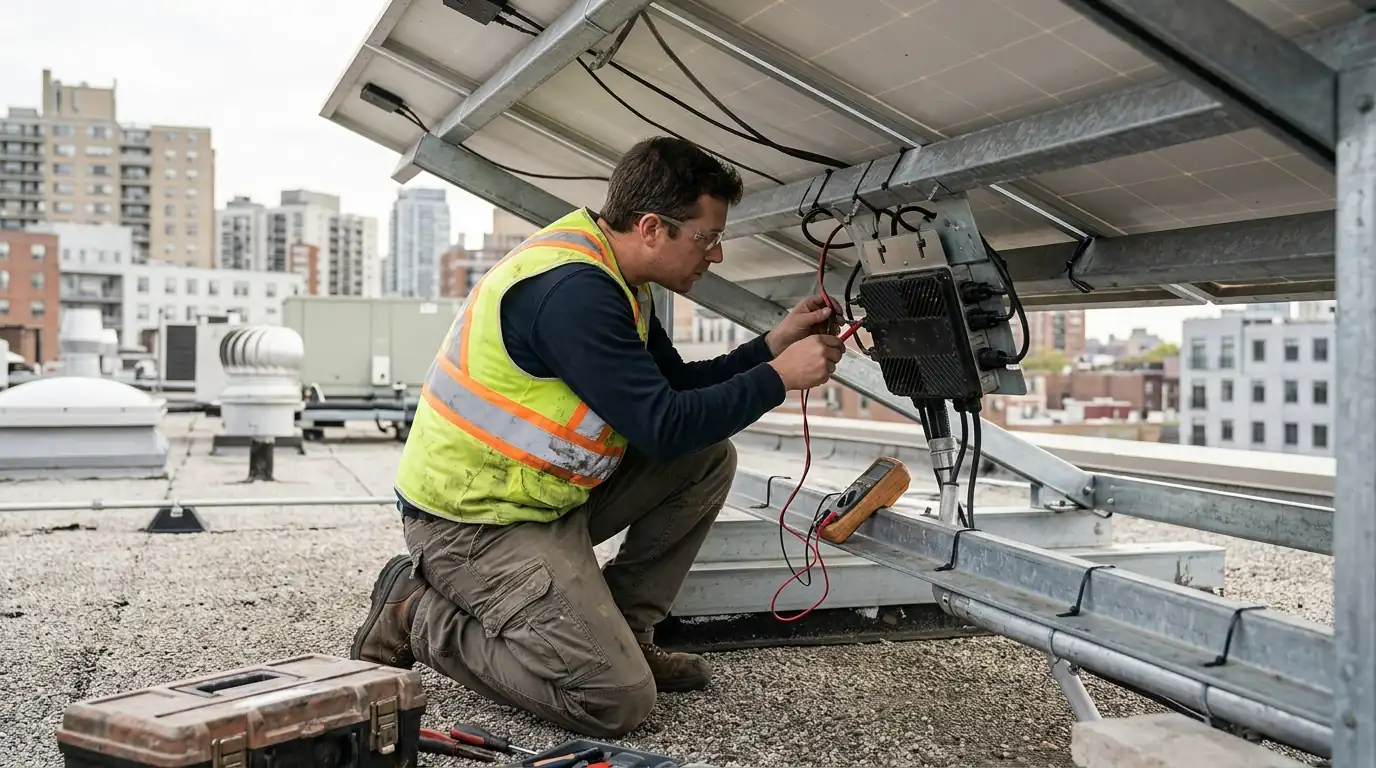
A roof leak under solar panels in Washington, DC usually comes from a failed attachment seal, a conduit penetration or membrane damage under a rack, and finding it means lifting the panels in the way. We trace the water to its source, repair the flashing or membrane with roof-compatible materials, and reinstall and test the affected panels.
What the job is
How we track down and fix solar-related leaks
Water travels before it shows up, so the stain on the ceiling is rarely directly under the leak. We start inside, mapping the stain against the array above, then go to the roof and inspect every attachment, conduit entry and the membrane in that area. Where needed, we water-test sections of the roof to confirm the source.
Repairs use materials that suit the roof: new flashing and sealant on shingle roofs, matching membrane patches and flashing on flat roofs. We lift only the panels we need to reach the source and reinstall and test them afterward.
What you might notice
Signs of a leak around solar mounts
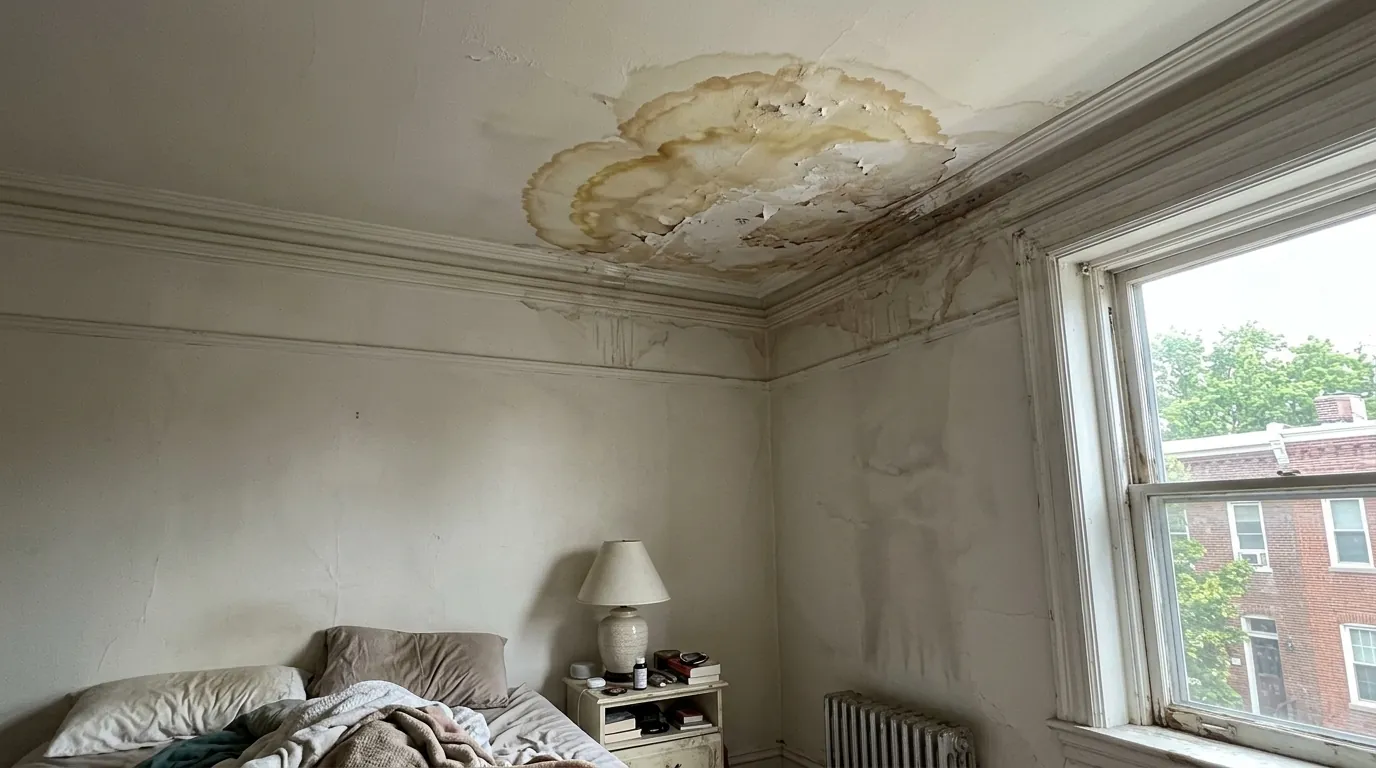
Ceiling stain under the array
A brown ring or bubbling paint on the top floor ceiling.
Drips after heavy rain
Water appearing only in storms, often near a wall or light fixture.
Damp attic or roof deck
Wet insulation or dark sheathing under the array.
Ponding around rack feet
Water sitting around ballast or anchors on a flat roof.
Cracked shingles near mounts
Broken shingles or lifted flashing around attachments.
Step by step
How a leak repair runs
Call with photos
Stain location, when it leaks and any photos of the roof.
Inside mapping
We match the stain to the array layout above.
Roof inspection
Attachments, conduit entries and membrane checked.
Lift and repair
Only the necessary panels lifted; source repaired properly.
Reinstall and test
Panels reset, strings tested and the system restarted.
Water check
Repaired area tested where practical before we leave.
Inside this job
Leaking attachments on pitched roofs
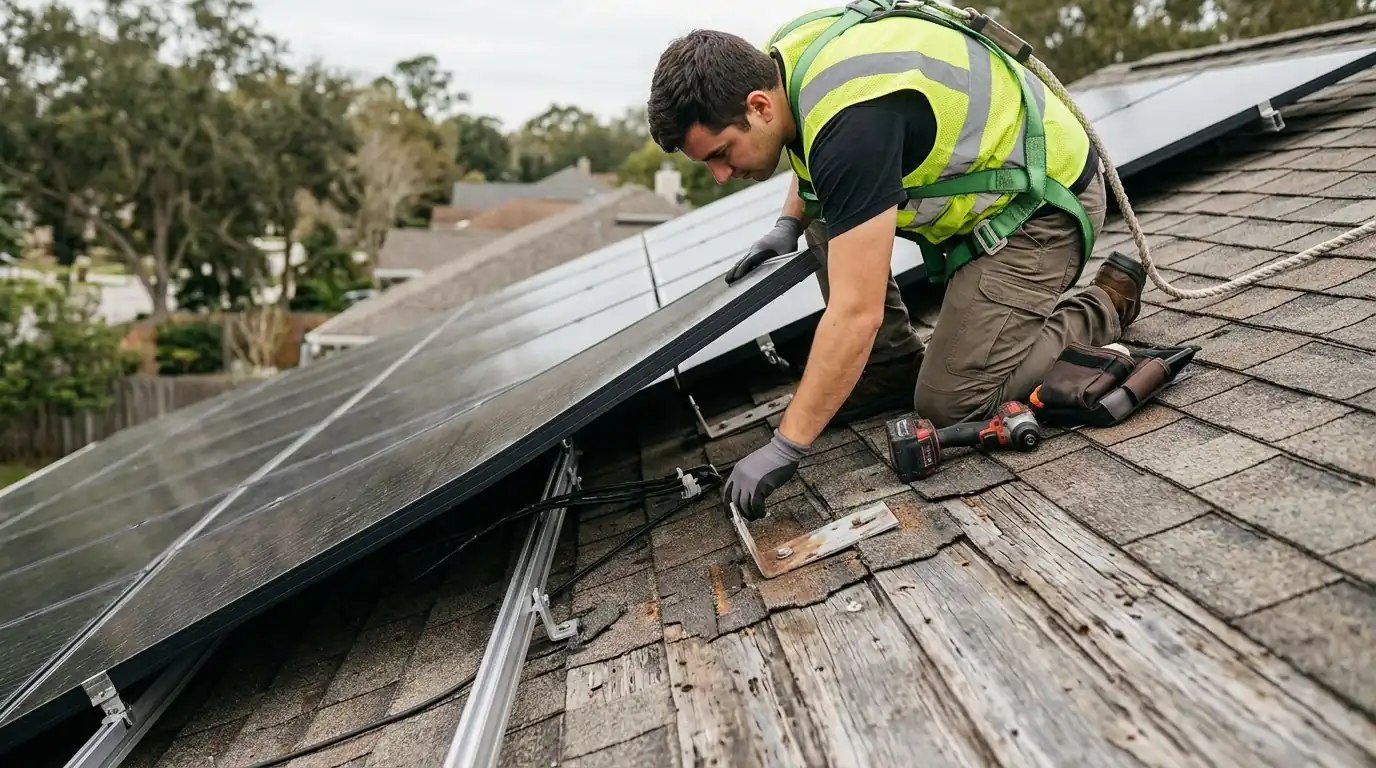
On shingle roofs, attachments that were sealed with caulk alone, or flashings that slipped during installation, are the usual culprits. Over time sealant cracks and water follows the lag bolt into the deck. We remove the affected attachments, repair any rotted sheathing, and reinstall them with proper flashing slid under the shingle course above, which sheds water rather than relying on sealant.
Membrane damage under ballast
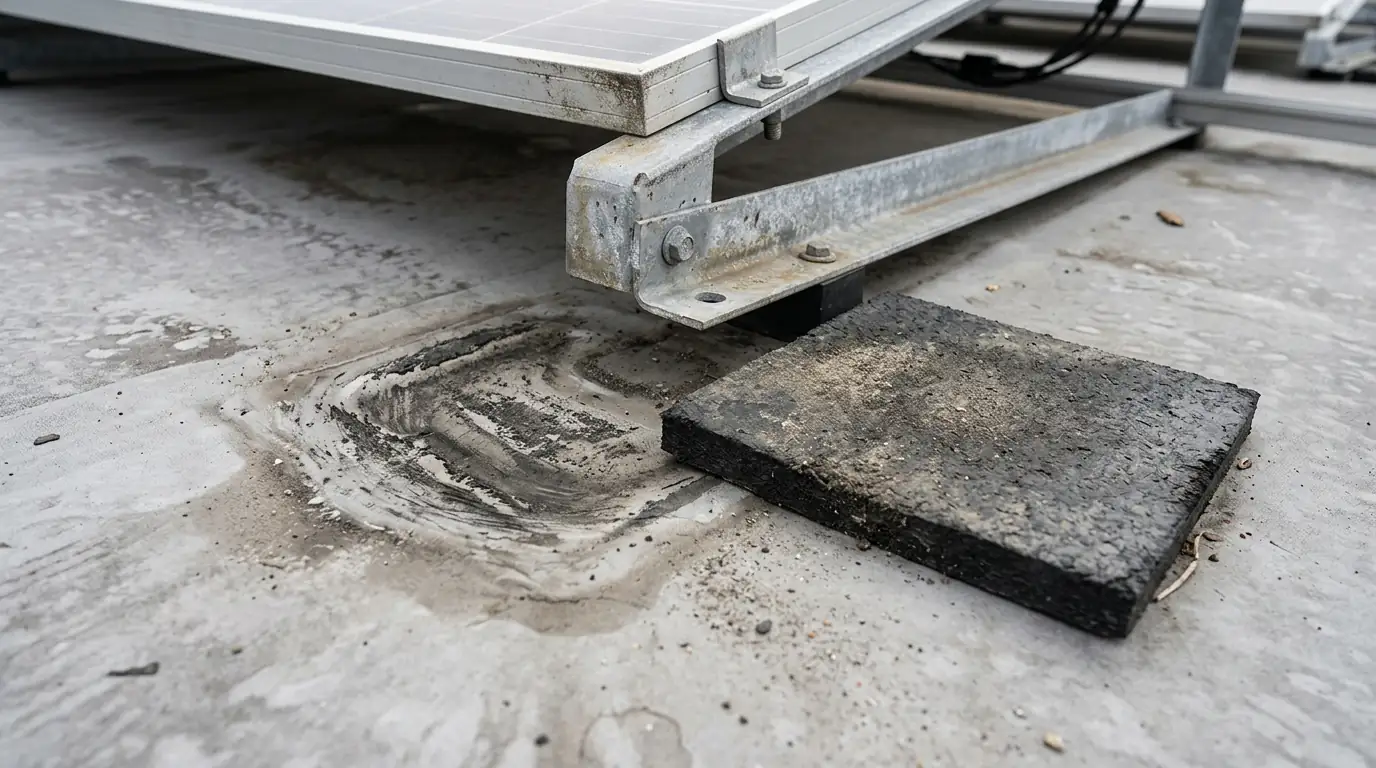
On flat roofs, racks that were set without protection pads, ballast that shifted in the wind, or debris trapped under the rack can wear through the membrane. The damage is hidden under the array until water shows inside. We lift the affected section, patch the membrane with matching material, add protection pads and reset the rack and ballast.
Conduit penetrations
Conduit has to get from the roof to the inverter, and where it goes through the roof is a common leak point. Penetrations without a proper boot, or boots that have cracked in the sun, let water run down the conduit into the house. We replace the boot with a flashed fitting suited to the roof, or reroute the conduit over the edge where that is the cleaner fix.
Do it yourself or call
What to do until we arrive
| Task | Safe for an owner | Needs our crew |
|---|---|---|
| Catch the drip and move belongings | Yes, protect what is below | Finding the source on the roof |
| Photograph the stain and note when it leaks | Yes, it helps us trace it | Lifting panels or opening flashing |
| Shut the system off if water reaches electrical | Yes, with the labeled shutdown switch | Any wet electrical equipment |
| Apply sealant on the roof | No; it often traps water and voids warranties | The roof repair itself |
Time on site
How long a leak repair takes
Finding the leak can take longer than fixing it, especially when the stain is far from the source. Most repairs are done in one visit once the source is confirmed.
Where rotted sheathing or a large membrane area needs replacing, the work may take longer and the affected panels stay off until the roof is sound. We keep the rest of the system running where it is safe to.
Washington conditions
Leaks on DC rowhouses and older roofs
On Washington's flat rowhouse roofs, most solar leaks trace to the membrane under the rack rather than to the panels themselves: a rack set without pads, ballast that shifted, or a membrane that aged out under an array installed on an old roof. On pitched roofs in the city and nearby suburbs, it is usually an attachment that leaned on sealant instead of flashing. Either way the cure is the same: find the source, repair the roof properly, then reset the panels.
What moves the price
What decides the cost of a leak repair
- Finding the sourceLeaks far from the stain take longer to trace.
- Panels to liftMore panels in the way means more removal and reinstallation.
- Roof damageRotted sheathing or a large membrane repair adds materials and time.
- Who installed itWorkmanship warranties from the original installer may apply.
Straight answers
Roof Leak Repair Around Solar Mounts questions we hear in DC
The panels do not, but poorly flashed attachments, conduit entries or damaged membrane under the rack can. Proper flashing prevents most of them.
Usually not. We lift only the panels over the source, then reinstall and test them.
For leaks under an array, a solar crew that also handles the roof repair avoids two companies working around each other's equipment.
If the installer's workmanship warranty is still in force, possibly. We document the cause so you can file a claim.
Yes. We repair leaks on systems from any installer.
It is not a good idea. Surface sealant often traps water and does not fix a flashing problem.
Related work
Jobs that often come up alongside this one
Solar Panel Repair
Cracked glass, hot spots and wiring faults on the array.
See this job about Solar Panel RepairSolar Inverter Repair & Replacement
String and hybrid inverters with faults or no output.
See this job about Solar Inverter Repair & ReplacementMicroinverter & Optimizer Replacement
Swapping failed electronics under individual panels.
See this job about Microinverter & Optimizer ReplacementLow Solar Production Diagnostics
Finding out why production dropped or monitoring went dark.
See this job about Low Solar Production Diagnostics