Short answer
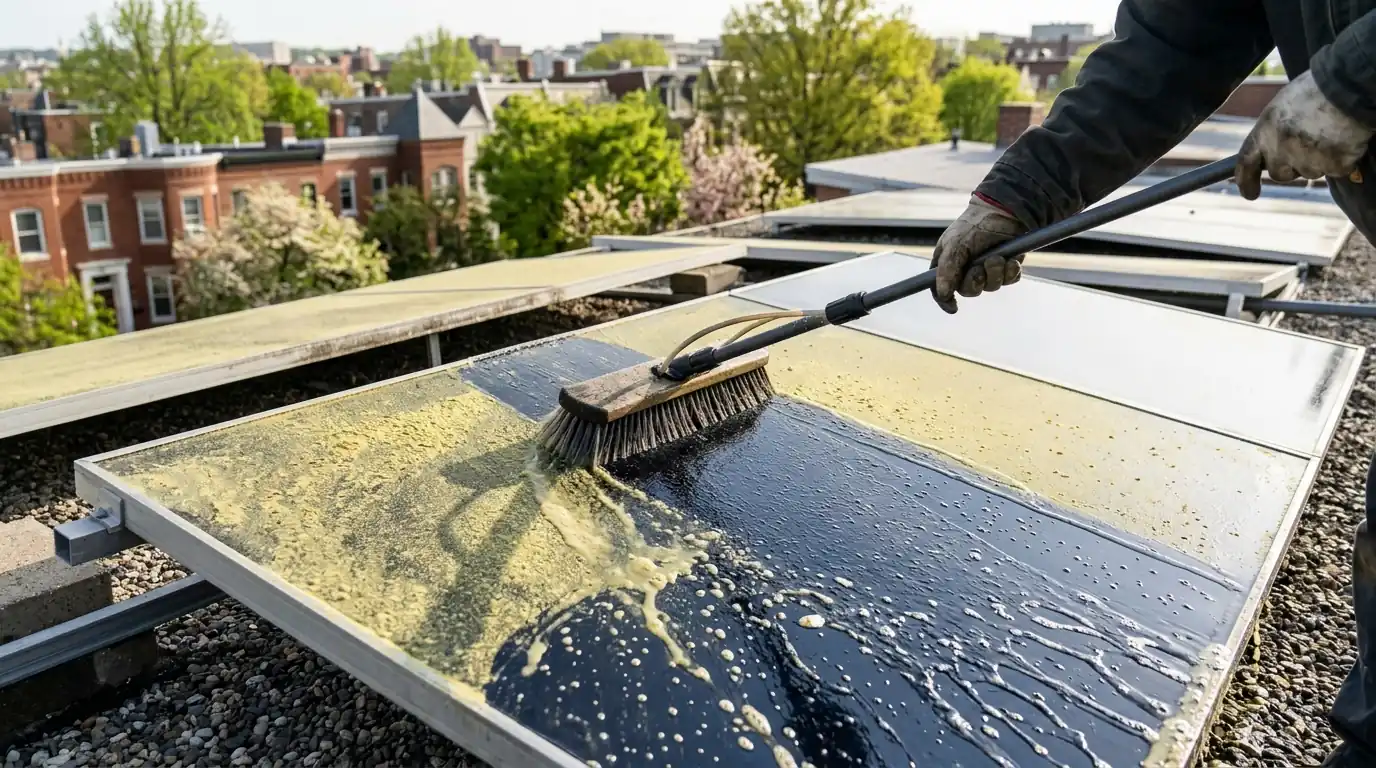
A solar maintenance inspection in Washington, DC checks the electrical connections, racking and attachments, the roof around the array, the inverter and monitoring, and compares production with what the weather should have delivered. It takes a few hours, ends in a written report, and is the cheapest way to keep a system earning credits.
What the job is
What a yearly inspection looks at
We start with the numbers: monitoring history, inverter logs and production against the weather. Then the roof: panels for cracks and hot spots, racking and attachments for loose hardware or rust, the membrane or shingles around mounts, wiring for chafing and connectors for heat damage.
Inside, we check the inverter, disconnects and the main panel connection, and confirm the monitoring is reporting. Findings go into a report with photos, ranked by urgency, with repairs quoted separately.
Inside this job
Electrical and torque checks
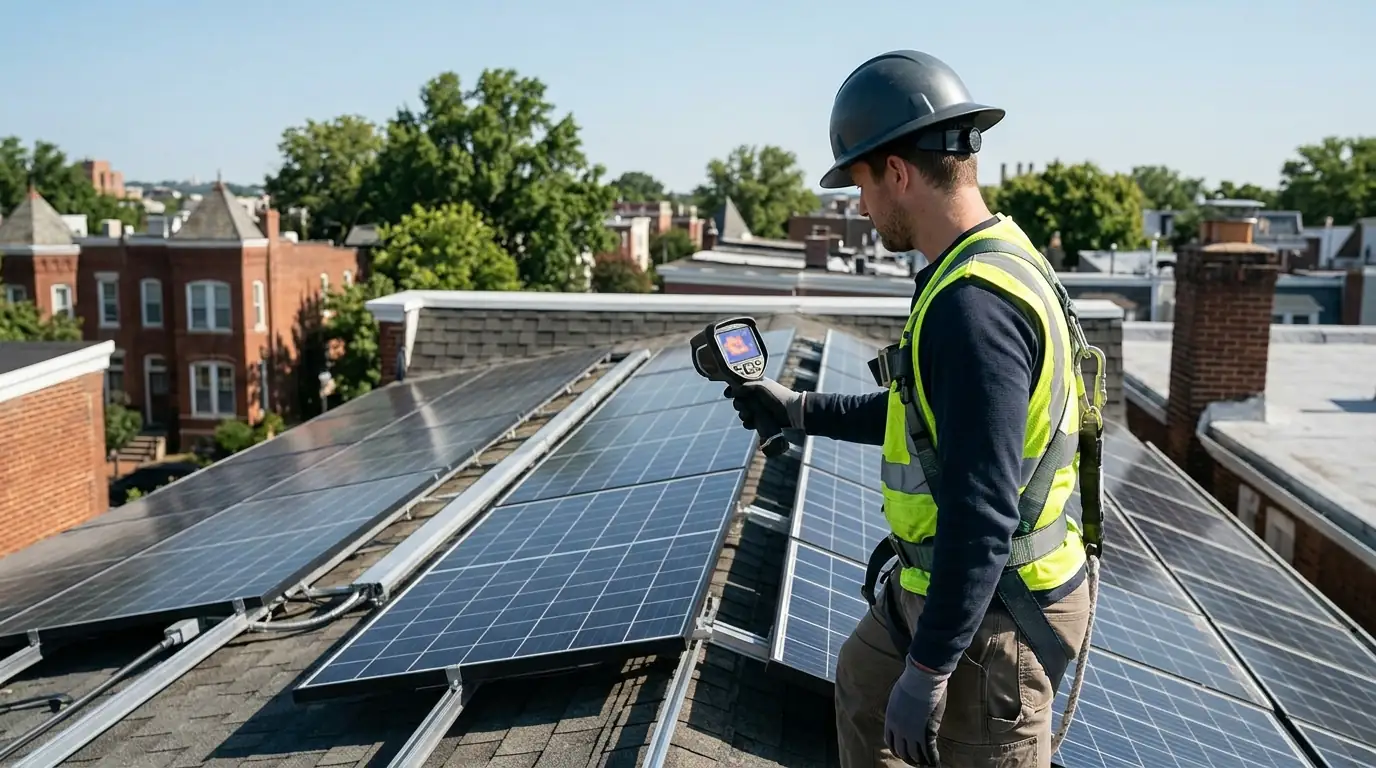
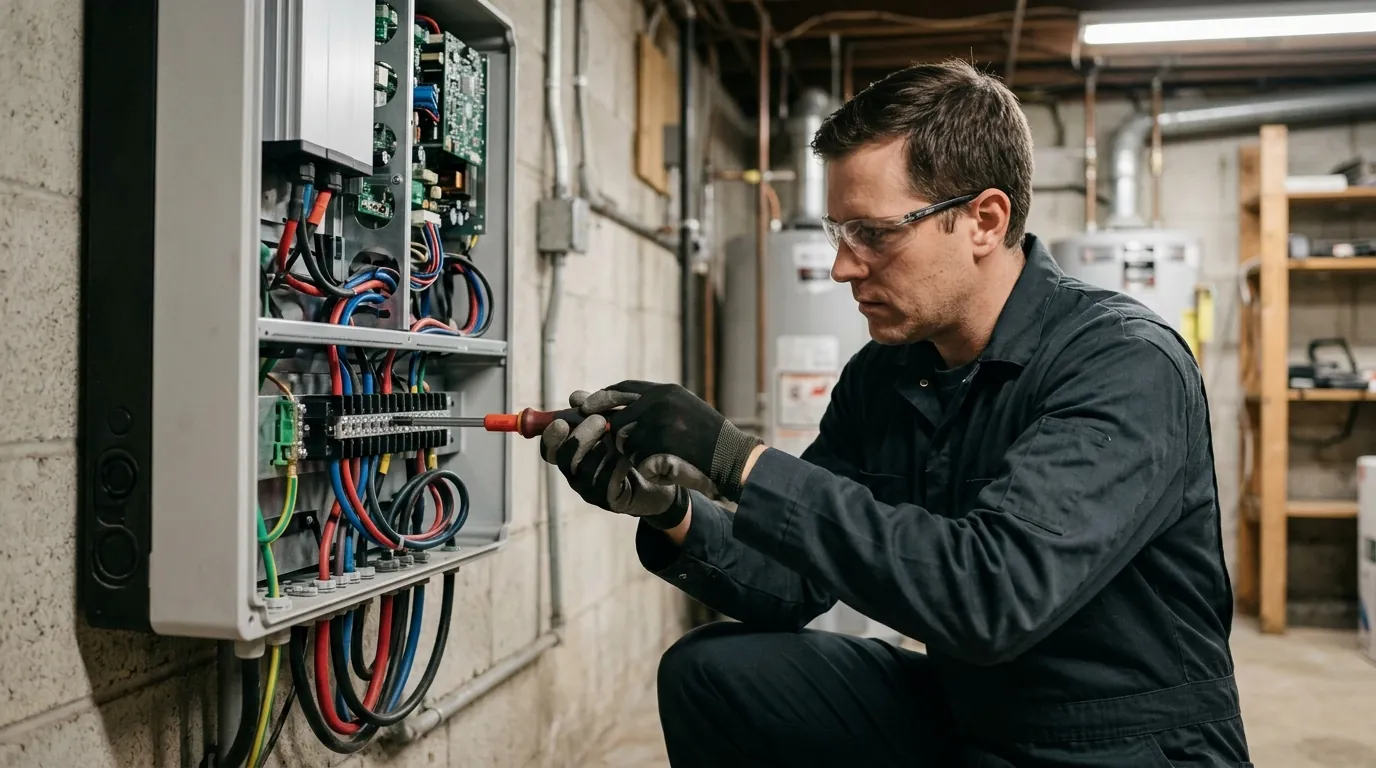
Heat cycles expand and contract every connection on a solar system daily. Over years, terminal screws and connectors can loosen, and a loose connection runs hot. We check torque on accessible terminals, look for discolored connectors and use a thermal camera where it helps. Ground connections get special attention because they protect against shock and lightning.
Roof and racking inspection
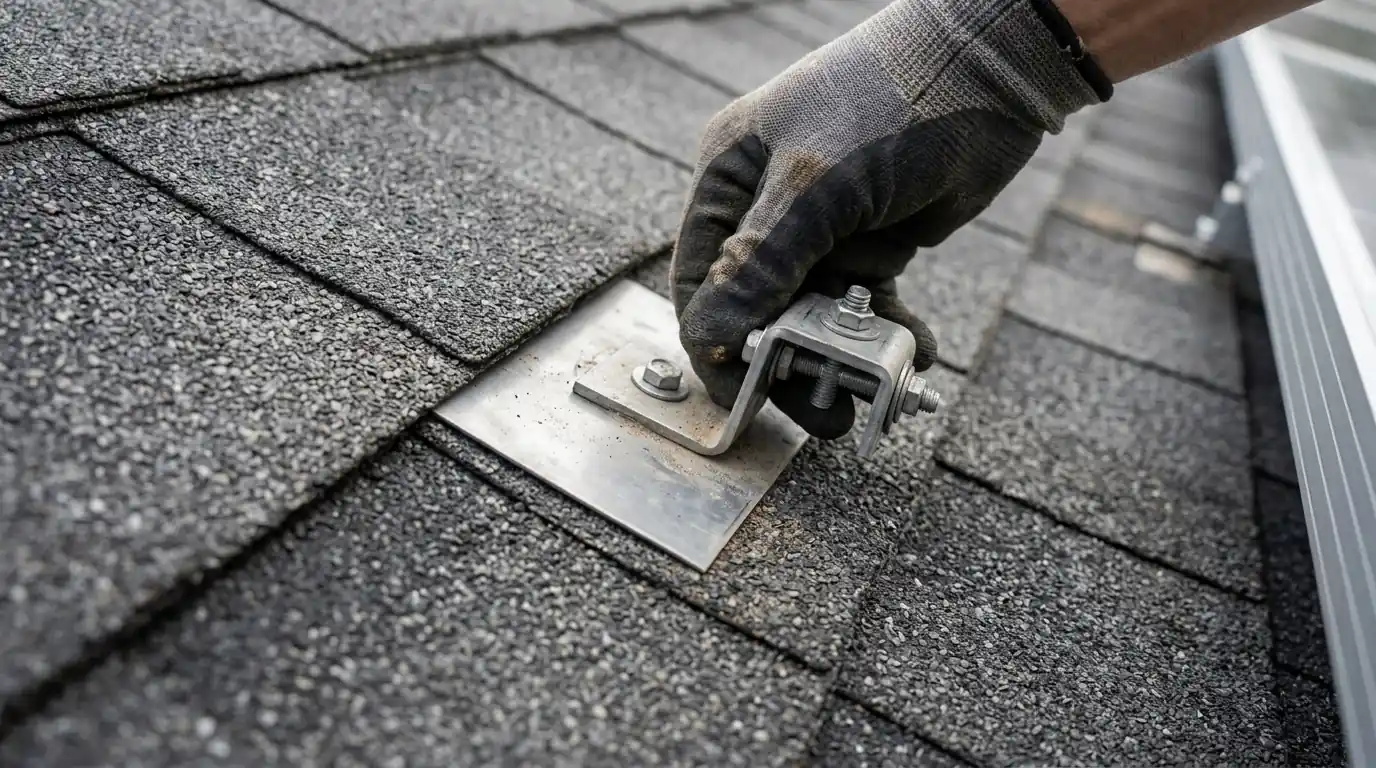
On pitched roofs we check that flashings are seated, sealants are intact and no attachment has worked loose. On flat roofs we check that ballast has not shifted, protection pads are in place and the membrane under the rack is sound. Racks are checked for corrosion and loose clamps, especially after a windy season.
Production review
Production is compared month by month against what the weather should have delivered, and panel by panel where the monitoring allows. A slow slide points to soiling, new shade or a weakening string; a sudden step points to a failed part. We flag anything that needs a closer look and check that production is reaching the meter that feeds SREC reporting.
What is included
What a maintenance visit includes
- Production review against the weather
- Panel inspection for cracks, hot spots and soiling
- Racking, attachment and ballast check
- Roof and flashing around every mount
- Wiring, connector and conduit inspection
- Inverter, disconnect and panel connection check
- Monitoring check and written report
Washington conditions
Why upkeep matters more in DC now
With the federal 25D credit for homeowner-owned systems gone since January 1, 2026, the value of a DC system rests on what it produces year after year rather than on a tax break at the start. That shifts the focus to keeping output high for the long run. A yearly visit that catches a loose connection, a failing string or a monitoring link that dropped is how Washington owners protect the production their SRECs and net metering depend on.
What moves the price
What sets the price of an inspection
- System sizeMore panels and strings take longer to check.
- Roof accessSteep or tall roofs need more setup.
- Add-onsCleaning, critter guard or repairs are quoted separately.
- Monitoring accessSharing your data ahead shortens the visit.
Step by step
How a maintenance visit runs
Book a visit
Tell us the system size and share monitoring access if you can.
Data review
Production and inverter history checked before arriving.
Roof inspection
Panels, racking, attachments and roof checked.
Electrical checks
Connections, inverter, disconnects and grounding tested.
Report
Findings ranked by urgency, with photos.
Repairs on approval
Fixes quoted and scheduled only if you want them.
Before you book
Pair the inspection with anything else that is due
Cleaning, critter guard or a monitoring fix can be done on the same visit, which saves a second trip up to the roof.
Call (202) 978-0232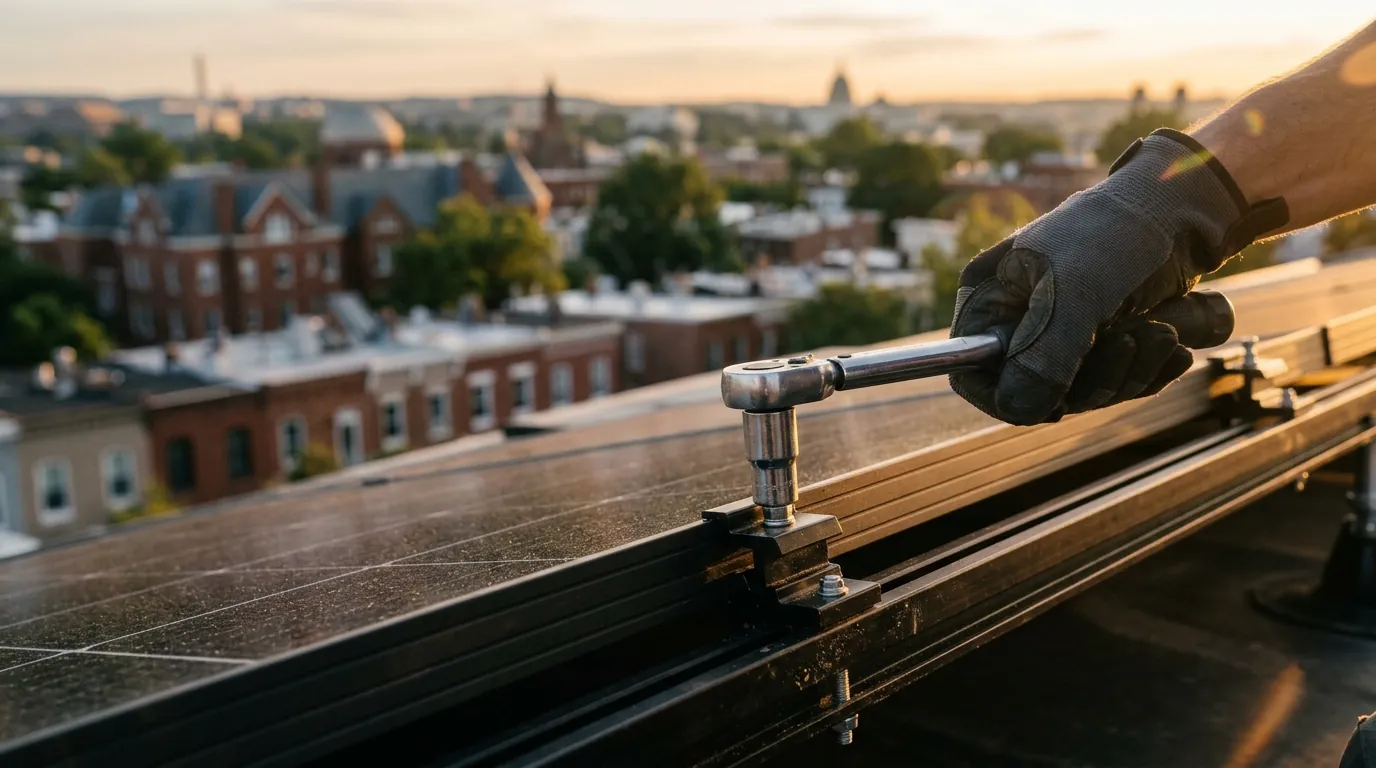
What you might notice
Signs it is time for an inspection
It has been a few years
No one has looked at the system since it was installed.
Production slipped
Output trending down year over year in similar weather.
A big storm passed
High winds, hail or falling branches near the array.
Birds or squirrels around the roof
Nesting or chewing near the panels.
Selling the house
Buyers and their inspectors will ask about the system.
Straight answers
Solar Maintenance & Annual Inspection questions we hear in DC
Once a year is a sensible rhythm, plus after major storms. Newer systems with good monitoring can sometimes go longer.
We check for soiling and recommend cleaning only when it is costing output. Cleaning is quoted separately.
Yes, including systems whose installer has closed.
A written report with photos, findings ranked by urgency and quotes for any repairs.
Often. Loose connections, early hot spots and failing attachments rarely show in production until they get worse.
Usually briefly, to check the inverter, disconnects and the main panel connection.
Related work
Jobs that often come up alongside this one
Solar Panel Cleaning
Washing off pollen, soot and droppings safely.
See this job about Solar Panel CleaningCritter Guard & Pigeon Proofing
Mesh and skirts that keep pigeons out from under panels.
See this job about Critter Guard & Pigeon ProofingSolar Inspection for Home Sales
A report on the system for buyers and sellers.
See this job about Solar Inspection for Home SalesDC SREC Registration
Getting a DC system certified so it earns SRECs.
See this job about DC SREC Registration