Short answer
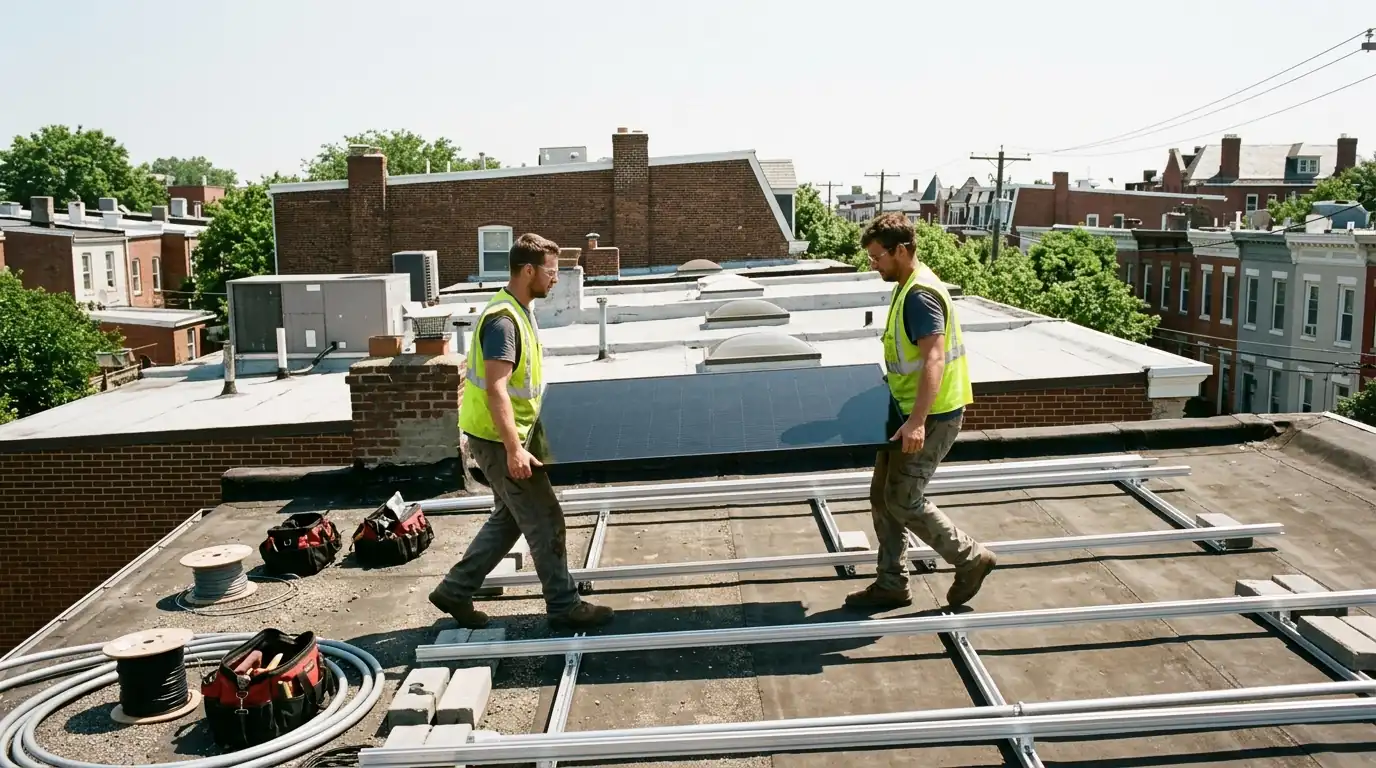
Solar on a house in a Washington, DC historic district needs Historic Preservation Office approval on top of the building permit and Pepco interconnection. Layouts that keep panels out of street view, on rear slopes or behind a parapet, usually move through review fastest, and visible panels can still be approved when they follow the city's sustainability guideline.
What the job is
What changes on a historic house
The electrical system is the same as anywhere else. What changes is the paperwork and the placement. The review looks at whether panels can be seen from the street or a public alley, whether the roofline and visible features stay intact, and whether equipment such as conduit and inverters lands on the facade.
That shapes every choice on a historic job. We favor rear slopes and flat roofs behind parapets, set panels back from edges and ridges, run conduit inside or on rear walls, and pick panels that read as dark and uniform from below.
What moves the price
What changes the price on a historic job
- Panel choiceAll-black modules and skirts cost more than standard panels.
- Concealed wiringRunning conduit inside or along rear walls takes longer than surface runs.
- Review workSightline studies, drawings and responses to comments add design time.
- Roof layoutUsing only rear or hidden roof areas can mean a smaller system or more complex racking.
Inside this job
Low visibility layouts
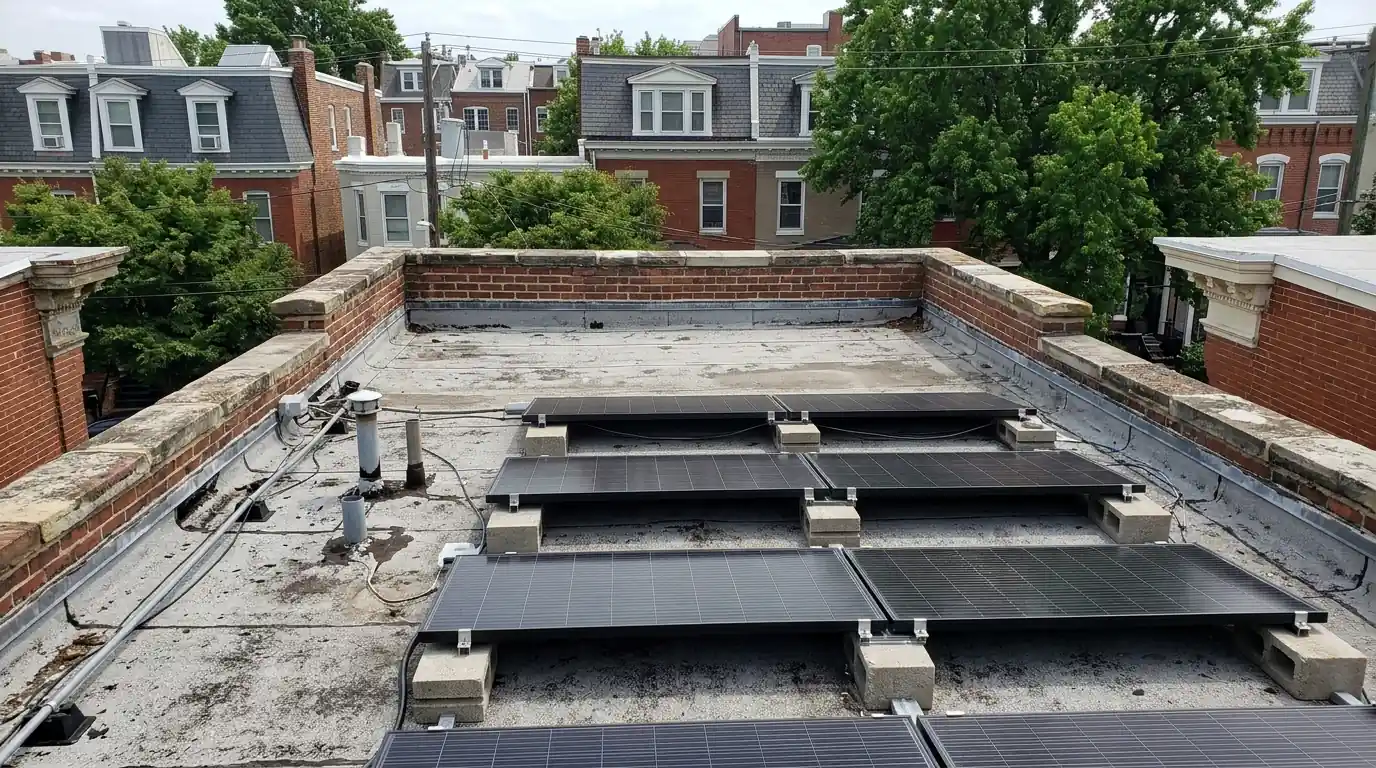
On a flat rowhouse roof the usual answer is a rack set low and back from the front parapet, so it cannot be seen from the sidewalk across the street. On pitched roofs we use the rear slope first and keep panels away from the ridge and edges. We often take sightline photos from the street to show reviewers what is visible, and adjust the layout before filing rather than after a comment comes back.
All black panels and skirts
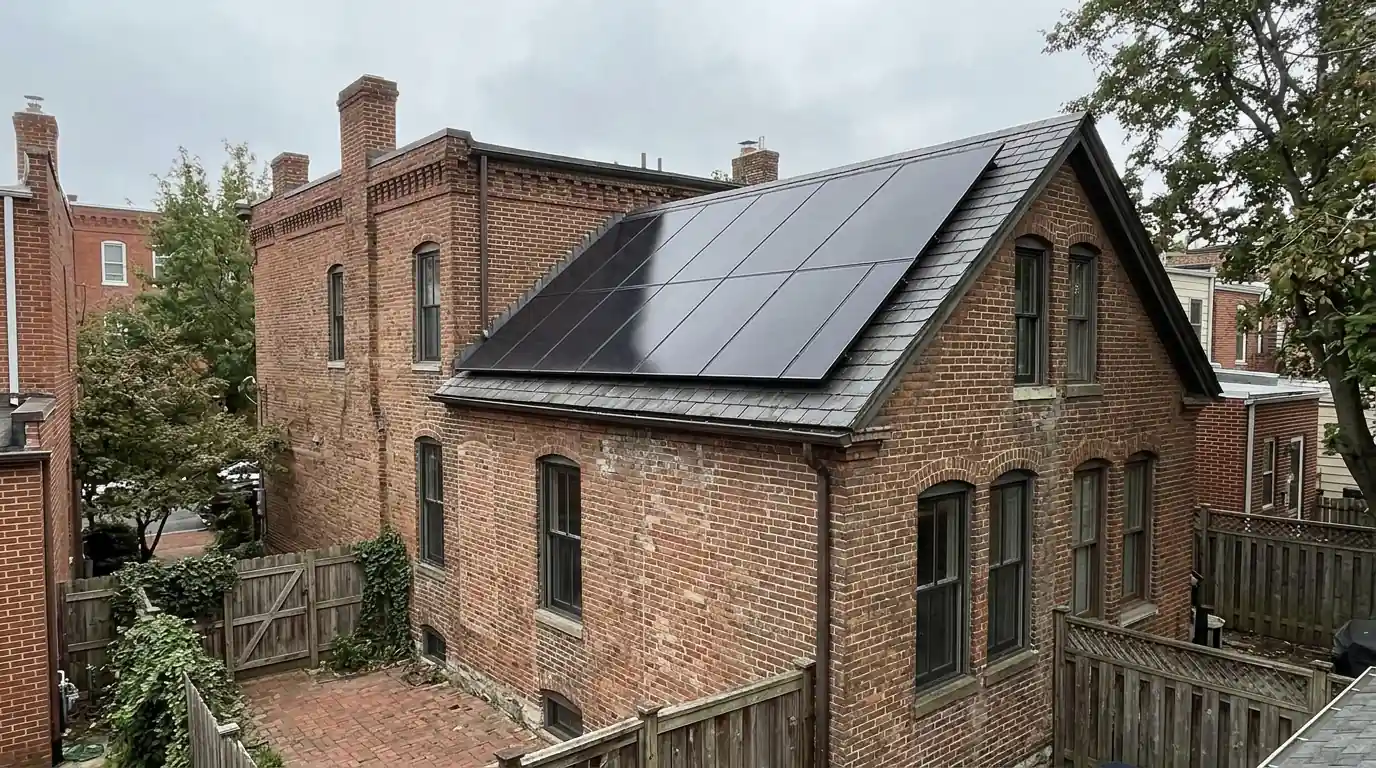
Where some of the array will be seen, appearance matters. All-black modules with black frames and backsheets read as one dark plane instead of a grid of silver lines, and front skirts hide the racking edge. Flush mounting on a pitched roof keeps the profile low. These choices cost a little more and produce about the same, which is why we suggest them on visible historic roofs.
The HPO review package
A review packet usually includes a site plan, the roof layout, photos of the house and the street, sightline studies, product sheets for the panels and racking, and notes on where conduit and equipment go. We assemble it with the building permit application. If the house is in Georgetown, the project goes to the Old Georgetown Board rather than the preservation board, and we plan for that path.
Washington conditions
How review plays out across DC's districts
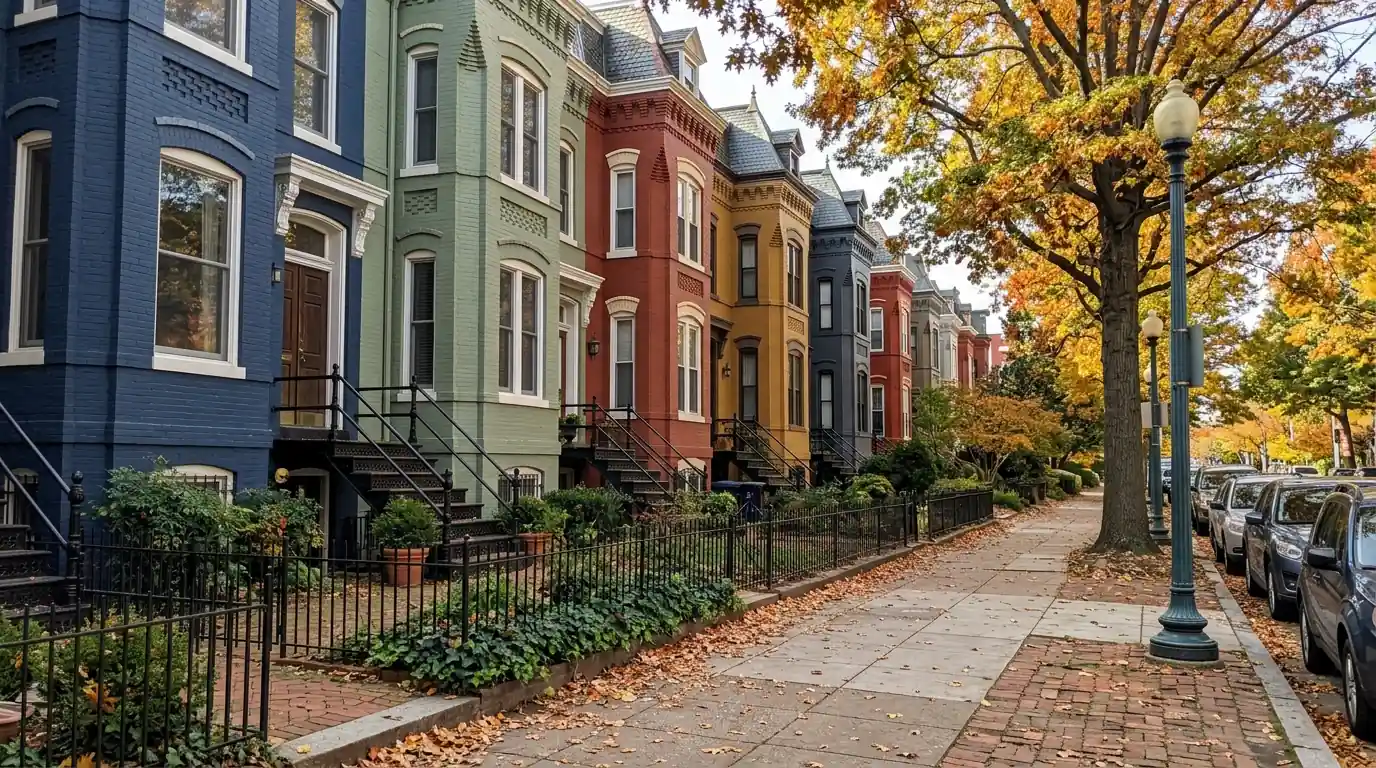
Most of our historic jobs are rowhouses on Capitol Hill and houses in Kalorama, where the Historic Preservation Office reviews solar alongside the building permit; Georgetown projects go to the Old Georgetown Board instead. The preservation office says thousands of buildings in DC's historic districts already carry solar, and that panels visible from the street can be approved when they follow the sustainability guideline, so the question is almost always how, not whether.
Step by step
How a historic district install runs
Address check
We confirm whether the house is in a historic district and which body reviews it.
Sightline survey
Photos from the street and alley show what a reviewer will see.
Layout and products
A low visibility layout with panels, skirts and conduit routes chosen.
Review and permit
The review package goes in with the building permit.
Install
Racking, panels and concealed wiring, built to the approved drawings.
Inspection and startup
Inspection, Pepco approval and SREC certification.
What is included
What goes into a historic district solar job
- Historic district check for the address
- Street and alley sightline photos
- Low visibility layout and section drawings
- Product sheets for panels, skirts and racking
- Review submission alongside the building permit
- Responses to any reviewer comments
- Install, inspection and Pepco approval
Before you book
Not sure if your house is in a historic district?
Call with the address. We check it against the city's historic district map before anything is drawn, so you know which path you are on from the start.
Call (202) 978-0232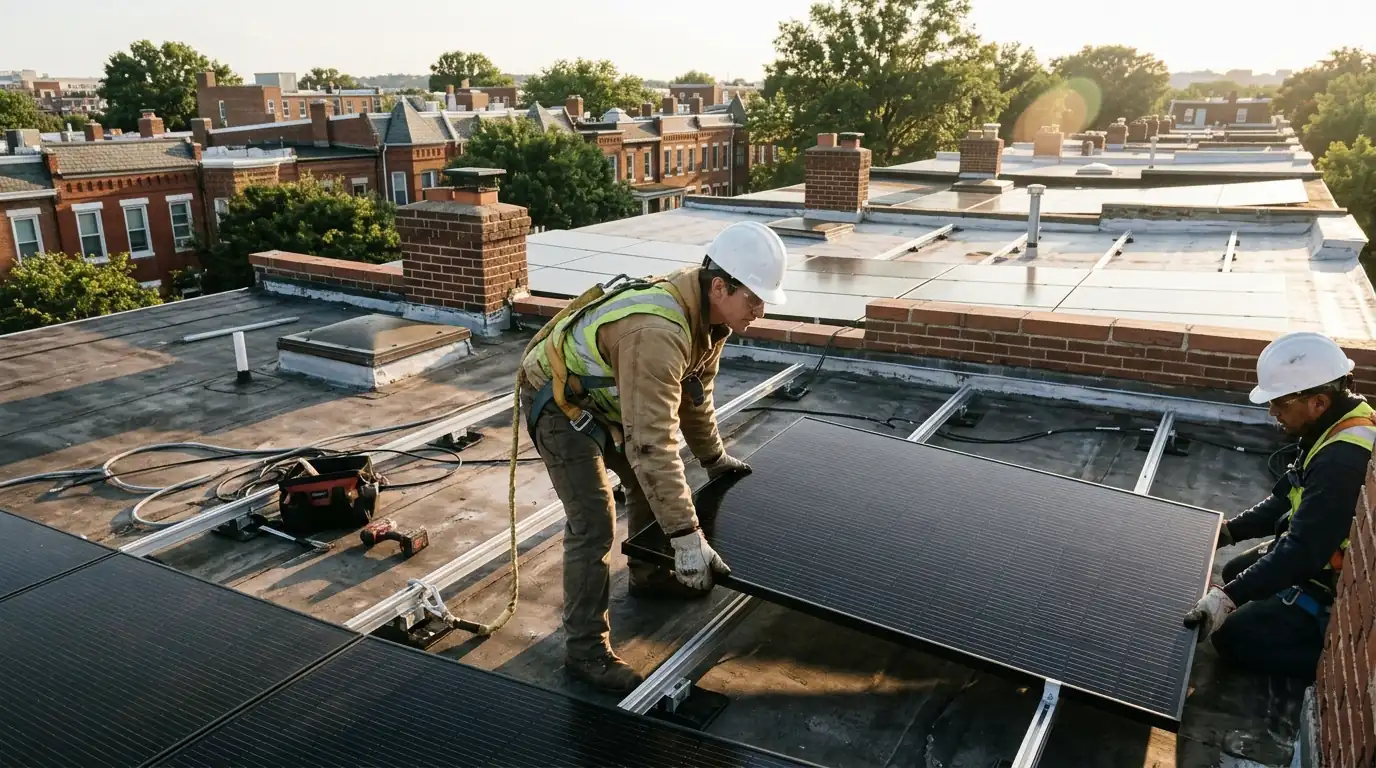
Time on site
How long the review adds
Preservation review adds a step before the building permit is issued, so a historic job runs longer on paper than the same system elsewhere. Simple, out of sight layouts often clear at the staff level; visible arrays and Georgetown projects can take longer and may come back with comments.
Install day itself is the same. The difference is front-loaded, which is why we file the review package early and keep you posted on where it stands.
Straight answers
Historic District Solar questions we hear in DC
Usually, yes. DC's Historic Preservation Office reports thousands of solar installs in historic districts, and layouts kept out of street view tend to move fastest.
Rear slopes and hidden flat roofs are the easiest to approve. Visible panels are not banned, but they get more scrutiny and may need design changes.
Georgetown projects go to the Old Georgetown Board rather than the Historic Preservation Review Board, which adds its own steps.
Yes. Equipment and conduit on a street-facing wall are a common reason for comments, so we route them inside or on rear walls.
The guideline encourages materials that match the roof, so they can help on visible slopes. They cost more and produce less than panels, so we weigh both options with you.
No. Once installed and approved, a historic district system earns DC SRECs and net metering credit like any other DC system.
Related work
Jobs that often come up alongside this one
Residential Solar Panel Installation
Pitched roof systems, from layout and permits to Pepco sign off.
See this job about Residential Solar Panel InstallationRowhouse & Flat Roof Solar
Tilted racks behind the parapet on DC's flat rowhouse roofs.
See this job about Rowhouse & Flat Roof SolarRoof Deck Solar Canopies
Panels on a raised frame over a roof deck or patio.
See this job about Roof Deck Solar CanopiesGround-Mount Solar
Arrays on posts in the yard where the roof will not work.
See this job about Ground-Mount Solar