Short answer
An orphaned solar system in Washington, DC is one whose installer has closed or stopped responding. We take over service: diagnosing faults, filing warranty claims directly with the panel, inverter and battery manufacturers, moving monitoring access to you, and checking that the system is still certified and earning DC SRECs.
What the job is
What taking over a system involves
Most of the value in an orphaned system is still there. Manufacturer warranties on panels, inverters and batteries stay with the equipment, not with the installer, and many run for years. What goes missing is the company that knows how to file the claim, the login to the monitoring and the paper trail.
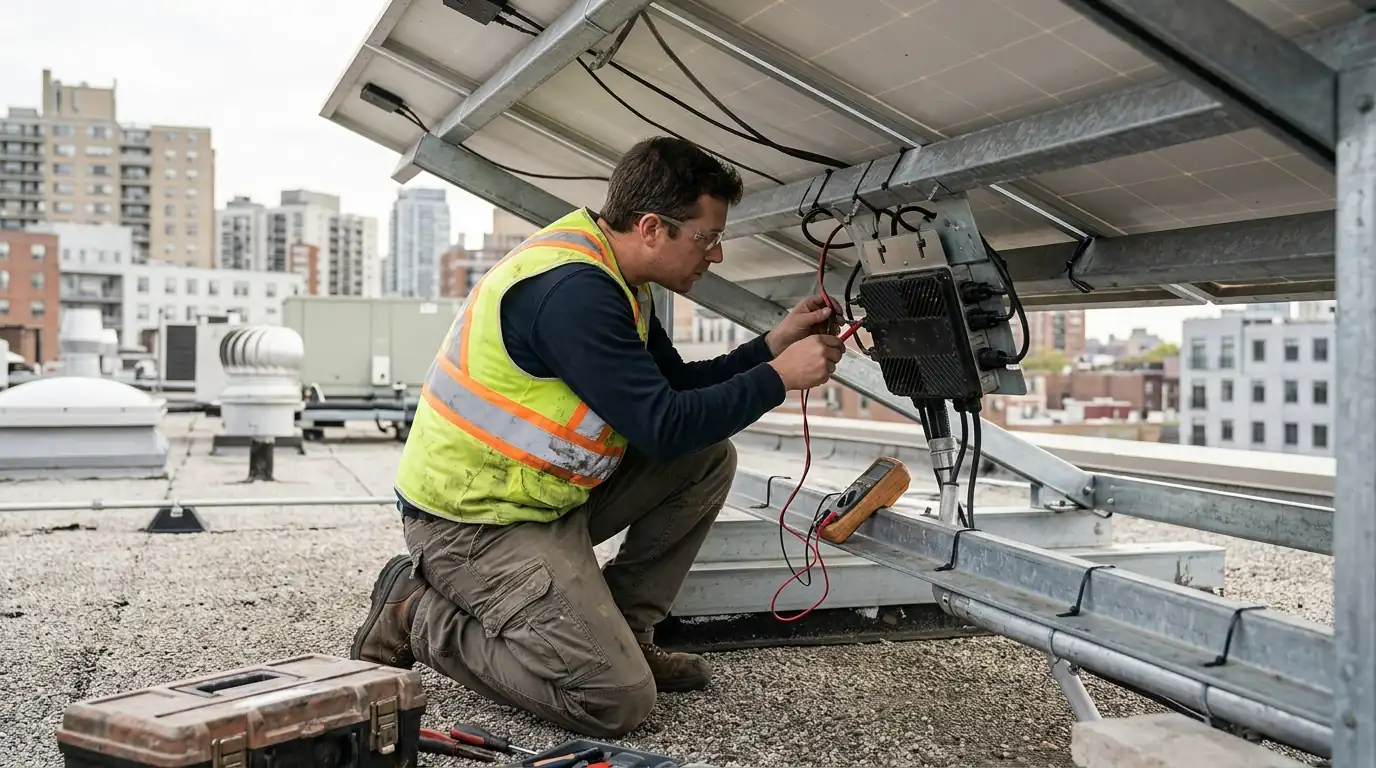
We start by rebuilding that trail: equipment models and serial numbers, the permit and interconnection records, monitoring accounts and the SREC certification. Then we test the system so any fault found can be claimed or repaired.
What moves the price
What drives the cost of a takeover
- What is brokenA system that only needs records and access costs far less than one with failed equipment.
- Warranty coverageParts under the maker's warranty are claimed; labor coverage depends on the brand.
- Missing recordsRebuilding lost permit and equipment files takes research time.
- Workmanship fixesProblems from the original install are repaired at normal rates.
2026 planning ranges
- String inverter replacement, installed$1,000 to $2,500 installedSource: greenlancer.com
- Microinverter replacement, per unit installed$150 to $350 per unit installedSource: greenlancer.com
Published market ranges, not our quote. Your price depends on the roof, the equipment and the permit path.
Inside this job
When the installer is out of business
When an installer closes, warranties on its own labor usually end with it, but the equipment warranties do not. We document the system, flag any workmanship problems such as loose wiring or poor flashing, and quote the repairs separately so you can see what falls under a manufacturer's warranty and what does not. If the system was leased or under a power purchase agreement, the financing company still owns it, so we contact them first.

Manufacturer warranty claims
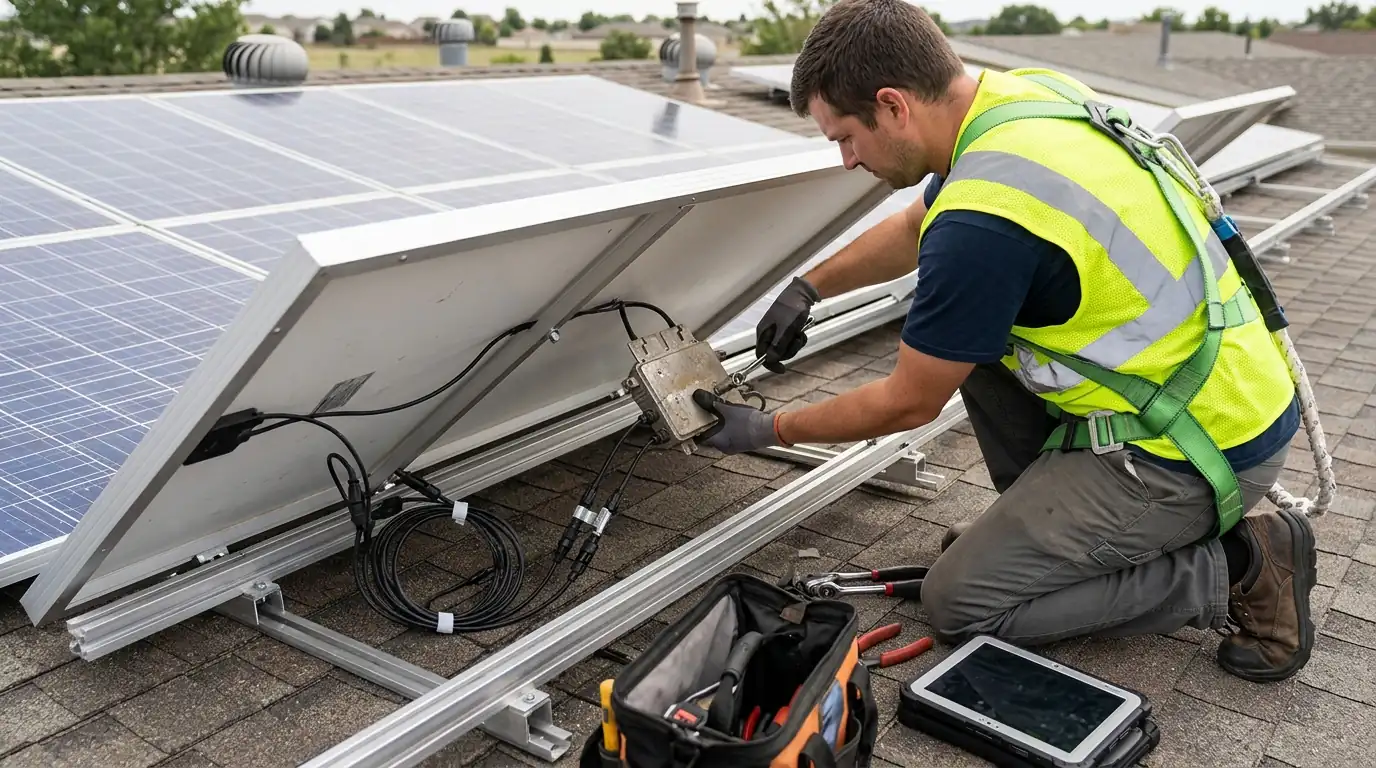
Panel, inverter, optimizer and battery makers each have their own claim process, and most expect a qualified installer to diagnose the fault and file it. We test the failed part, gather the serial numbers and data the manufacturer asks for, file the claim and install the replacement when it arrives. Labor coverage varies by brand; we tell you up front whether the claim covers our time.
Taking over monitoring and paperwork
Monitoring accounts set up under an installer's company can usually be transferred to the owner or to a new installer with the manufacturer's help. We also confirm the system is still certified for DC SRECs and that production is reaching the tracking account, and we gather the permit and interconnection records you will need when you sell the house.
Washington conditions
What an orphaned DC system can lose
In Washington the costly loss is often the credits, not the hardware. Only systems physically inside the District earn DC SRECs, and each credit can be sold for five years after it is generated, so a system whose registration lapsed when its installer closed may still have credits worth recovering. That is why we check the certification and the tracking account early in every takeover, before we touch a wrench.
Step by step
How a takeover runs
Call with what you know
Who installed it, roughly when, and what is going wrong.
Records search
We pull permits, interconnection files and equipment details.
System test
Panels, strings, inverters and batteries tested on site.
Claims and repairs
Warranty claims filed, and other repairs quoted separately.
Access and paperwork
Monitoring transferred and the SREC status confirmed.
Ongoing service
You have one company to call from here on.
What is included
What we take over
- Equipment list with models and serial numbers
- Full system test and fault report
- Manufacturer warranty claims filed and tracked
- Monitoring access moved to you
- SREC certification and tracking check
- Permit and interconnection records gathered
- A service plan for the years ahead
Before you book
Bring whatever the old installer left you
A contract, an invoice, a monitoring email or even photos of the inverter label give us a head start. If you have nothing at all, the equipment itself still tells us most of what we need.
Call (202) 978-0232
What you might notice
Signs your system has been orphaned
Calls and emails go nowhere
The installer's phone is disconnected or nobody responds.
Monitoring access lost
The app account was in the installer's name and you cannot log in.
A fault nobody will fix
An inverter error or dead panel with no one to file the claim.
SREC payments stopped
Credits quit arriving after the installer or its broker changed.
No paperwork on file
You never received the permit, warranty or interconnection documents.
Straight answers
Orphaned Solar System Service questions we hear in DC
The installer's own workmanship warranty usually ends with the company, but manufacturer warranties on the equipment stay valid. We file those claims for you.
Yes. Most of our takeover work is on systems from installers that have closed or moved on.
The financing company owns a leased system, so service usually goes through them. We help you reach them and can work on the system with their approval.
We contact the manufacturer to move the account to you, which usually needs the system serial numbers and proof of ownership.
We check the certification and the tracking account and tell you where the credits are going.
Rarely. Most orphaned systems need repairs, claims and paperwork, not replacement.
Related work
Jobs that often come up alongside this one
Solar Panel Repair
Cracked glass, hot spots and wiring faults on the array.
See this job about Solar Panel RepairSolar Inverter Repair & Replacement
String and hybrid inverters with faults or no output.
See this job about Solar Inverter Repair & ReplacementMicroinverter & Optimizer Replacement
Swapping failed electronics under individual panels.
See this job about Microinverter & Optimizer ReplacementLow Solar Production Diagnostics
Finding out why production dropped or monitoring went dark.
See this job about Low Solar Production Diagnostics