Short answer
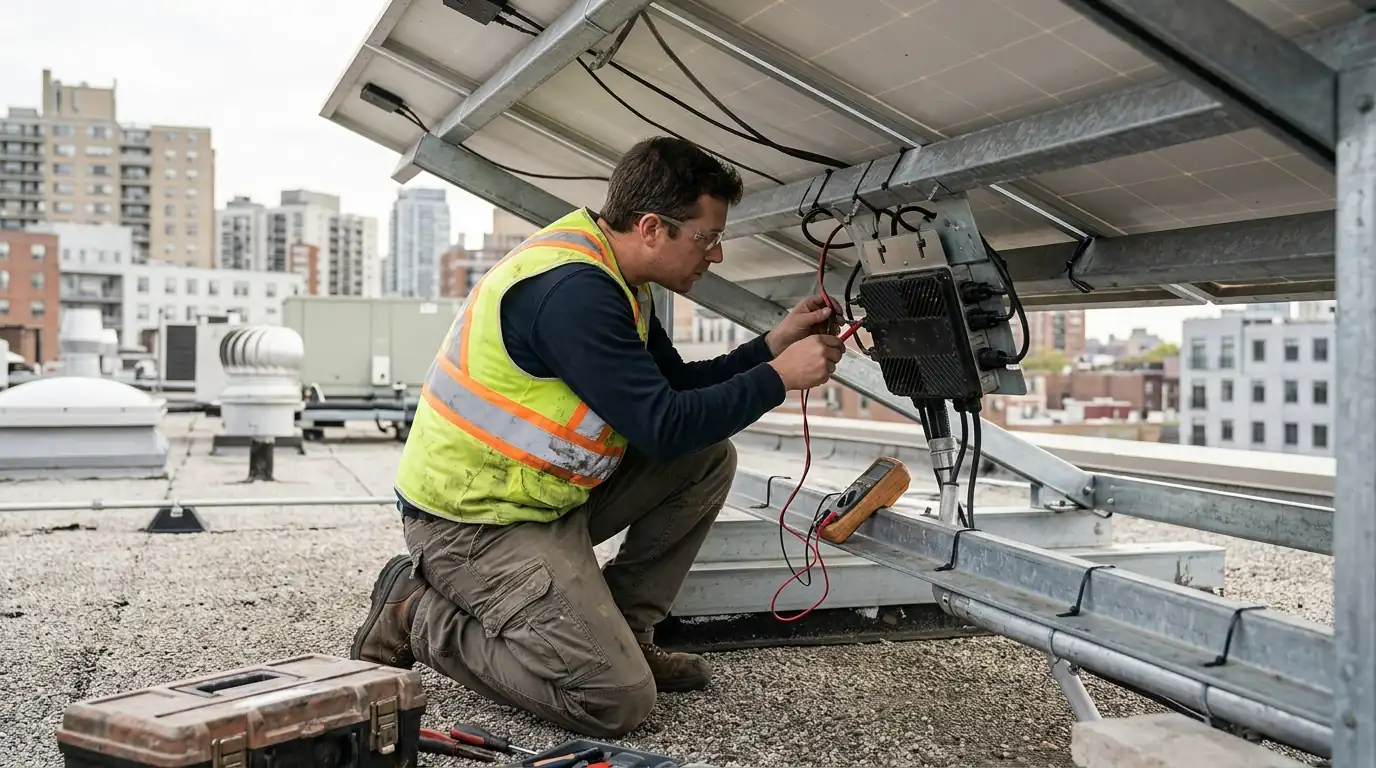
Replacing a failed microinverter or power optimizer in Washington, DC means lifting the affected panel, swapping the unit and updating the system's records. Out of warranty, a microinverter typically costs $150 to $350 per unit installed and an optimizer about $100 to $200, and many units are still covered by long manufacturer warranties.
What the job is
What panel-level electronics repair involves
Microinverters convert each panel's power to household AC right on the roof. Optimizers condition each panel's output and send it to a central string inverter. Either way, the device under one panel can fail while the rest keep working, which is exactly what panel-level monitoring is good at showing.
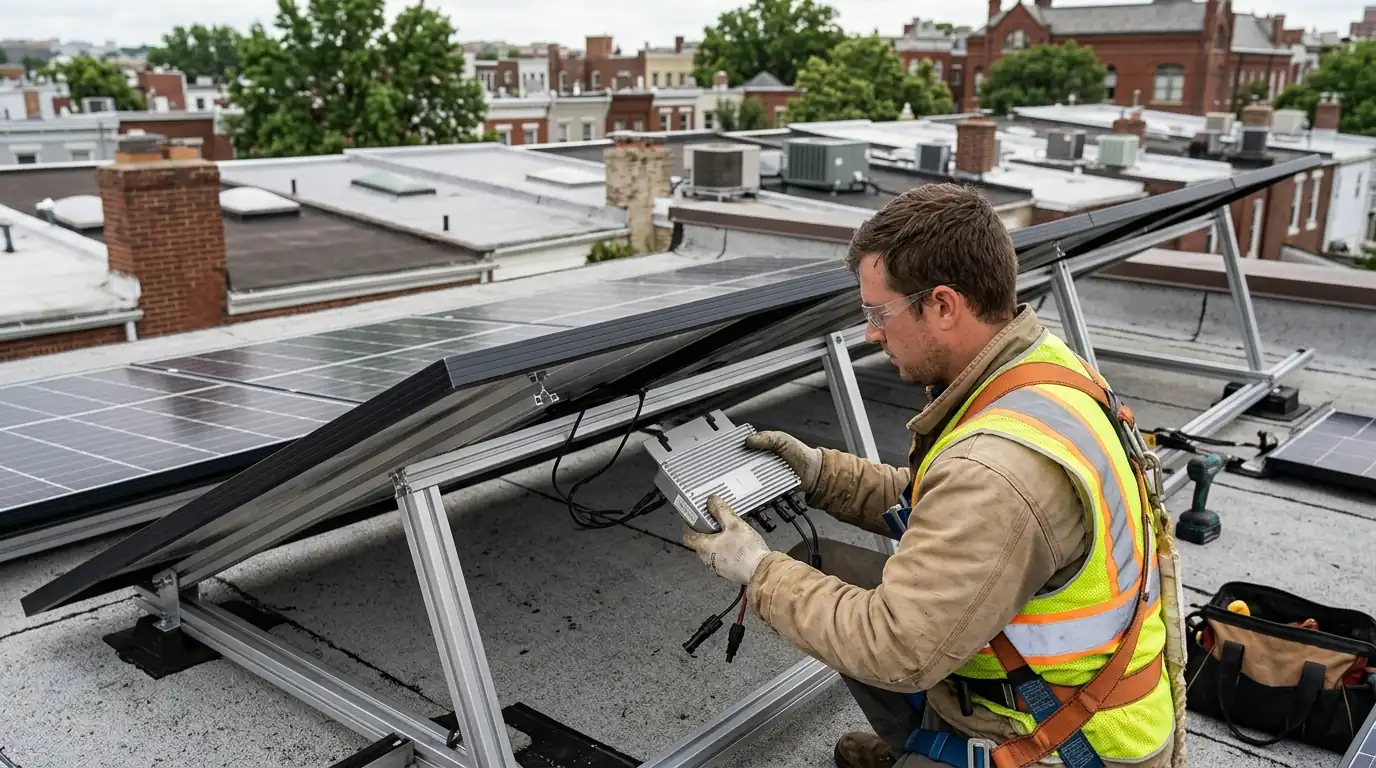
A replacement is a roof job: shut down safely, lift or tilt the panel, swap the unit, reconnect, and register the new serial number in the monitoring system. We check the neighboring connectors and the trunk cable while the panel is up, because a wiring fault can mimic a failed unit.
What you might notice
Signs a microinverter or optimizer has failed
One panel at zero
Panel-level monitoring shows a single module producing nothing.
A panel that drops out in heat
Output vanishes in hot afternoons and comes back later.
Communication errors
The app reports a device not reporting or a lost connection.
Several units at once
A group failing together can point to a wiring or gateway issue.
String lower than normal
On optimizer systems, a failed optimizer pulls its string down.
Step by step
How a microinverter or optimizer replacement runs
Send the app view
A screenshot of the dead panel narrows it down.
Compatibility check
We match the replacement to your system generation.
Safe shutdown
System shut down before any panel is lifted.
Swap and reconnect
Unit replaced and connectors and trunk cable checked.
Register and test
New serial registered and production confirmed.
Claim filed
Warranty paperwork submitted where it applies.
Inside this job
Single microinverter swaps
A single failed microinverter is replaced with the same model or a compatible newer one, then registered to the system so it reports correctly. Older systems sometimes need a newer generation unit with an adapter or a gateway update to talk to the rest of the array. We confirm compatibility before the visit so the unit we bring is the one that works.
Power optimizer replacement
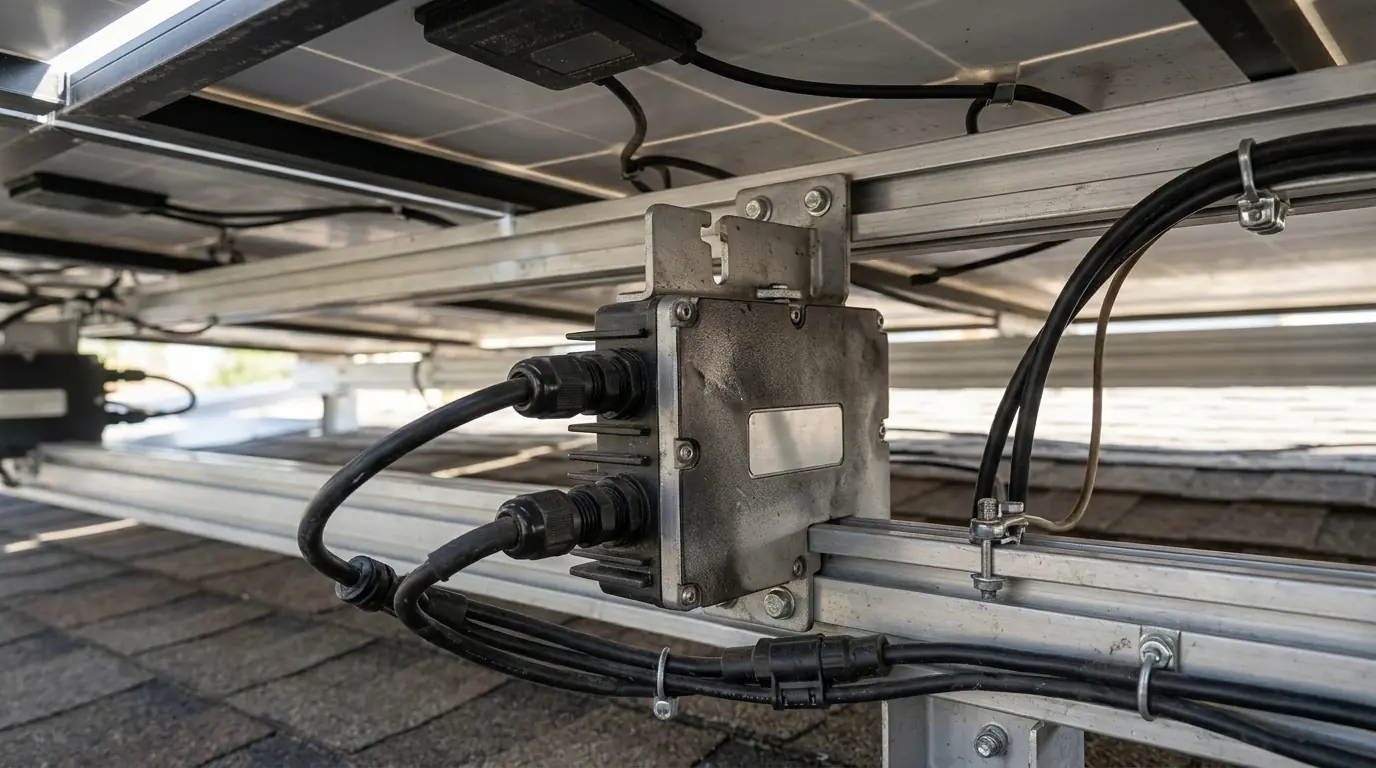
On optimizer systems, a failed optimizer can pull its whole string down or trip the inverter. Replacement follows the same steps as a microinverter, with one difference: the string inverter has to recognize the new optimizer, so we re-pair it and confirm the string reads correctly at the inverter afterward.
Warranty claims on roof electronics
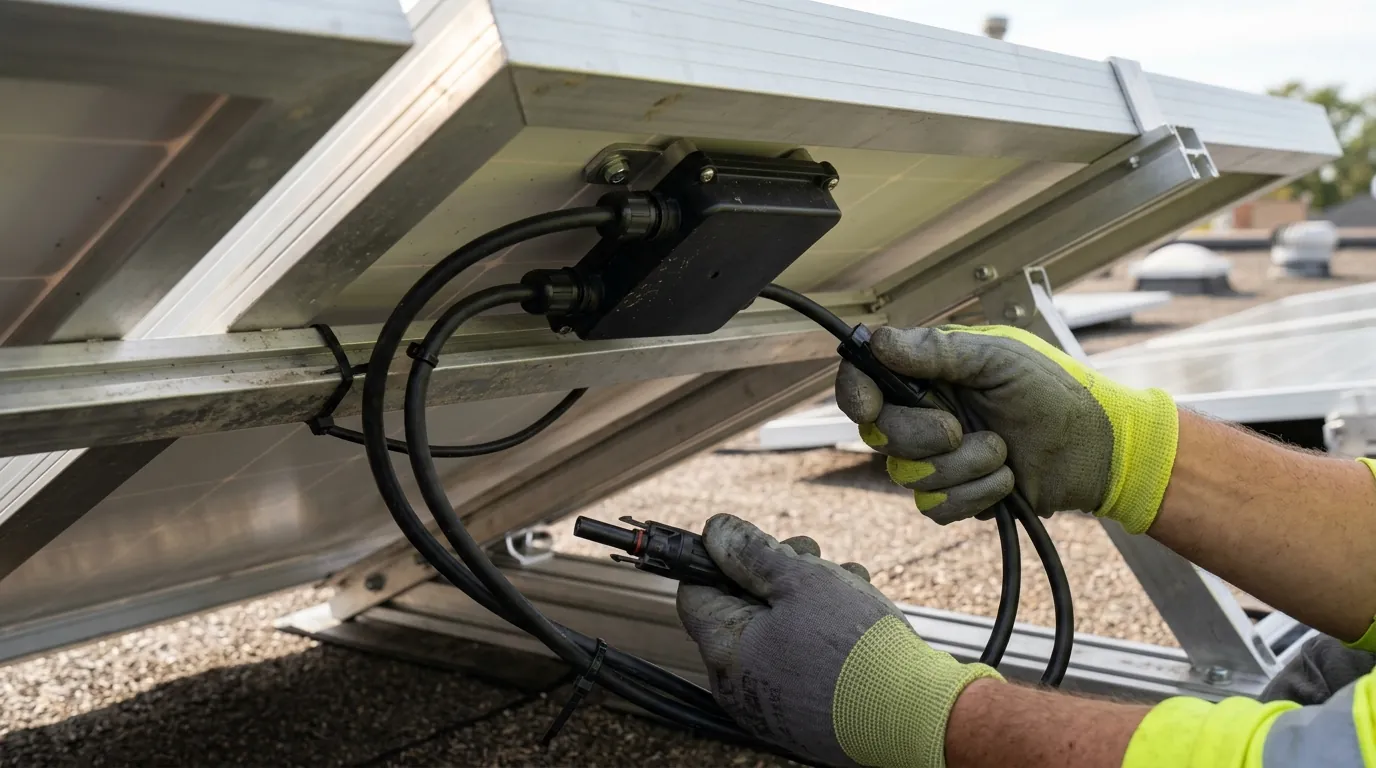
Microinverters and optimizers often carry long manufacturer warranties, and most makers expect a qualified installer to diagnose and file the claim. We pull the failure data from the monitoring, record the serial numbers, file the claim and install the replacement unit when it arrives. Labor coverage depends on the brand and model; we tell you before the work whether it applies.
Do it yourself or call
What you can do, and what needs the roof
| Task | Safe for an owner | Needs our crew |
|---|---|---|
| Check the panel view in your app | Yes, screenshot the dead panel | Confirming the cause on the roof |
| Restart the gateway or inverter | Yes, if the maker's guide describes it | Anything under the panels |
| Note when the panel drops out | Yes, it helps diagnose heat-related failures | Testing connectors and trunk cables |
| Lift a panel to look | No; panels carry live wiring | Always |
Washington conditions
Reaching panel electronics on DC rooftops
On flat rowhouse roofs in Washington, arrays usually sit on low racks set back behind the parapet so they stay out of street view. That keeps access to each panel's electronics fairly easy, since the rows are reachable from the roof deck, but the same racks can be tight against the parapet and to each other. We plan which panels have to move to reach a failed unit before we arrive, so the visit stays short.
Most of the panel-level electronics we replace are Enphase microinverters and SolarEdge power optimizers, with older systems running earlier generations of both.
What moves the price
What decides the cost of a replacement
- Warranty statusIn-warranty units cost little or nothing for the part; labor coverage varies.
- Number of unitsSeveral failures on one visit lower the cost per unit.
- AccessUnits in the middle of an array or on steep roofs take longer.
- CompatibilityOlder generations may need adapters or a gateway update.
2026 planning ranges
- Microinverter replacement, per unit installed$150 to $350 per unit installedSource: greenlancer.com
- Power optimizer replacement, per unitabout $100 to $200 per unitSource: temeculasolarsavings.com
Published market ranges, not our quote. Your price depends on the roof, the equipment and the permit path.
Straight answers
Microinverter & Optimizer Replacement questions we hear in DC
Panel-level monitoring shows that panel at zero while its neighbors produce. Heat-related failures may come and go.
Many carry long manufacturer warranties. We check the serial number and file the claim if it is covered.
Often yes, if it is compatible with your gateway. We confirm before the visit.
Usually. That panel produces nothing until it is replaced, and the cost of lost production and credits adds up.
A group failure can point to a wiring, trunk cable or gateway problem rather than the units themselves. We check before replacing them all.
Yes, including systems whose installer has closed.
Related work
Jobs that often come up alongside this one
Solar Panel Repair
Cracked glass, hot spots and wiring faults on the array.
See this job about Solar Panel RepairSolar Inverter Repair & Replacement
String and hybrid inverters with faults or no output.
See this job about Solar Inverter Repair & ReplacementLow Solar Production Diagnostics
Finding out why production dropped or monitoring went dark.
See this job about Low Solar Production DiagnosticsRoof Leak Repair Around Solar Mounts
Leaks at attachments, membranes and conduit entries.
See this job about Roof Leak Repair Around Solar Mounts