Short answer
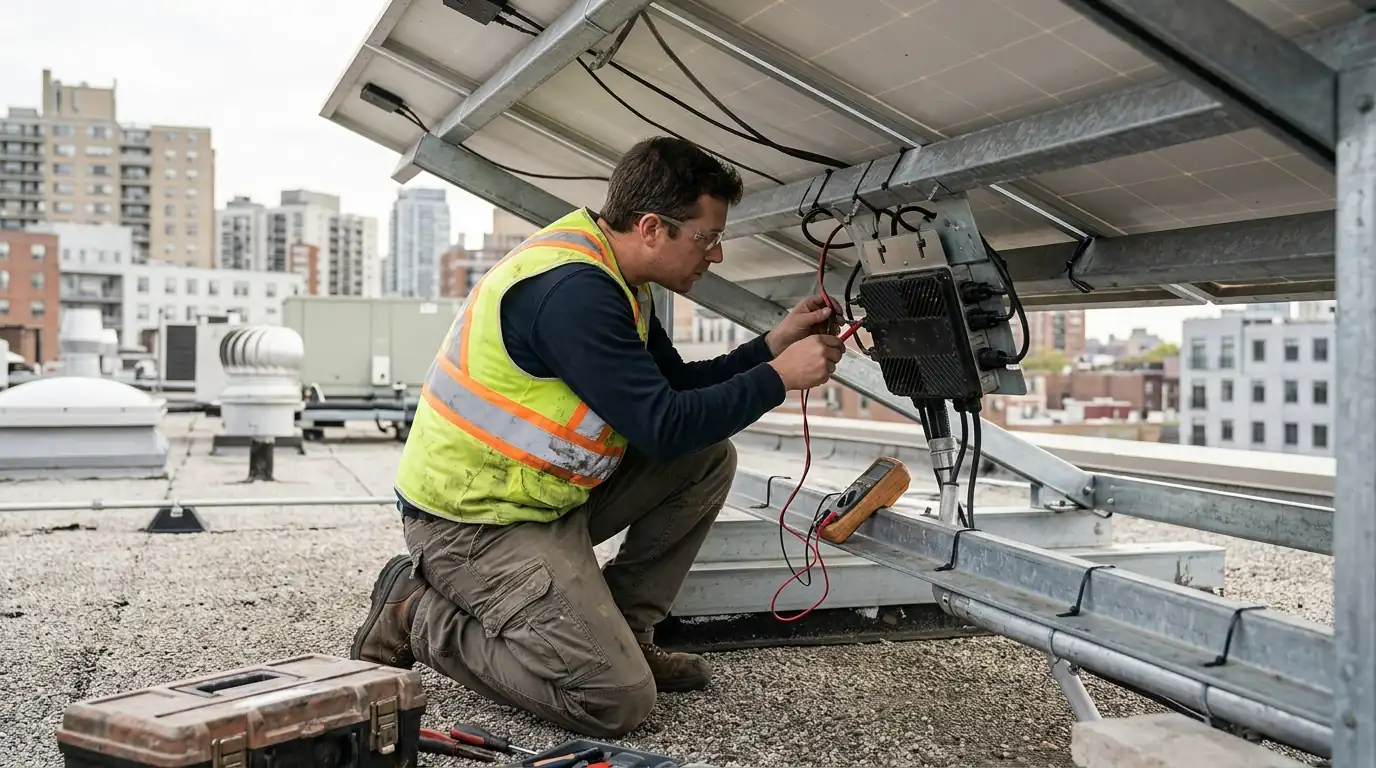
Solar panel repair in Washington, DC usually means replacing a module with cracked glass or a burned junction box, or fixing connectors and wiring that have loosened or chafed. We test the array to find the fault, swap or repair the part, and confirm production before we leave. On string systems one bad panel pulls down every panel wired with it.
What the job is
What solar panel repair covers
Panels themselves are durable, but the parts around them take a beating: connectors that were never fully clicked together, wires that rub on rails, junction boxes that overheat, and glass hit by branches. We treat each repair as a test first and a fix second.
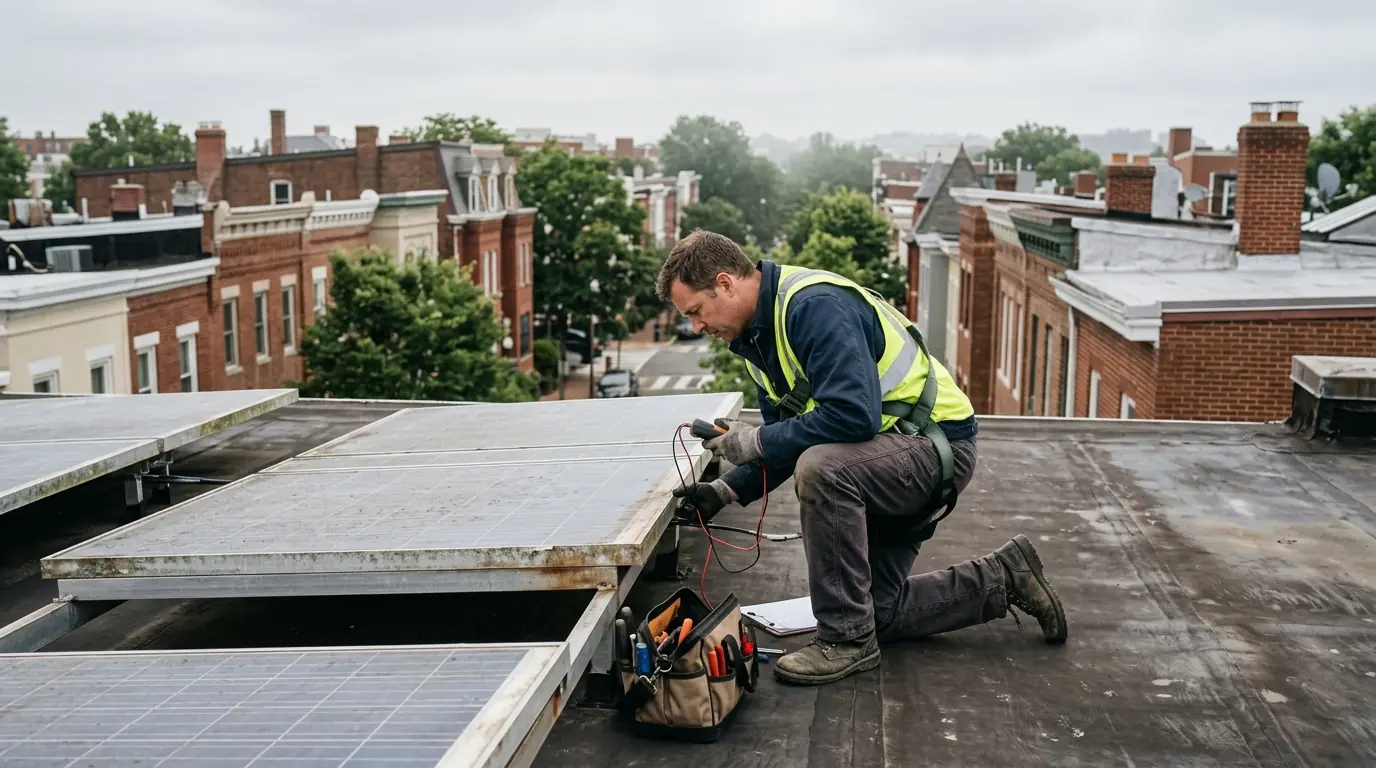
On DC rowhouse roofs we often work behind parapets with little room, so we plan which panels have to come off to reach the faulty one. A replacement module has to match the system's electrical ratings closely; where the original model is out of production, we pick a compatible one and update the permit records if the change requires it.
What you might notice
Signs a panel or its wiring has failed
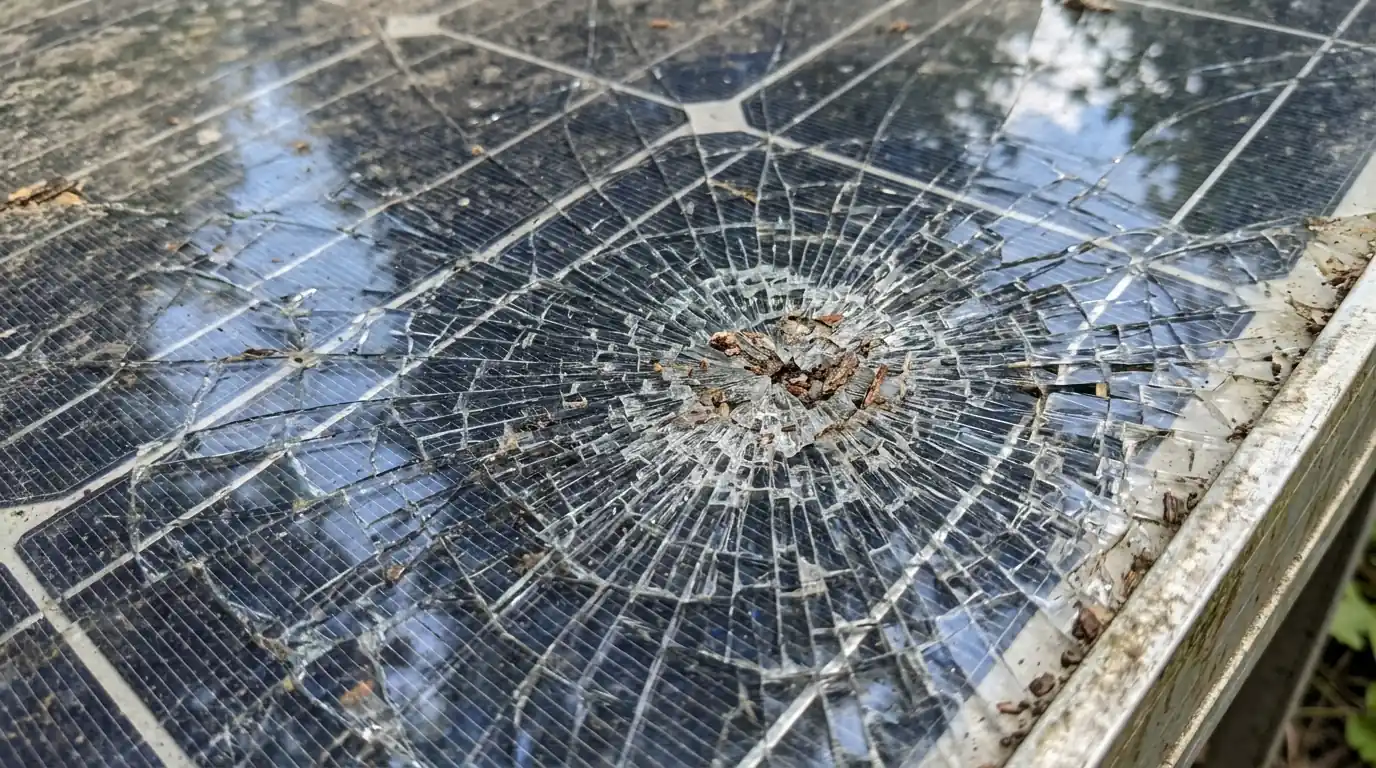
Cracks or shattered glass
Often after a falling branch or hail; cracks let moisture in over time.
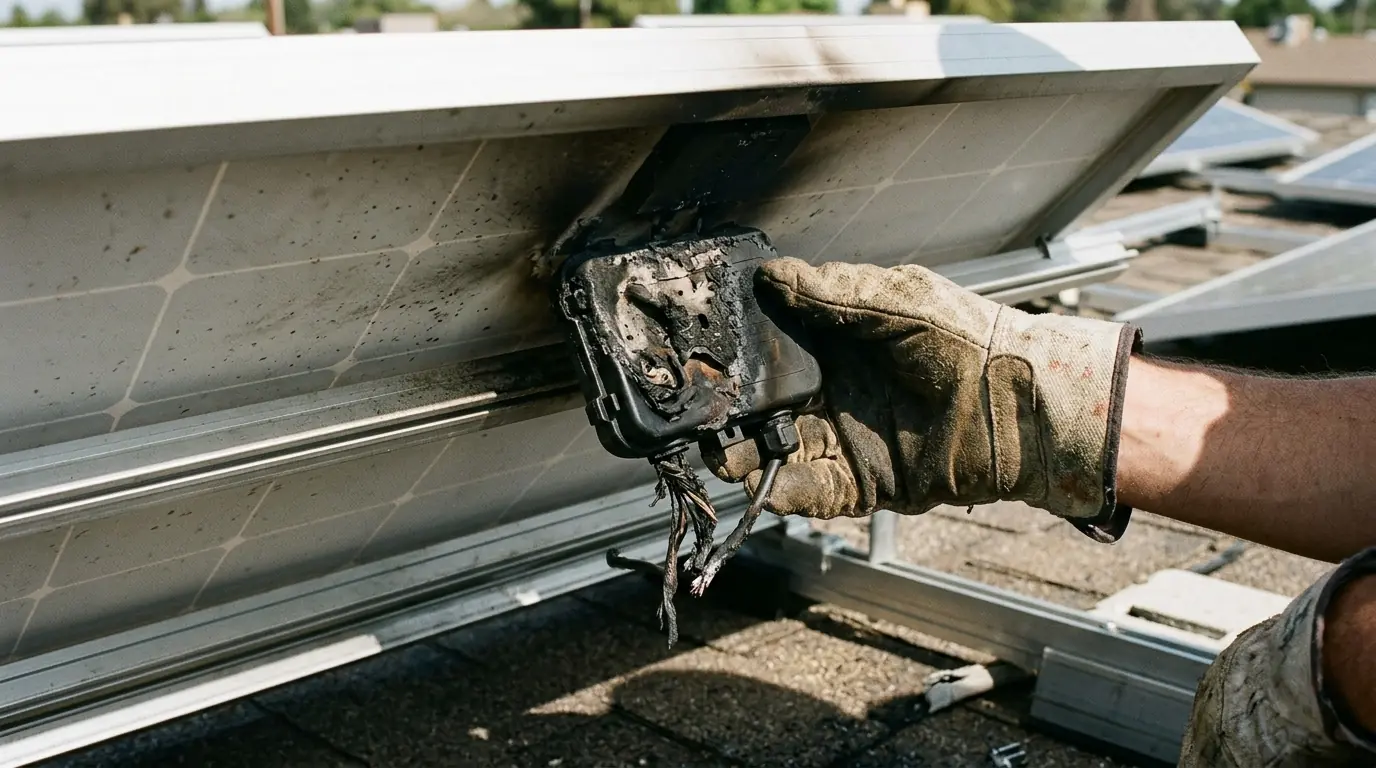
Brown or scorched spots
Discoloration on the cells can mark a hot spot.
One panel offline in the app
Panel-level monitoring shows a single module producing nothing.
A string lower than the rest
On string systems, one weak panel or connector drags the whole string down.
Loose or hanging wires
Wires drooping under the array, often after squirrel or pigeon damage.
Step by step
How a panel repair runs
Call with what you see
Photos from the ground and the app's panel view help us plan the visit.
Safe shutdown
We shut the system down properly before touching the array.
Testing
Strings, connectors and panels tested to pin down the fault.
Repair or replace
Damaged modules replaced, connectors and wiring repaired.
Re-test and restart
Each string checked against the others, then the system restarted.
Report
Photos and notes on what failed and why.
Inside this job
Cracked or shattered glass
Tempered glass on a solar panel usually breaks in a web pattern after an impact or from stress in the frame. A cracked panel may keep producing for a while, but moisture works into the cells and output falls. Replacement is the safe fix; coatings and films sold as repairs do not restore the seal. We shut the string down, swap the module and check its neighbors for damage from the same impact.
Hot spots and burned junction boxes
A hot spot is a cell or connection running far hotter than the rest of the panel, often from a cracked cell, persistent shade or a failing bypass diode. It can show as a brown patch on the front or a scorched junction box on the back. Hot spots cost production and, left alone, can damage the panel and the materials around it. We confirm with testing, then replace the panel or the failed component.
Loose connectors and damaged wiring
Connectors that were never fully seated, connectors from two different makers pushed together, and wires rubbing on rails or chewed by animals cause many of the faults we find. Symptoms range from a string that drops out in afternoon heat to a ground fault that shuts the inverter down. We replace damaged connectors with matched pairs, clip the wiring up off the roof surface and add guards where animals got in.
Do it yourself or call
What you can check and what to leave alone
| Task | Safe for an owner | Needs our crew |
|---|---|---|
| Look at the array from the ground or a window | Yes, note cracks, scorch marks or hanging wires | Anything that means getting on the roof |
| Check the monitoring app | Yes, screenshot panels or strings showing low output | Testing strings and connectors |
| Shut the system down | Only with the labeled shutdown switch, if you see smoke or damage | Opening junction boxes or unplugging connectors |
| Rinse a dusty panel | Only from the ground with a garden hose | Climbing up, or pressure washing |
Washington conditions
Why a fast repair pays in DC
In Washington an idle system loses twice. Its output would have offset your Pepco bill under net metering at the full retail rate, and every megawatt-hour would also have become a DC SREC, which sold for $360 to $455 in 2026. A string that has been dead since a summer storm can quietly cost more than the repair, which is why we check the whole array during a panel repair rather than only the module that looks broken.
Before you book
Damage after a storm? Start with photos
If a branch came down or you see broken glass, take photos from the ground and call. Keep everyone off the roof; damaged panels still carry voltage whenever light hits them.
Call (202) 978-0232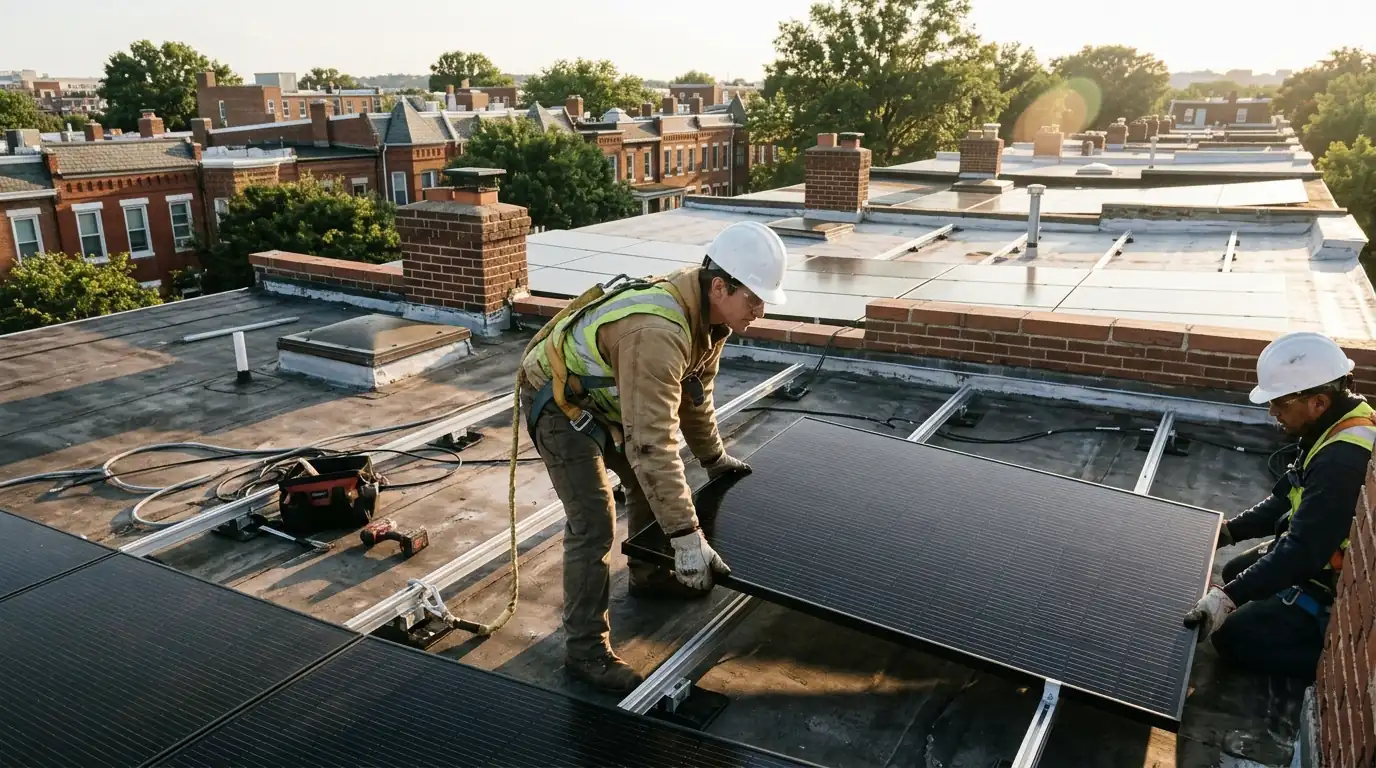
What moves the price
What decides a panel repair price
- AccessSteep roofs, three-story rowhouses and panels in the middle of an array take longer to reach.
- Replacement moduleA matching or compatible panel has to be sourced; discontinued models narrow the choices.
- How much failedOne connector is quick; a storm that hit several panels is a bigger job.
- Who paysDefective panels may fall under the maker's warranty; impact damage is often a homeowners insurance question.
Straight answers
Solar Panel Repair questions we hear in DC
Not reliably. Cracked glass lets moisture in, and repair films do not restore the seal. Replacing the module is the safe fix.
It can be. Panels produce voltage whenever light hits them, and broken glass can expose live parts. Stay off the roof and call us.
On string systems, yes: the whole string drops toward the weakest panel. Systems with microinverters or optimizers keep the loss to the damaged panel.
If the model is still made, yes. If not, we choose a compatible panel with similar electrical ratings and note the change in the records.
Many policies treat a roof-mounted system as part of the house, but coverage varies. We document the damage with photos you can send to your insurer.
Yes, including systems whose installer has since closed.
Related work
Jobs that often come up alongside this one
Solar Inverter Repair & Replacement
String and hybrid inverters with faults or no output.
See this job about Solar Inverter Repair & ReplacementMicroinverter & Optimizer Replacement
Swapping failed electronics under individual panels.
See this job about Microinverter & Optimizer ReplacementLow Solar Production Diagnostics
Finding out why production dropped or monitoring went dark.
See this job about Low Solar Production DiagnosticsRoof Leak Repair Around Solar Mounts
Leaks at attachments, membranes and conduit entries.
See this job about Roof Leak Repair Around Solar Mounts