Short answer
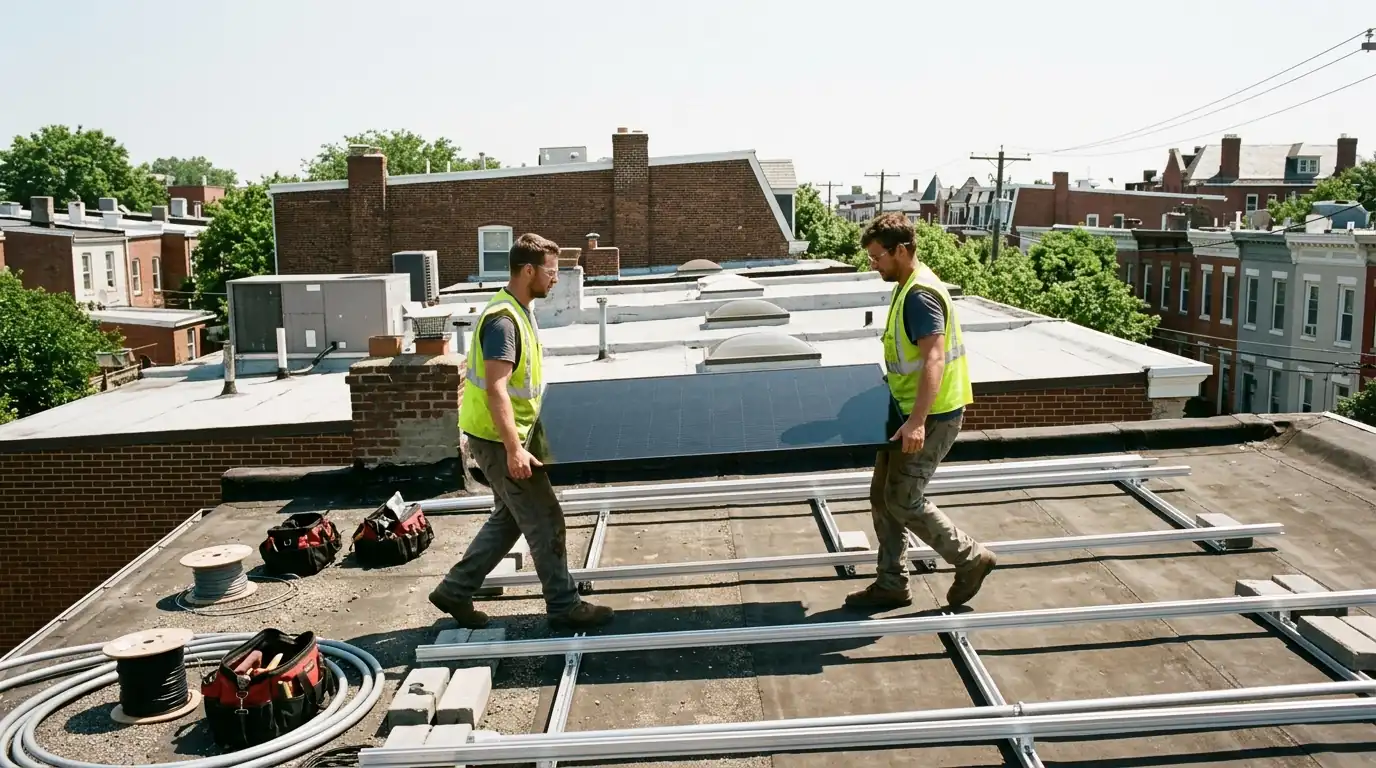
A ground-mounted solar array in the Washington, DC area needs open southern sky and enough yard for the frame plus setbacks, which usually means a suburban lot rather than a rowhouse yard. It costs more per panel than a roof system because of footings and trenching, but it leaves the roof alone and can face due south.
What the job is
When a ground mount is the better choice
We suggest a ground array when the roof cannot do the job well: heavy shade from mature trees, a north-facing or chopped-up roof, a roof covering near the end of its life, or an owner who wants nothing on the roof at all.
The tradeoff is space and digging. The frame needs clear ground, room to walk around it and a path for buried conduit back to the main panel. Local zoning sets how close it may sit to property lines, and county permit desks usually ask for a site plan.
What moves the price
What drives a ground mount's price
- Footing typeConcrete footings, driven piles or ground screws, chosen for the soil and frost depth.
- Trench lengthEvery foot between the array and the house adds digging, conduit and wire.
- Array size and tiltA steeper tilt or a taller frame adds steel and wind design.
- Site accessFences, slopes and narrow gates limit equipment and add labor.
- Electrical serviceAn older 100 amp service may need an upgrade to take the array.
Inside this job
Fixed tilt ground arrays
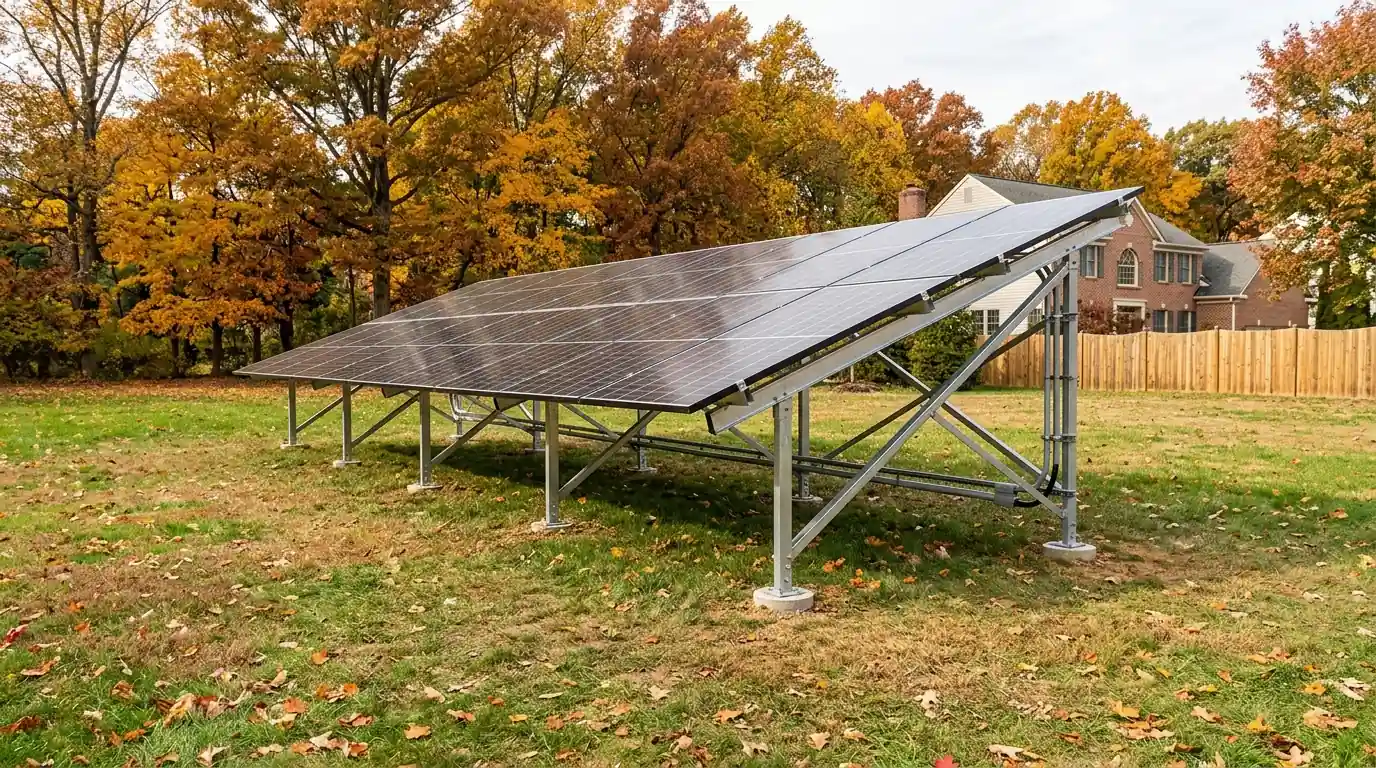
The common build is two or more rows of rails on a galvanized steel or aluminum frame, set at a fixed angle facing south. Footings go in first, then the frame, then rails and panels, with module-level electronics or a string inverter mounted on a post or the house wall. A fixed array has no moving parts, so upkeep comes down to keeping grass and saplings from shading the bottom row. We set the lower edge high enough for mowing and for snow to slide clear.
Trenching and conduit runs
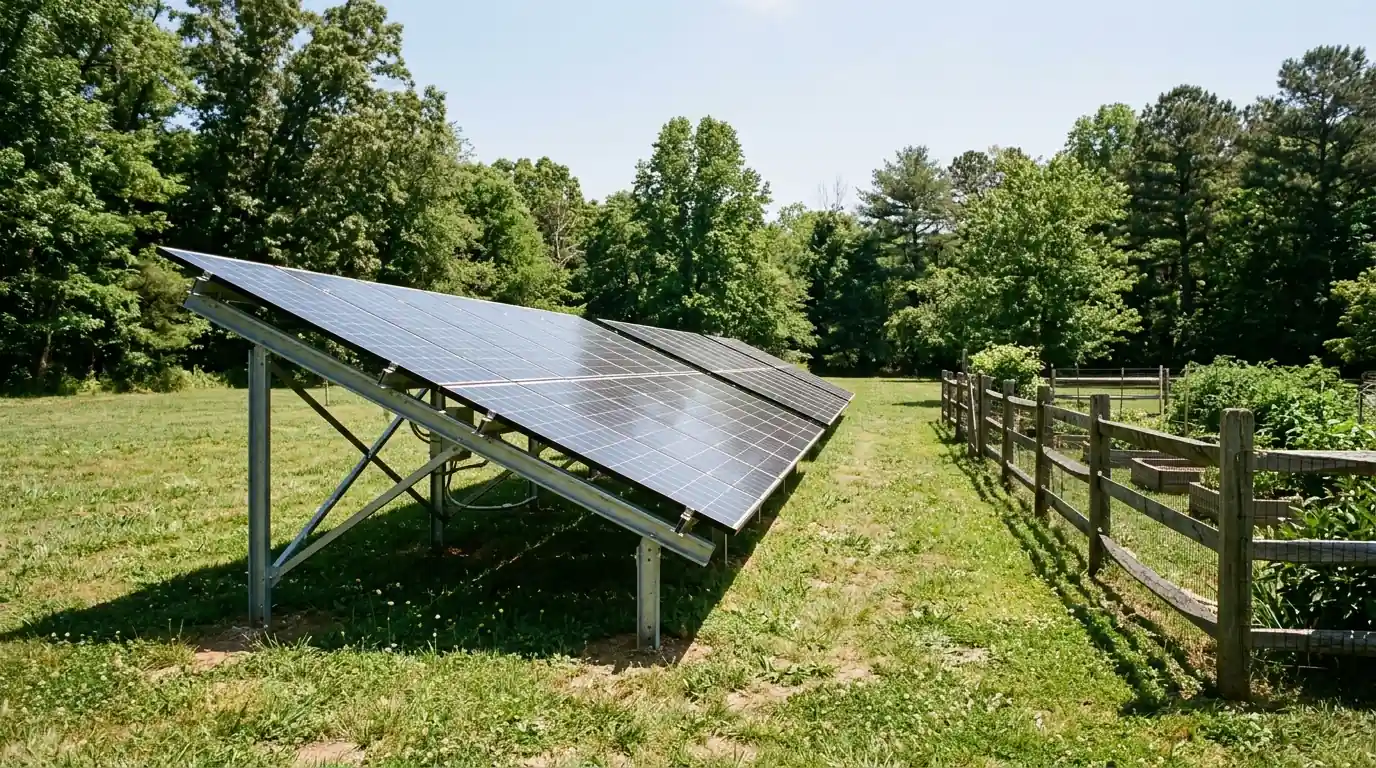
The wiring travels underground in conduit to the house, where it meets the inverter or the main panel. Trench depth depends on the conduit type and the electrical code, and we request utility locates before any digging starts. Long runs need heavier wire to hold down voltage loss, so placing the array nearer the house can save real money. We restore the soil over the trench and route around tree roots and drainage lines.
Pole mounts
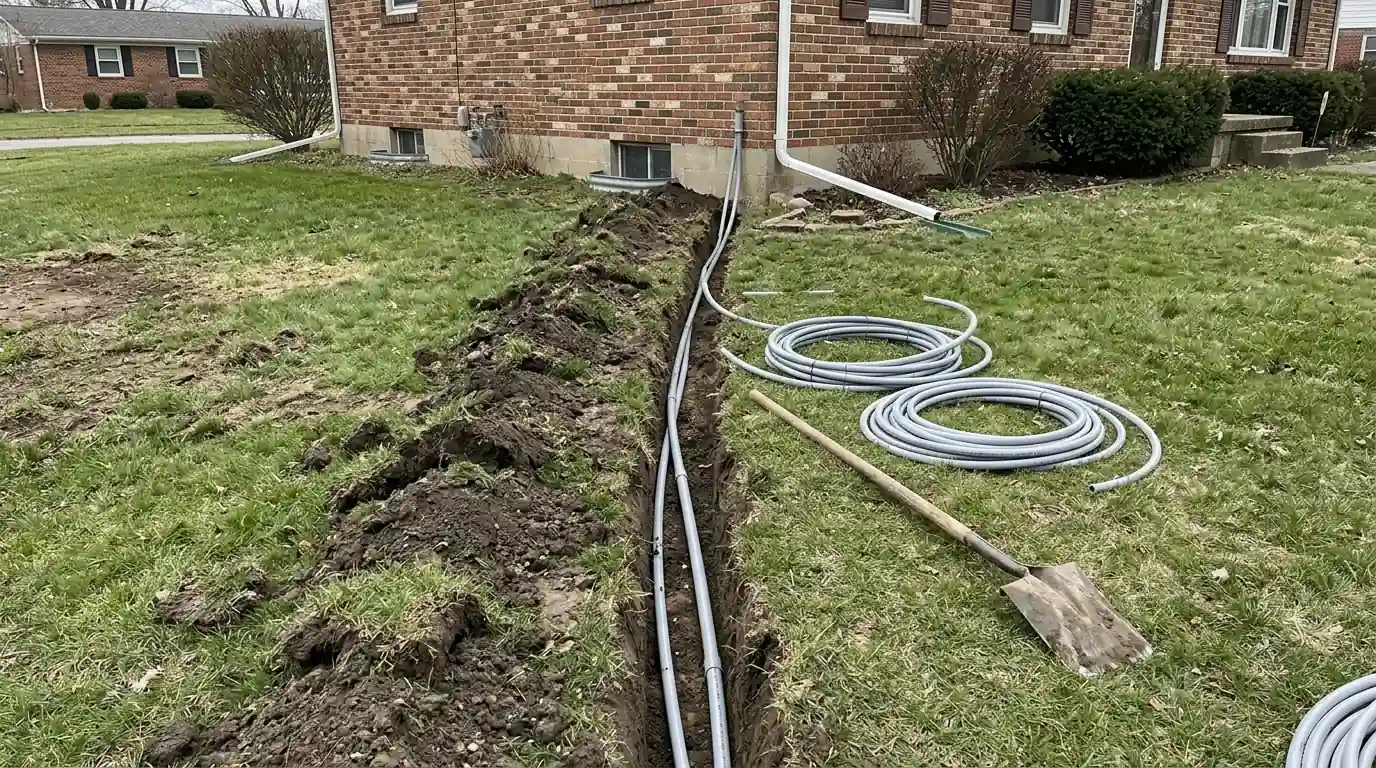
A pole mount sets a smaller array on one heavy steel post anchored deep in concrete. It takes up less ground than a rack, clears garden beds and can tilt a little steeper for winter sun. The limit is size: a single pole carries fewer panels, so larger systems need several poles. Pole mounts suit corner lots and yards where a long rack would block a path or a view.
Choosing between options
Roof, ground rack or pole?
| Roof mount | Ground rack | Pole mount | |
|---|---|---|---|
| Space needed | None beyond the roof | Clear yard plus walkways | Small footprint per pole |
| Orientation | Set by the roof | Due south at a chosen angle | Due south, adjustable tilt |
| Extra work | Roof attachments and flashing | Footings and a long trench | One deep footing per pole |
| Upkeep | Roof access for service | Mowing and vegetation | Mowing around the base |
Washington conditions
Where ground arrays make sense around Washington
Ground mounts are rare inside the District, where many lots are narrow rowhouse yards, and far more common on the bigger lots of Montgomery County and Fairfax County. Fairfax County waives its permit fee for residential solar and offers a five year equipment tax exemption, and in Maryland full retail net metering stays open to new customers until July 1, 2027. Suburban owners weighing a yard array have a reason to decide sooner rather than later.
Step by step
How a ground array gets built
Yard walk
We check sun, slope, setbacks and where the trench can run.
Layout and price
A drawing of the array, the footing plan and a written price.
Permits
Building and electrical permits plus the utility interconnection application.
Footings and frame
Footings set and cured, then the frame goes up.
Panels and trench
Panels mounted, conduit buried and wired to the house.
Inspection and startup
Inspection, utility approval, then we commission the system.
What is included
What a ground mount job includes
- Site survey for shade, slope and setbacks
- Utility locates before digging
- Footings or piles and the steel frame
- Rails, panels and module electronics
- Trench, conduit and wiring to the house
- Permit drawings and inspections
- Utility interconnection and system startup
Racking comes from IronRidge or Unirac depending on the site, carrying panels such as REC, Qcells or Silfab with Enphase or SolarEdge electronics.
Straight answers
Ground-Mount Solar questions we hear in DC
It depends on the system size, the tilt and local setbacks. We measure the open area and show the footprint on the layout before you decide.
Yes. Expect building and electrical permits plus the utility's interconnection approval, and in some counties a zoning review for setbacks.
There is a trench and some equipment traffic. We restore the soil over the trench, and the grass usually needs a season to grow back in fully.
Yes. The battery sits at the house near the main panel, just as it would with a roof system.
It goes through the same preservation review as other visible exterior changes, and placement out of street view helps.
Snow slides off a tilted array sooner than off a low roof. We set the lower edge high enough that it does not bury the bottom row.
Related work
Jobs that often come up alongside this one
Residential Solar Panel Installation
Pitched roof systems, from layout and permits to Pepco sign off.
See this job about Residential Solar Panel InstallationRowhouse & Flat Roof Solar
Tilted racks behind the parapet on DC's flat rowhouse roofs.
See this job about Rowhouse & Flat Roof SolarHistoric District Solar
Layouts and review packages for homes under preservation rules.
See this job about Historic District SolarRoof Deck Solar Canopies
Panels on a raised frame over a roof deck or patio.
See this job about Roof Deck Solar Canopies