Short answer
Solar panel removal and reinstallation in Washington, DC typically runs $250 to $400 per panel, or about $5,000 to $8,000 for a 20-panel system, covering shutdown, labeled removal, storage, new flashing or hardware where needed, reinstallation and recommissioning. On flat rowhouse roofs the racking is often lifted off as a unit before the membrane is replaced.
What the job is
What removal and reinstallation involves
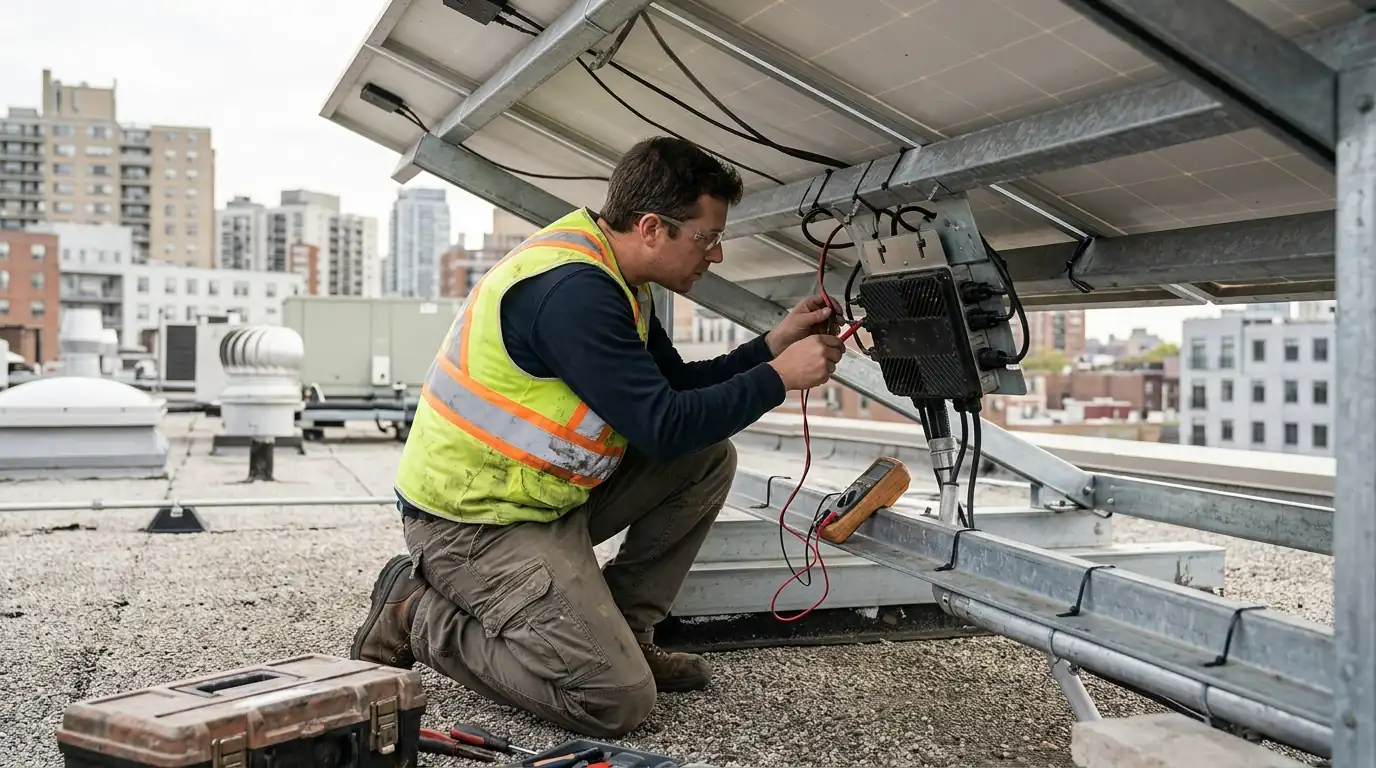
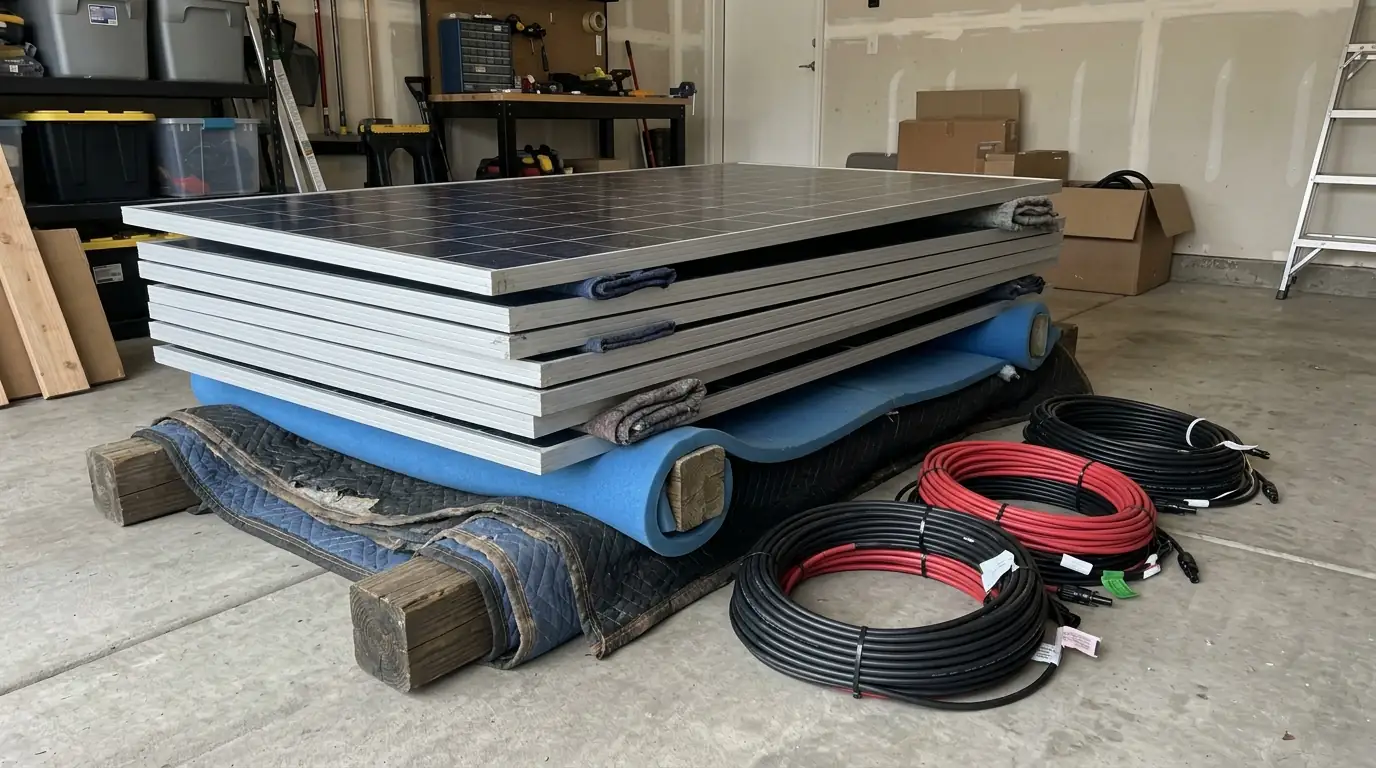
Panels come off in an order that makes reinstallation straightforward: system shut down, strings tested and labeled, connectors capped, modules stacked and stored, racking and attachments removed or set aside. The roofer then has a clear roof.
Reinstallation runs the same steps in reverse, with new flashing on every pitched-roof attachment and fresh hardware where the old parts are worn. We test each string before restarting and confirm production in the monitoring, so you know the system came back the way it left.
What moves the price
What moves the price of a removal and reinstall
- Panel countPricing is mostly per panel; bigger arrays cost more in total.
- Roof typeBallasted flat-roof racks move differently from attached pitched-roof rails.
- Storage timeA long reroof means panels stored longer and more handling.
- Upgrades while it is offNew critter guard, optimizers or a battery are easiest to add now.
2026 planning ranges
- Removal and reinstall, per panel$250 to $400 per panel; about $5,000 to $8,000 for 20 panelsSource: southern-energy.com
Published market ranges, not our quote. Your price depends on the roof, the equipment and the permit path.
Inside this job
Remove and reinstall for a new roof
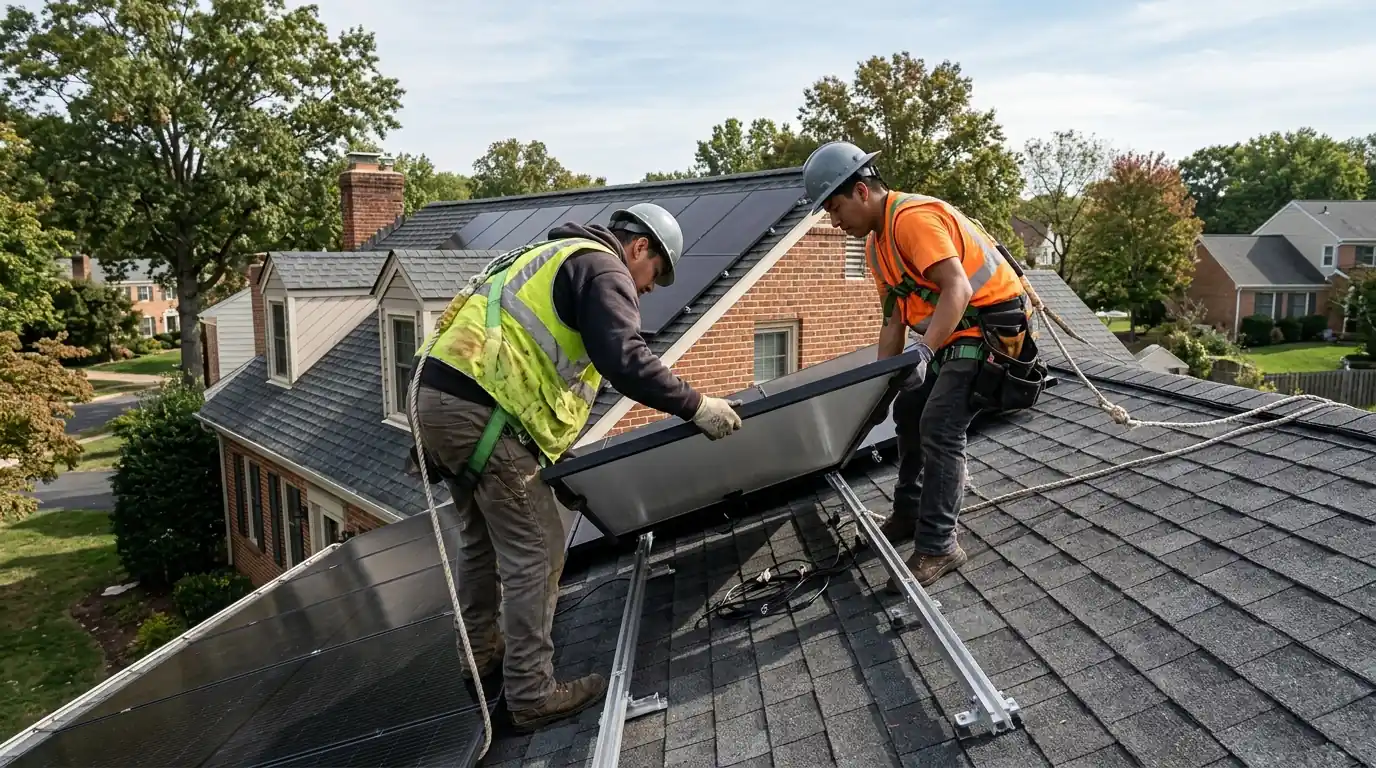
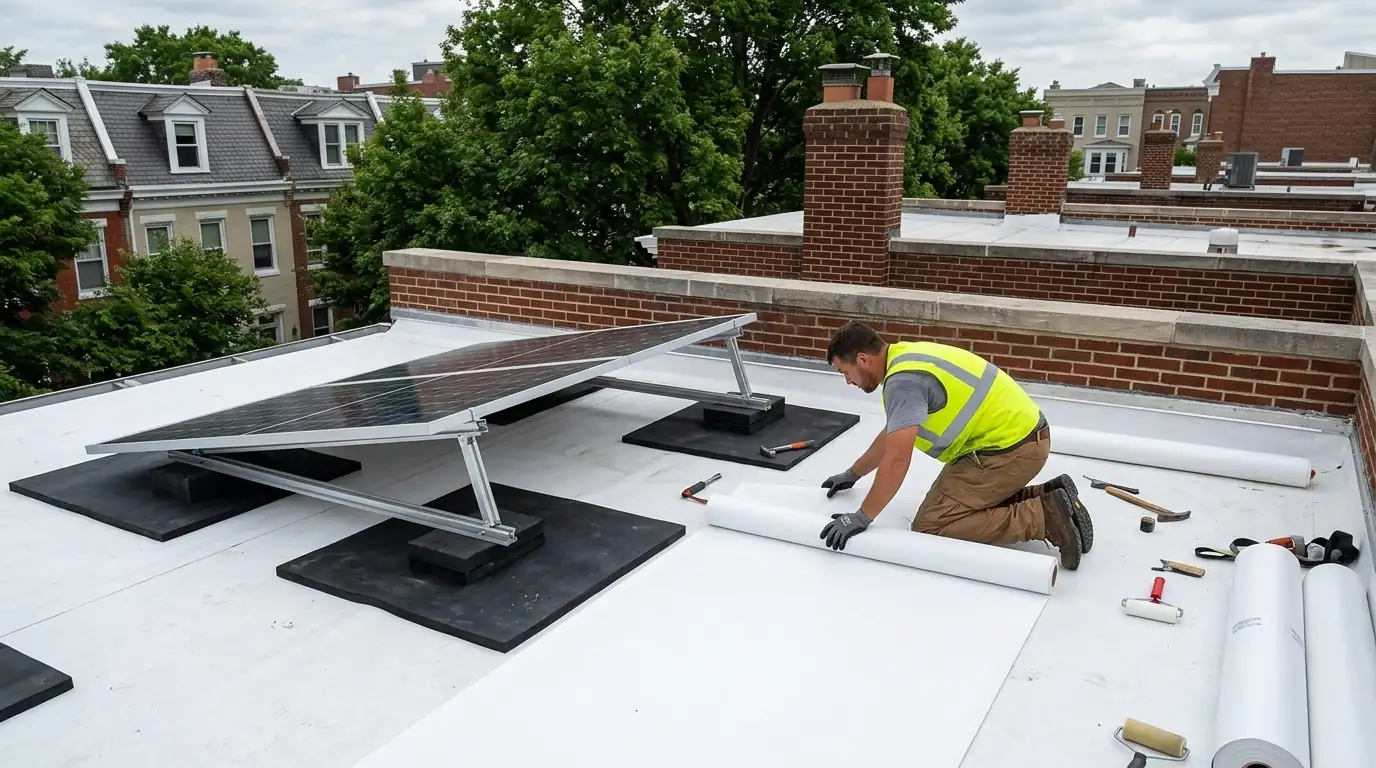
For a full roof replacement, the whole array comes off. On a pitched roof, every attachment is removed and later reflashed into the new roofing. On a flat rowhouse roof with a ballasted rack, the rack is lifted off as a unit or disassembled so the membrane can be replaced underneath, then set back on new protection pads. We schedule with your roofer so the panels go back up as soon as the new roof is ready, not weeks later.
Partial removal for a roof repair
A leak or a damaged section of roof under the array does not always need the whole system off. We remove only the panels over the problem area, leave the rest producing where it is safe to, and reinstall once the repair is done. It costs less and keeps more of the system running, but the roofer has to be able to work in the space we open up.
Permanent removal and recycling
When a system is coming off for good, because of a sale, a demolition or old equipment, we shut it down, remove everything, seal the roof penetrations and close out the permit and the Pepco interconnection. Panels and inverters go to a recycler rather than a landfill, and we tell you whether any of the equipment still has resale value first.
Washington conditions
Flat rowhouse roofs and reroofing
About a quarter of DC homes are row houses, and most of their flat roofs carry a membrane that will need replacing during the life of a solar array. On those roofs the rack usually sits on protection pads behind the parapet, so the solar side of a reroof is lifting and resetting the rack rather than reflashing dozens of attachments. Planning the membrane replacement before the panels go up in the first place saves the most money of all.
Step by step
How the remove and reinstall runs
Call with the roofing plan
Roofer, start date and the scope of roof work.
Pre-check
We test the system so existing faults are documented before removal.
Removal day
Shutdown, labeling, removal and storage.
Roof work
Your roofer replaces or repairs the roof.
Reinstall day
Panels and racking back with new flashing or pads.
Restart and verify
Strings tested, system restarted, production confirmed.
What is included
What the job includes
- System shutdown and string labeling
- Careful module removal and capped connectors
- Secure storage between removal and reinstall
- Coordination with your roofing contractor
- New flashing or protection pads on reinstall
- String testing and system restart
- Production check in your monitoring
Before you book
Planning a new roof? Call before the roofer starts
The best time to plan the solar side is when you sign the roofing contract. We coordinate dates so neither crew waits on the other.
Call (202) 978-0232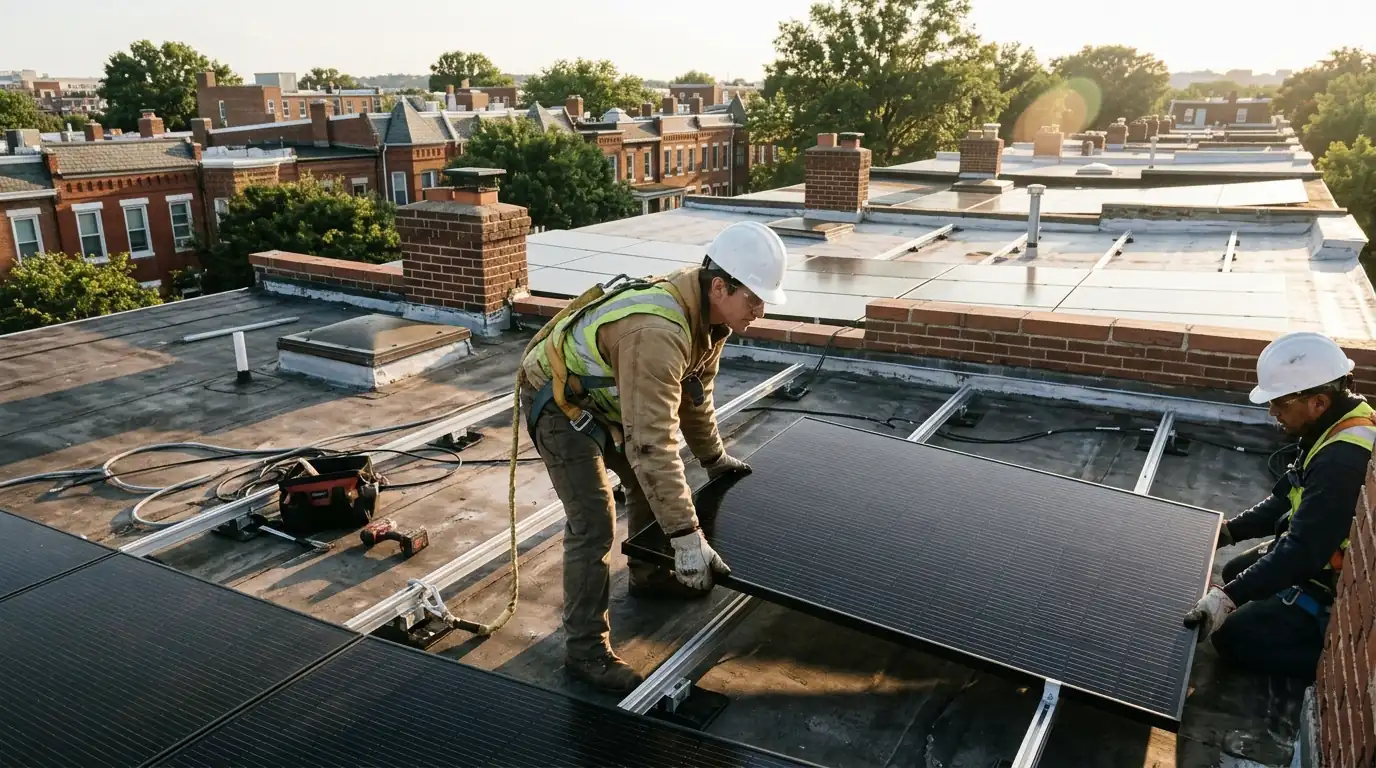
Time on site
How long the panels are off
Removal and reinstallation each usually take a day on a typical home system, longer on large or complex roofs. The gap between them is the roof work itself, which your roofer sets.
We line up both visits with the roofer before anything comes off, so the system is down for as short a stretch as possible. Every day it is off is a day without production or SRECs.
Straight answers
Solar Panel Removal & Reinstallation questions we hear in DC
It is not a good idea. Removing panels means working with live DC wiring and warranty-sensitive equipment. A solar crew should shut the system down and handle the modules.
Somewhere dry and secure, stacked and protected, either on site in a safe spot or at our facility, depending on the space and the timeline.
Done by a qualified installer following the manufacturers' procedures, it should not. We document the condition of the panels before removal.
Often yes, especially if anything about the attachments or wiring changes. We handle the permit and any Pepco paperwork.
Yes, and it is the cheapest time to do it, since the array is already apart.
Less than a remove and reinstall, since nothing goes back. It includes sealing the roof penetrations and closing out the permit and interconnection.
Related work
Jobs that often come up alongside this one
Solar Panel Repair
Cracked glass, hot spots and wiring faults on the array.
See this job about Solar Panel RepairSolar Inverter Repair & Replacement
String and hybrid inverters with faults or no output.
See this job about Solar Inverter Repair & ReplacementMicroinverter & Optimizer Replacement
Swapping failed electronics under individual panels.
See this job about Microinverter & Optimizer ReplacementLow Solar Production Diagnostics
Finding out why production dropped or monitoring went dark.
See this job about Low Solar Production Diagnostics