Short answer
A solar system in Washington, DC that produces less than it should usually has one of five causes: a tripped breaker or failed inverter, a dead string or panel, new shade, heavy soiling, or monitoring that stopped reporting while the system kept working. We test production string by string and compare it with the weather to find which one.
What the job is
How we diagnose an underperforming system
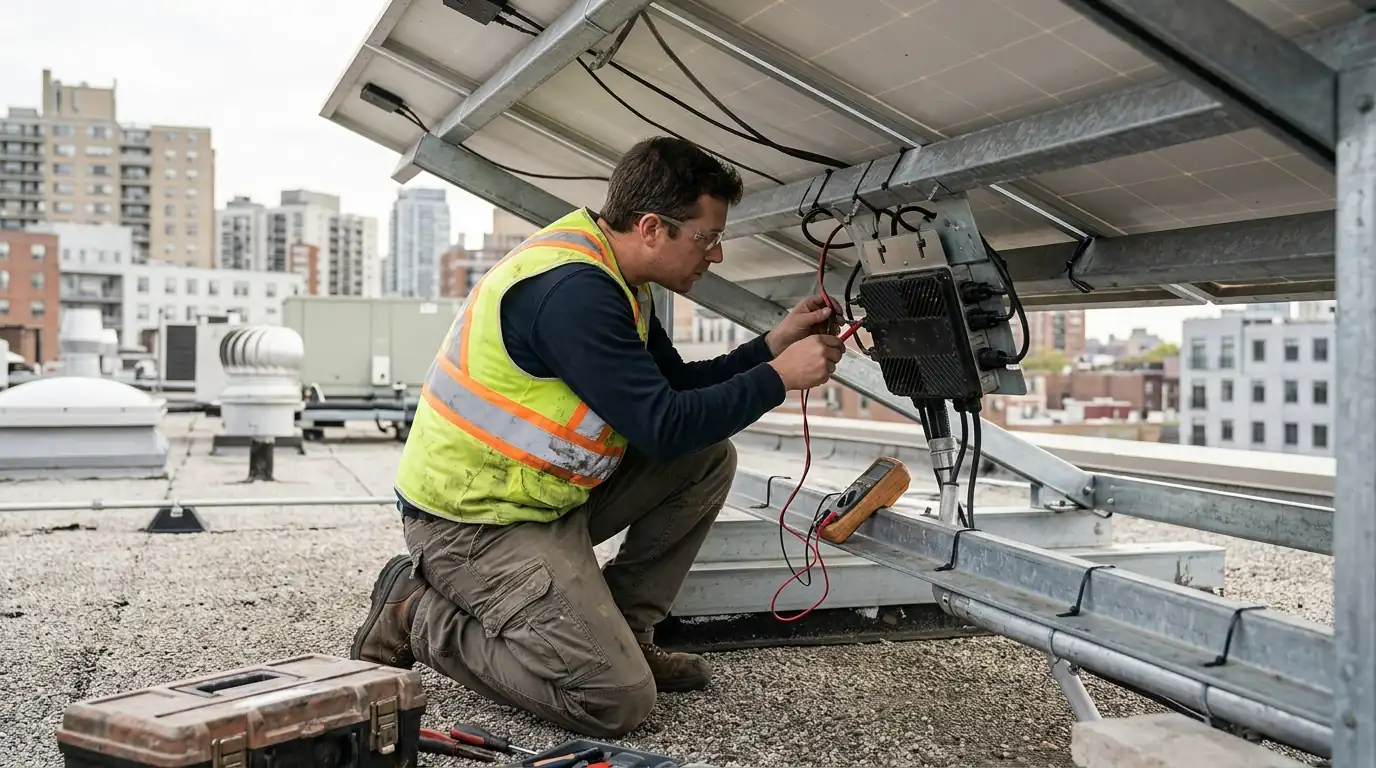
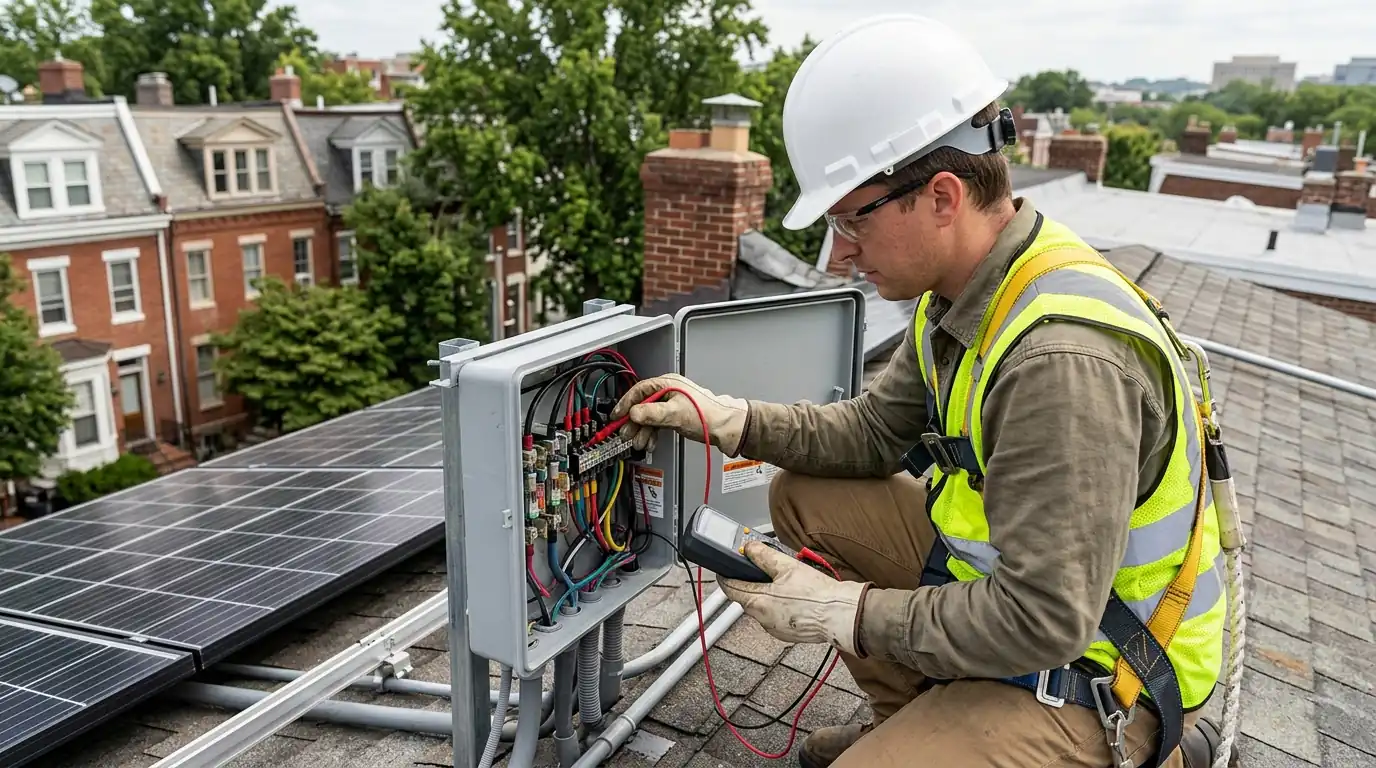
We start with the data, if there is any: monitoring history, inverter logs and your Pepco bills. That usually narrows the problem to a part of the system before we arrive. On site we check breakers and disconnects, test each string's voltage and current, look at the panels for damage and soiling, and walk the shade around the array.
The goal is a clear answer with evidence. You get the cause, what it is costing in lost production, and the options to fix it, with any warranty coverage noted. If the system is healthy and the drop is weather, we say so.
What you might notice
Signs your system is underperforming
Lower than last year
This month's production is well below the same month last year, with similar weather.
Monitoring flatlined
The app shows zero or no data, but the inverter lights look normal.
Inverter fault light
A red or amber light, or an error code on the display.
One panel or string lagging
Panel-level monitoring shows a single module far below its neighbors.
Bills creeping up
Pepco bills rising with no change in how you use power.
Step by step
How a diagnostic visit runs
Call with what you see
What changed, when, and any error codes or app screenshots.
Data review
Monitoring history, inverter logs and bills checked first.
Electrical testing
Each string tested and compared against the others.
Physical inspection
Panels, wiring, connectors and shade checked on the roof.
Findings and options
The cause, the lost production and the repair options in writing.
Fix or claim
Repairs on approval, and warranty claims filed where they apply.
Inside this job
Monitoring offline
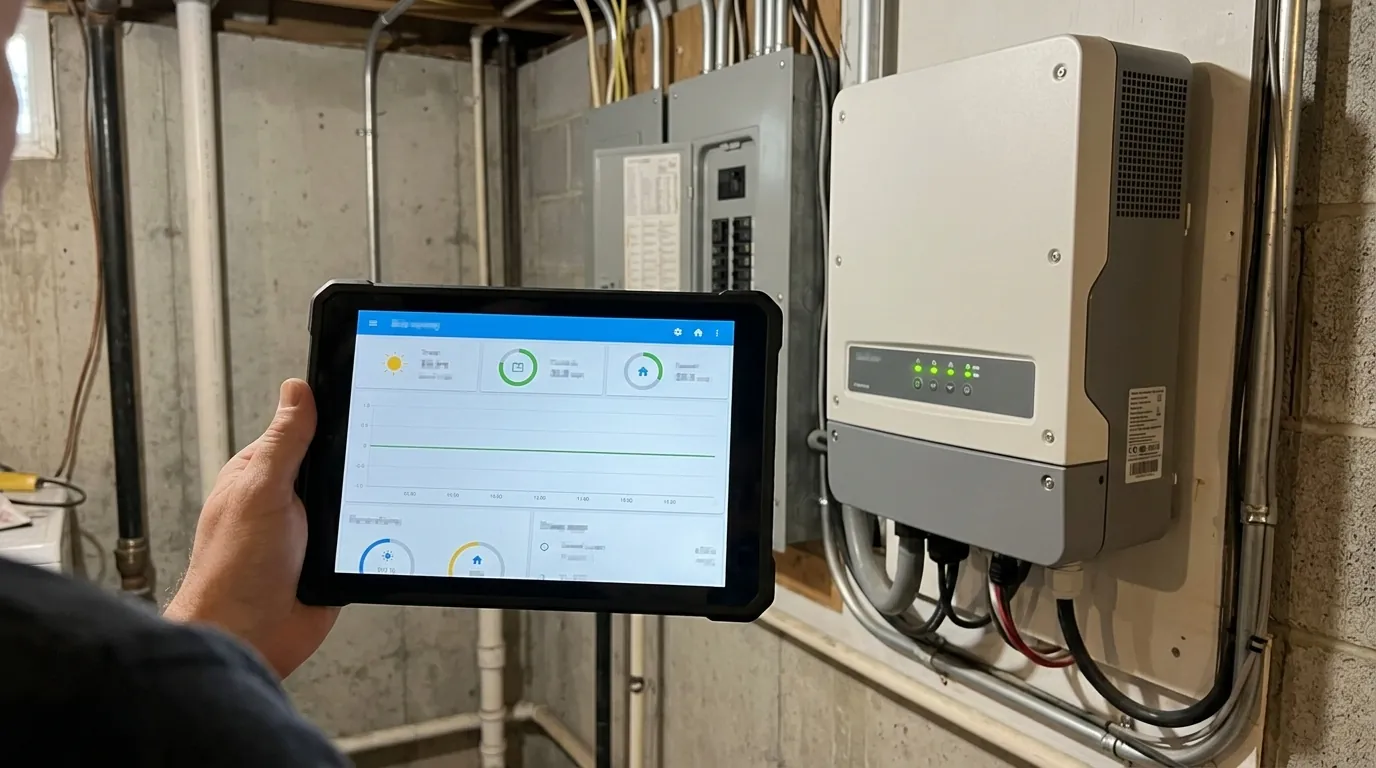
A monitoring gateway that loses Wi-Fi after a router change makes a working system look dead. The inverter keeps producing and the meter keeps counting, but the app shows nothing. We reconnect the gateway, confirm data is flowing and check the production meter against the inverter so the record is complete. If the monitoring hardware has failed, it is often covered by the inverter maker's warranty.
Output lower than last year
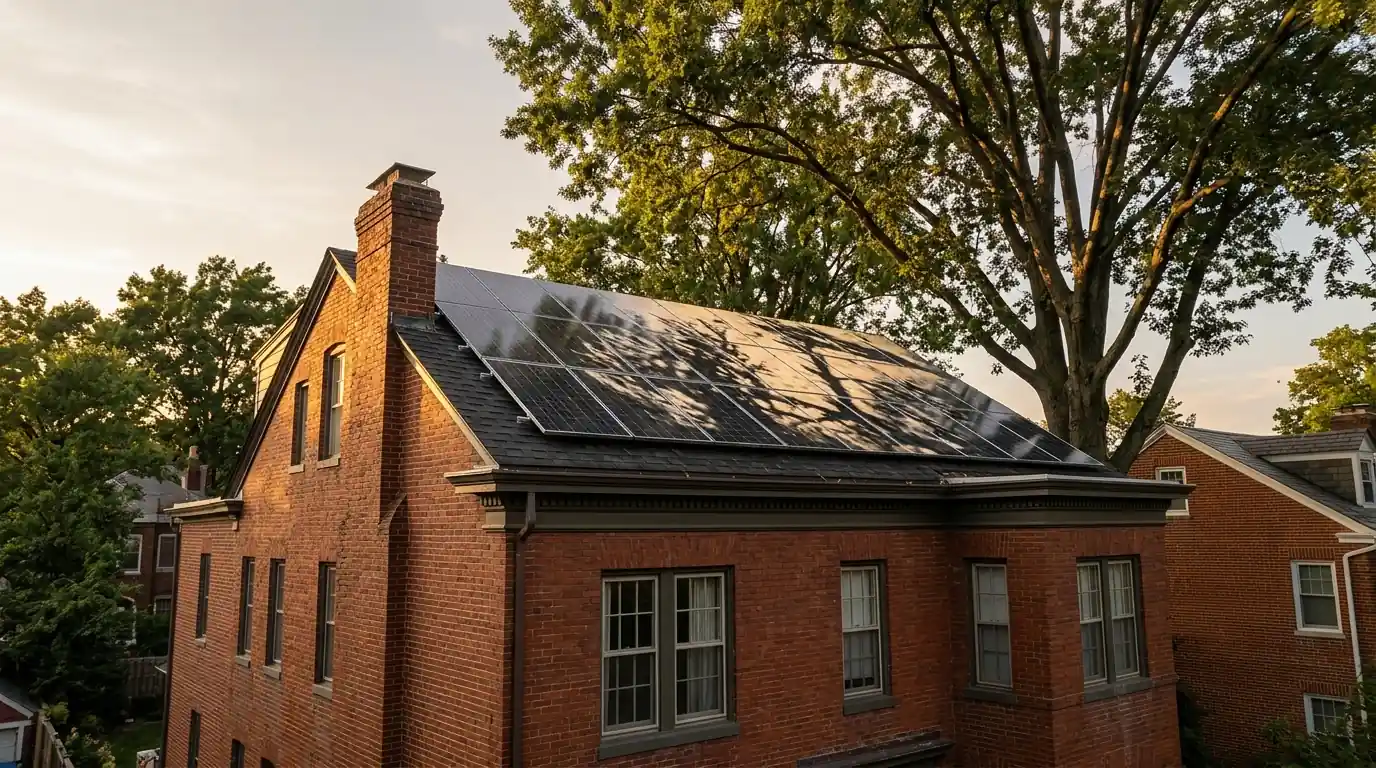
Comparing year to year is the most useful test, but weather moves the numbers, so we look at sunny days rather than monthly totals. A slow slide often points to new shade from a neighbor's tree or a rooftop addition, soiling on low-tilt panels, or a string that has lost a panel. A sudden step down usually means a failed component, which shows up quickly in string testing.
Breaker trips and ground faults
A breaker that trips repeatedly or an inverter that reports a ground fault is a safety signal, not just lost output. Damaged wire insulation, water in a junction box or a pinched cable under a rail can leak current to the frame. We isolate strings one at a time to find the fault, repair it and verify insulation resistance before the system goes back on.
Do it yourself or call
Checks you can make before you call
| Task | Safe for an owner | Needs our crew |
|---|---|---|
| Look at the inverter display or lights | Yes, note any error code | Opening the inverter |
| Check the solar breaker in the main panel | Yes, see whether it is tripped | Resetting it more than once |
| Compare bills or app data year to year | Yes, it helps us start | Interpreting string-level data |
| Restart the monitoring gateway | Yes, if the maker's guide describes it | Rewiring or replacing the gateway |
Time on site
How long a diagnostic visit takes
Most diagnostic visits are a few hours on site, longer for large or hard-to-reach arrays. Monitoring data reviewed before the visit shortens it.
Repairs found during the visit are often done the same day if the parts are on hand. Warranty replacements wait on the manufacturer, and we keep you posted on the claim.
Washington conditions
What lost production costs a DC system
In Washington an underperforming system loses twice. Production it fails to make would have offset Pepco power under net metering at the full retail rate, and every megawatt-hour would have become a DC SREC, which sold for $360 to $455 in 2026. A monitoring link that has been down since spring may even hide credits that were never reported. That is why our diagnostics always include a check of the production meter and the SREC reporting, not just the inverter.
What moves the price
What decides the cost of diagnostics
- System size and accessMore strings and harder roofs mean longer testing.
- Data availableGood monitoring history shortens the visit.
- Type of faultGround faults take careful isolation; offline monitoring is usually quick.
- Repairs foundParts and repairs are quoted separately after the diagnosis.
Straight answers
Low Solar Production Diagnostics questions we hear in DC
Common causes are new shade, soiling, a failed panel or string, or an inverter fault. Weather explains some of it, which is why we compare sunny days rather than monthly totals.
Often the system is working and the monitoring lost its internet connection. We reconnect it and check the production meter.
It means current is leaking where it should not, so treat it seriously. Leave the system off if the inverter shut down, and call us.
Yes. We diagnose systems from any installer, including ones that have closed.
Only if soiling is the cause. We measure before recommending cleaning so you are not paying for the wrong fix.
Simple fixes are often done on the spot. Larger repairs and warranty replacements are quoted after the diagnosis.
Related work
Jobs that often come up alongside this one
Solar Panel Repair
Cracked glass, hot spots and wiring faults on the array.
See this job about Solar Panel RepairSolar Inverter Repair & Replacement
String and hybrid inverters with faults or no output.
See this job about Solar Inverter Repair & ReplacementMicroinverter & Optimizer Replacement
Swapping failed electronics under individual panels.
See this job about Microinverter & Optimizer ReplacementRoof Leak Repair Around Solar Mounts
Leaks at attachments, membranes and conduit entries.
See this job about Roof Leak Repair Around Solar Mounts