Short answer
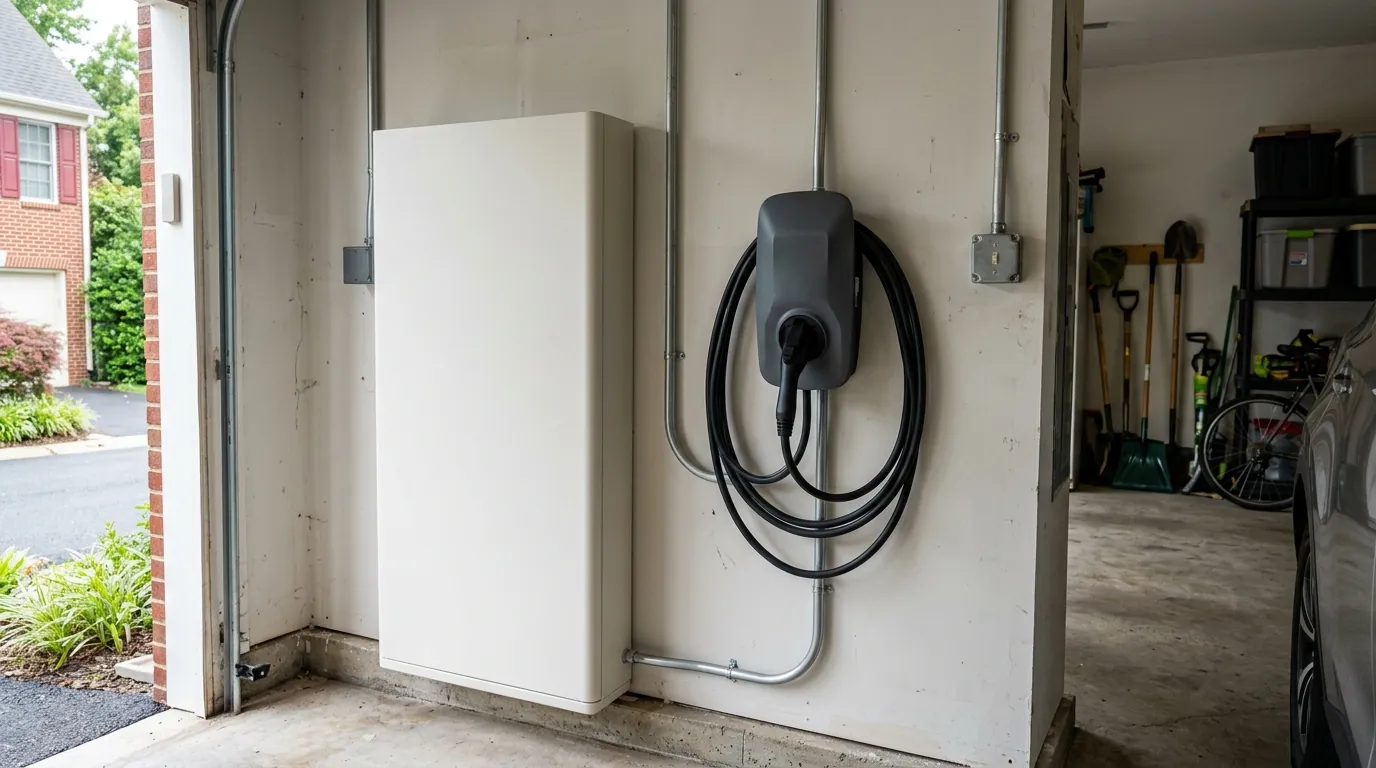
A Level 2 EV charger installation in Washington, DC typically runs $800 to $3,000, depending on the distance from the main panel and whether the panel has spare capacity. Older DC homes on 100 amp service may need load management or a panel upgrade, which can add $1,000 to $5,000 when a full service upgrade is required.
What the job is
What an EV charger install involves
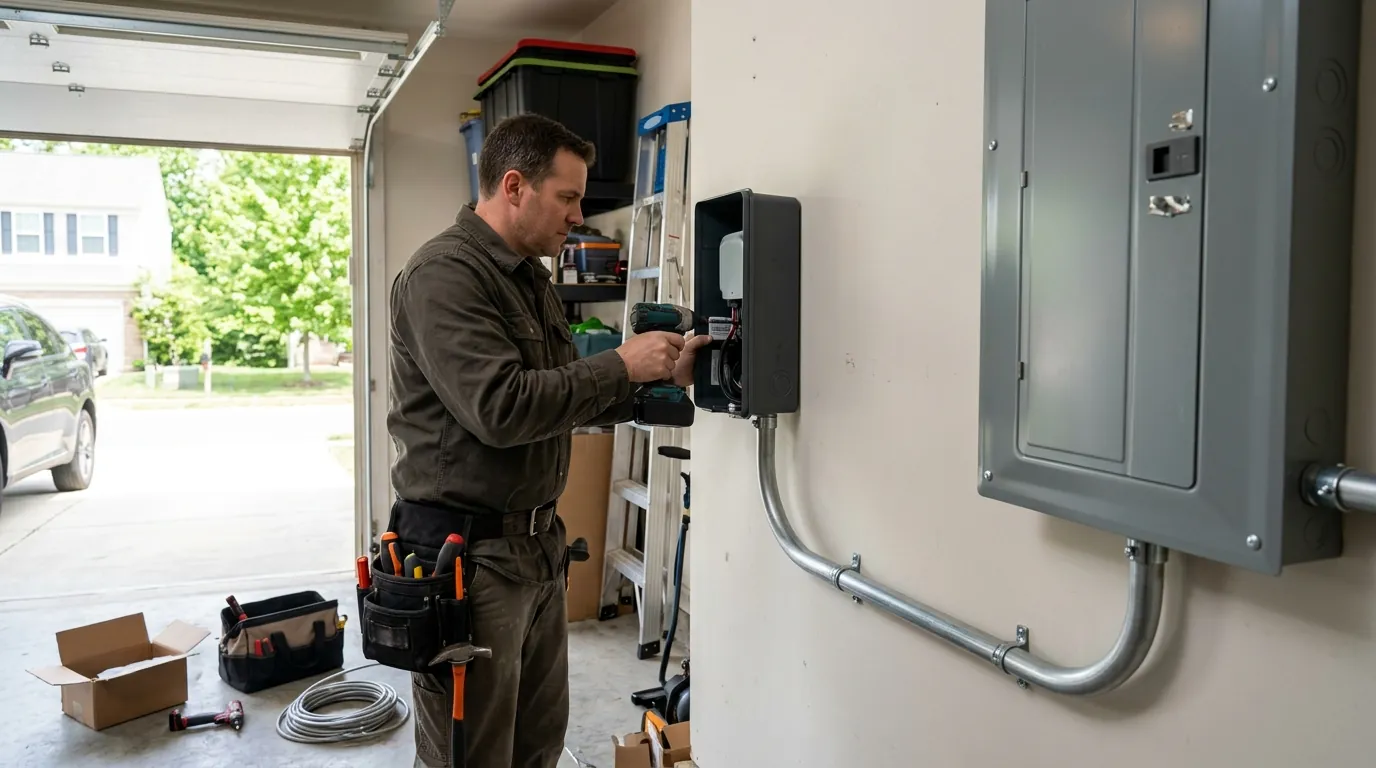
A Level 2 charger needs a dedicated 240 volt circuit, sized to the charger, run from the main panel to where you park. The job is a load calculation, a breaker, wire and conduit, the charger mounting, a permit and an inspection.
The load calculation decides everything else. If the panel has room, the install is simple. If it does not, the options are a smaller charging current, a load management device that throttles the charger when the house is busy, or a service upgrade. We walk through those with numbers from your own panel, not a guess.
What moves the price
What moves the price of a charger install
- Distance to the panelEvery foot of wire and conduit adds cost, especially outdoors.
- Panel capacitySpare room keeps it simple; a full panel means load management or an upgrade.
- Charger choiceHardwired, smart and solar-aware units vary in price.
- Wall and trenching workMasonry walls, long exterior runs or trenching add labor.
2026 planning ranges
- Level 2 charger, installed$800 to $3,000 installedSource: ev-lectron.com
- 100 to 200 amp service upgrade, when needed$1,000 to $5,000Source: jouleio.com
Published market ranges, not our quote. Your price depends on the roof, the equipment and the permit path.
Inside this job
Level 2 wall chargers
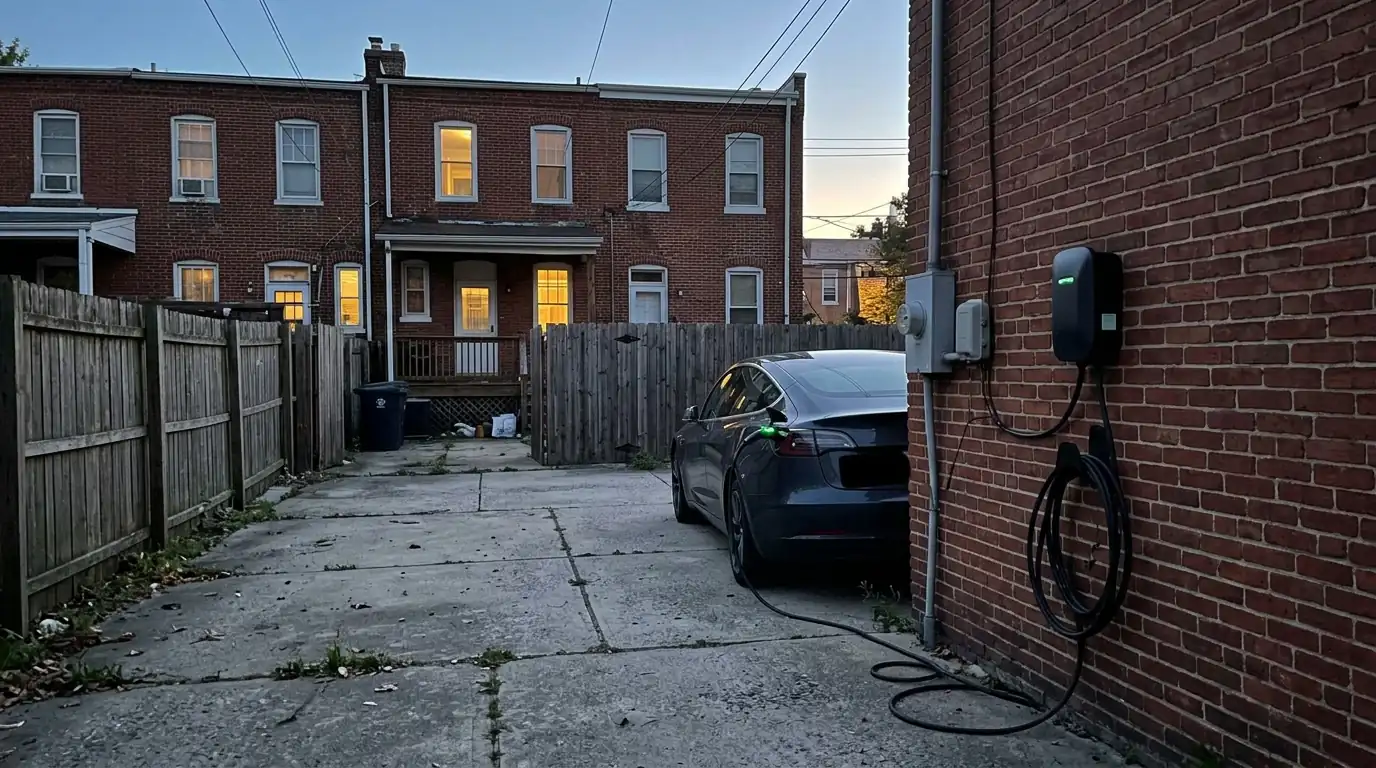
Most home chargers mount on a garage or exterior wall and either plug into a 240 volt outlet or hardwire to the circuit. Hardwired units allow higher charging current and hold up better outdoors; plug-in units are easier to swap. Rowhouse owners with a rear parking pad often need a longer outdoor run along the back wall, so we plan the route and the weatherproofing with the charger's cable length in mind.
Charging from solar
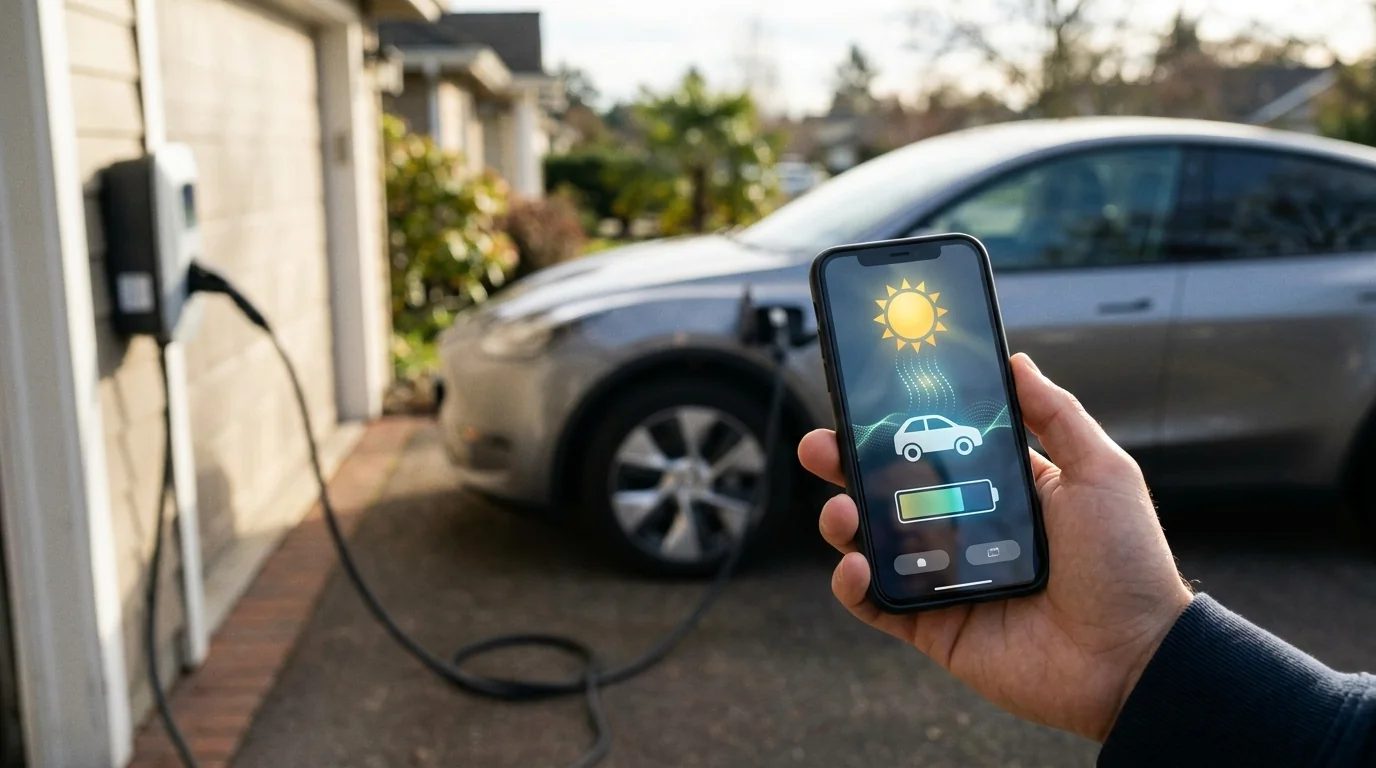
If you have solar, the cheapest miles come from charging while the sun is up. Some chargers read the solar production or a home energy monitor and adjust their current to match the surplus, and others simply run on a daytime schedule. We set up whichever fits your equipment, and explain how it works with net metering so you know when charging from the grid makes sense.
Load management on 100 amp service
Many older houses run on 100 amp service with little room left. A load management device watches the main lines and turns the charger down when the dryer, range or heat pump is running, which often avoids an expensive upgrade. It suits drivers who charge overnight anyway. Where the panel is already overloaded or outdated, we price the upgrade alongside so you can compare.
Choosing between options
Plug-in or hardwired charger?
| Plug-in (240 volt outlet) | Hardwired | |
|---|---|---|
| Maximum charging current | Limited by the outlet rating | Higher, set by the circuit |
| Outdoor use | Needs a weather-rated outlet and cover | Better suited |
| Swapping chargers later | Easy | Needs an electrician |
| Typical choice | Garages, lighter daily driving | Outdoor parking, heavier use |
Washington conditions
Older DC houses and charger capacity
About 35 percent of DC homes were built in 1939 or earlier, and many still run on 100 amp service with panels that have been added to over the decades. That is the main reason EV charger quotes in Washington vary so much from house to house. The first thing we do on a charger call is the load calculation, because it decides whether the job is an afternoon of wiring or a conversation about load management or a service upgrade.
Step by step
How a charger install runs
Call with the basics
Your car, where you park and a photo of the main panel.
Load check
We calculate what the panel can carry and plan the route.
Price and charger choice
A written price for the circuit and the charger you pick.
Permit
We file the electrical permit.
Install day
Breaker, wiring, conduit and the charger mounted and tested.
Inspection and setup
Inspection passed, then app and solar settings configured.
We install chargers such as ChargePoint, Tesla Wall Connector and Enphase IQ EV chargers, and set them up alongside Enphase, SolarEdge and Tesla Powerwall systems.
Do it yourself or call
What owners can and cannot do
| Task | Safe for an owner | Needs our crew |
|---|---|---|
| Pick the charger and parking spot | Yes, and check the cable reach | Confirming the circuit and route work |
| Plug into an existing 240 volt outlet | Only if it was installed for EV use and rated for it | Any new outlet or circuit |
| Change charger settings in the app | Yes, schedules and current limits | Changes that exceed the circuit rating |
| Wire a new circuit | No; it needs a permit and inspection | Always |
Straight answers
EV Charger Installation questions we hear in DC
It depends on the car's onboard charger and the circuit, but Level 2 typically refills a daily commute overnight with plenty to spare.
Yes. A new 240 volt circuit needs an electrical permit and an inspection. We handle both.
Yes. A solar-aware charger or a daytime schedule uses surplus solar first. With net metering, charging at night still uses credits banked during the day.
Often yes, with load management or a lower charging current. If the panel is full or outdated, we price an upgrade so you can compare.
We install chargers on private parking only. Running a cable across a public sidewalk to a street space raises right-of-way rules, so we plan around a rear pad, driveway or garage.
Usually not just for charging. Batteries make sense for backup; daytime charging from solar does most of the work.
Related work
Jobs that often come up alongside this one
Solar Battery Installation
Backup power for outages, sized to the circuits you need.
See this job about Solar Battery InstallationBattery Retrofit for Existing Solar
Adding a battery to a system that is already producing.
See this job about Battery Retrofit for Existing SolarSolar Battery Repair
Batteries that stopped charging or did not switch over.
See this job about Solar Battery RepairElectrical Panel Upgrade for Solar
Service and panel upgrades that make room for solar.
See this job about Electrical Panel Upgrade for Solar