Batteries and charging
Charging an EV From Rooftop Solar in DC
Rooftop solar and an electric car are a natural pair, but in DC the details are not what most people expect. Net metering, older electrical panels and rowhouse parking all shape how the two fit together. Here is how to plan it.
About this article
- Written by
- Orville Merriweather
- Role
- Solar Guides Editor
- Updated
- October 2026
- Reading time
- 7 minutes
Article
By Orville Merriweather, Solar Guides Editor. Updated October 2026.
Short answer
In Washington, DC, you can charge an EV from rooftop solar either directly, by charging during the day, or indirectly, because Pepco credits daytime solar exports at the full retail rate and those credits offset overnight charging. A Level 2 charger typically costs $800 to $3,000 installed, plus panel work if the service is full.
How solar and an EV work together
Under net metering, Pepco credits the solar you export at the full retail rate. Power the car uses at night is offset by credits banked during the day, so you do not have to be home in daylight to charge from solar in any practical sense.
Charging during the day still has advantages: it uses solar directly, it keeps more of the credit for other uses, and some chargers can follow the solar output so the car soaks up whatever the house does not need.
What the electrical panel needs
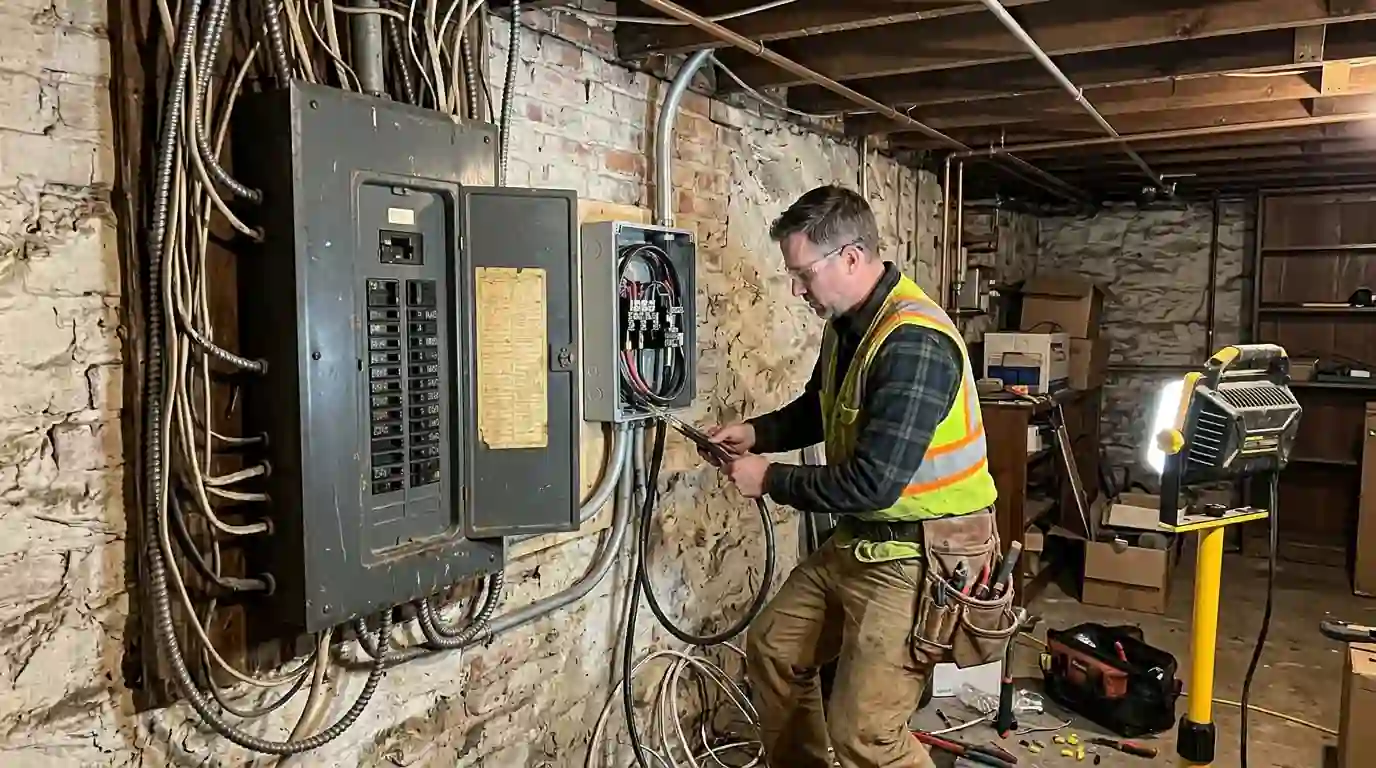
A Level 2 charger needs a dedicated 240 volt circuit, and the main panel has to have room for it. About 35 percent of DC homes were built in 1939 or earlier, and many still run on 100 amp service. In those houses, the first step is a load calculation.
If the panel has room, the install is simple. If it does not, the options are a lower charging current, a load management device that turns the charger down when the house is busy, or a service upgrade, which typically costs $1,000 to $5,000.
What a charger costs
Installed, a Level 2 charger typically runs $800 to $3,000. The spread comes mostly from the distance between the panel and the parking spot, whether the run is indoors or outdoors, and the charger itself.
| Item | Typical 2026 range |
|---|---|
| Level 2 charger, installed | $800 to $3,000 |
| 100 to 200 amp service upgrade, when needed | $1,000 to $5,000 |
Choosing where the charger goes
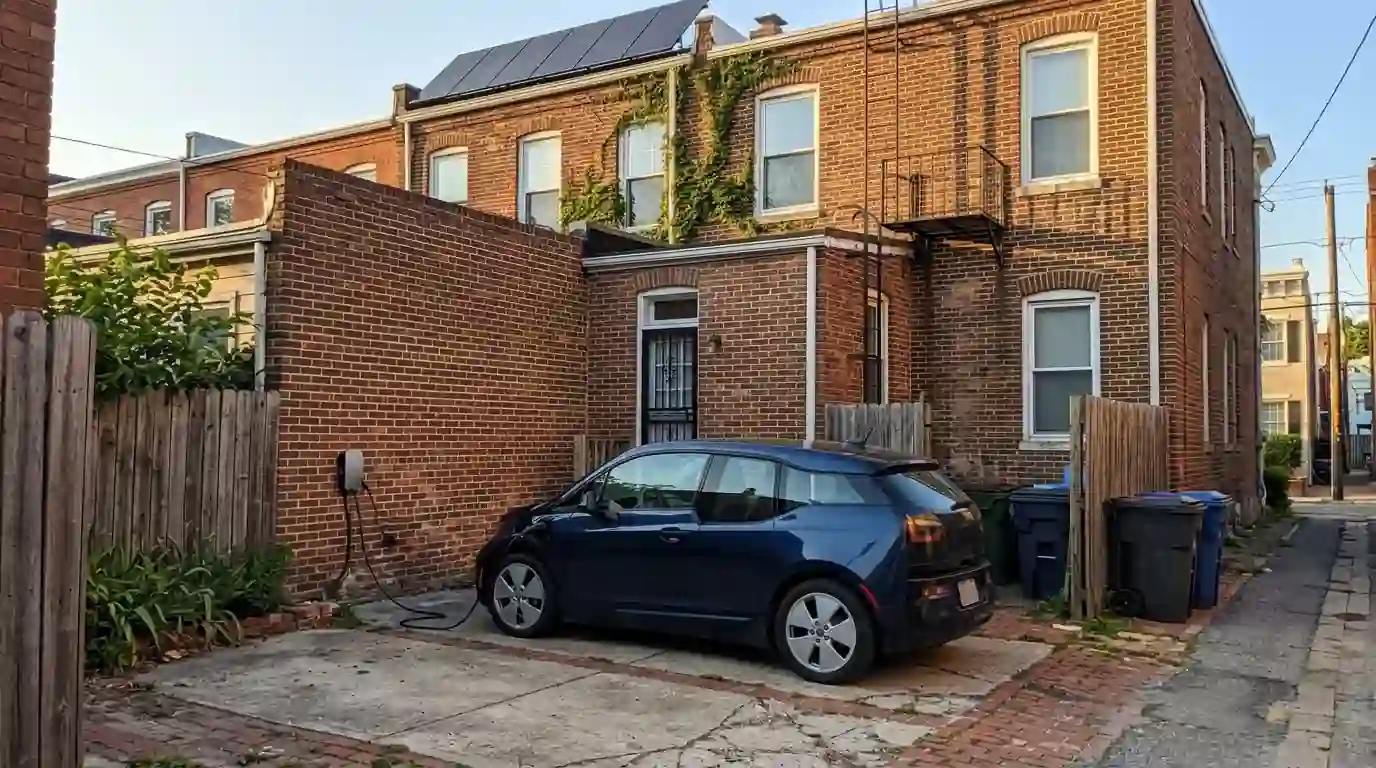
The best spot is close to where the car parks and as close to the main panel as practical, since every foot of wire and conduit adds cost. Garage walls are the easiest. Exterior walls work well with a hardwired, outdoor-rated charger and a weatherproof conduit run.
Check the cable reach before choosing. Most charger cables are long enough for a car parked nose-in or tail-in, but not for both, and a cable stretched across a walkway is a trip hazard. If you plan to add a battery later, leave wall space near the panel for it too.
Solar-aware chargers and schedules
Some chargers read the solar production or a home energy monitor and raise or lower their current to match the surplus. Others simply charge on a schedule. Either works with net metering. A solar-following charger makes the most sense for a car that is often home during the day; a schedule suits a car that is out at work.
Sizing solar for an EV
An EV can add a large amount to a household's electricity use. If you are planning solar and a car together, add the car's expected annual use to the house's usage before the system is sized. If you already have solar, an expansion can add panels to cover the new load, roof space permitting.
Rowhouse roofs are often the limit. When the roof cannot hold enough panels for both the house and the car, the solar still covers part of the charging, and net metering handles the rest.
Rowhouse parking realities
Chargers have to be installed on your property. Owners with a rear parking pad or garage off an alley have the simplest installs, with the charger on the back wall. Running a cable across a public sidewalk to a street space is not something a homeowner can arrange alone, so street parkers usually rely on public charging instead.
Do you need a battery for EV charging?
Usually not. A home battery is too small to add much range, and under net metering the grid already stores daytime solar at full value. A battery makes sense for outage backup, not for charging a car.
Sources
- EnergySage: DC solar rebates and incentives
- EV Lectron: Cost to install a home charging station
- Jouleio: EV home charging station cost
- NeighborhoodScout: Washington, DC real estate data
Figures are as published by the sources above in 2026 and can change. Call (202) 978-0232 to check how they apply to your address.
Related work
Jobs this article connects to
EV Charger Installation
Level 2 charging set up to use daytime solar.
See this job about EV Charger InstallationElectrical Panel Upgrade for Solar
Load checks and upgrades when the panel is full.
See this job about Electrical Panel Upgrade for SolarSolar System Expansion
More panels to cover an EV's added use.
See this job about Solar System ExpansionKeep reading
More from the blog
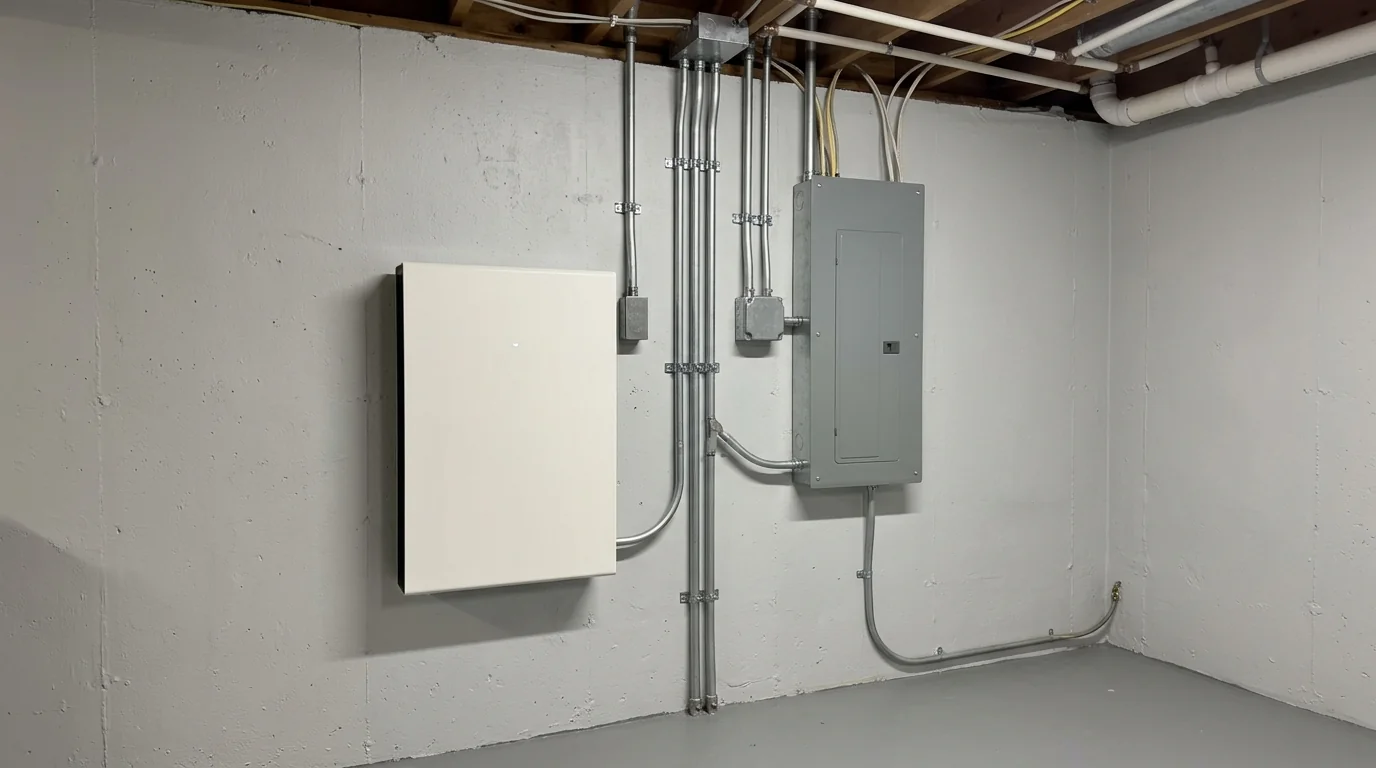
Battery or No Battery? How DC Net Metering Decides
Full retail net metering changes the battery question in DC. Here is when one earns its place.
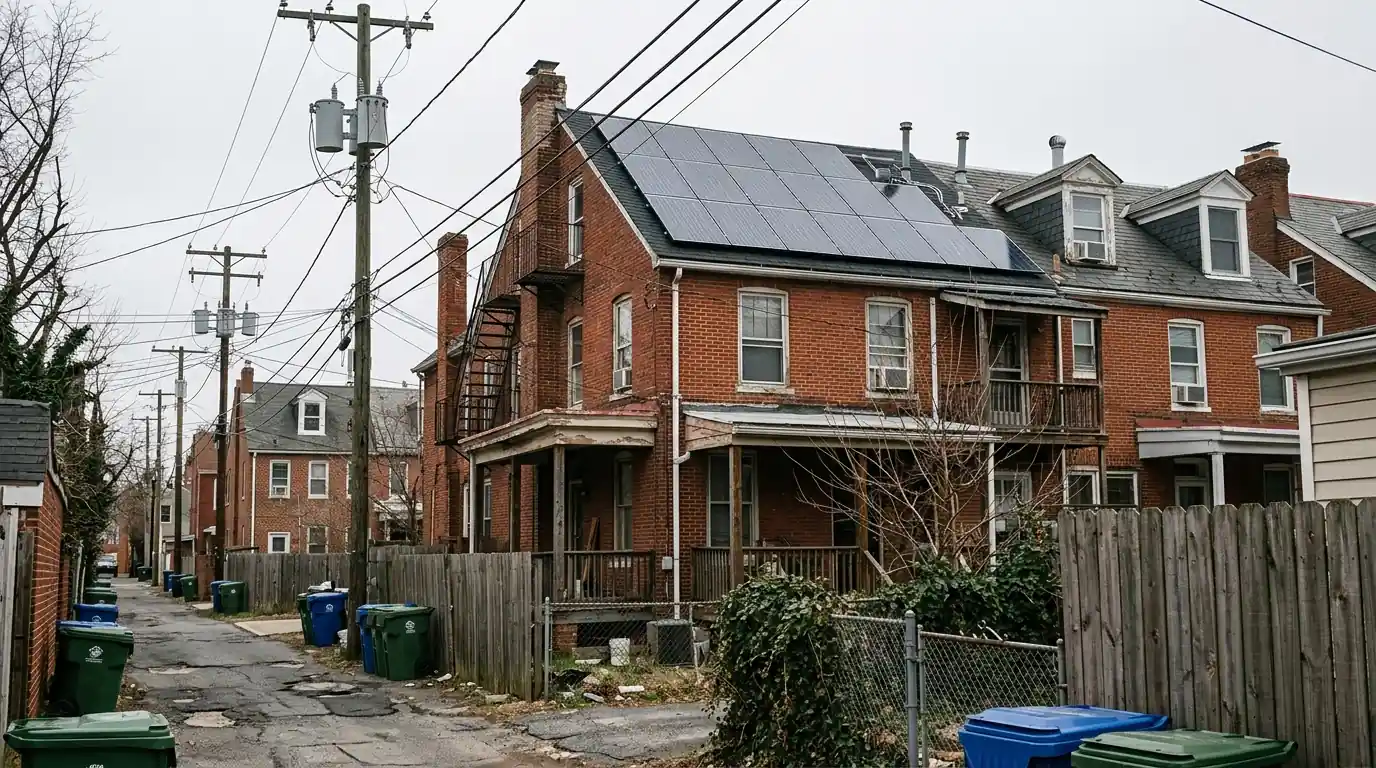
Pricing a Solar System in Washington, DC This Year
Price per watt in DC, what pushes a quote up, and how SRECs change the payback after the federal credit.
Straight answers
Questions readers ask
Effectively yes. Net metering credits daytime solar at the full retail rate, and those credits offset overnight charging.
Typically $800 to $3,000 installed, plus panel work if the service is full.
Sometimes, with load management or a lower charging current. A load calculation decides.
No. Net metering handles the timing, and batteries are better suited to outage backup.
Tell us what you want the system to do
Give us the address and the goal: lower bills, backup power, an EV charger or a fix. We will say plainly whether it fits and what the job involves.
Phones answered 24/7 from our 4702 14th St NW office.
Call us, or find the office
- Phone
- (202) 978-0232
- Hours
- Answered 24 hours a day, every day
- Service office
- 4702 14th St NW, Washington, DC 20011
- Head office
- 743 South Route 73, Berlin, NJ 08009
Map of our service office at 4702 14th St NW, Washington, DC. It loads only when you ask for it.