Permits and review
Going Solar Inside a DC Historic District
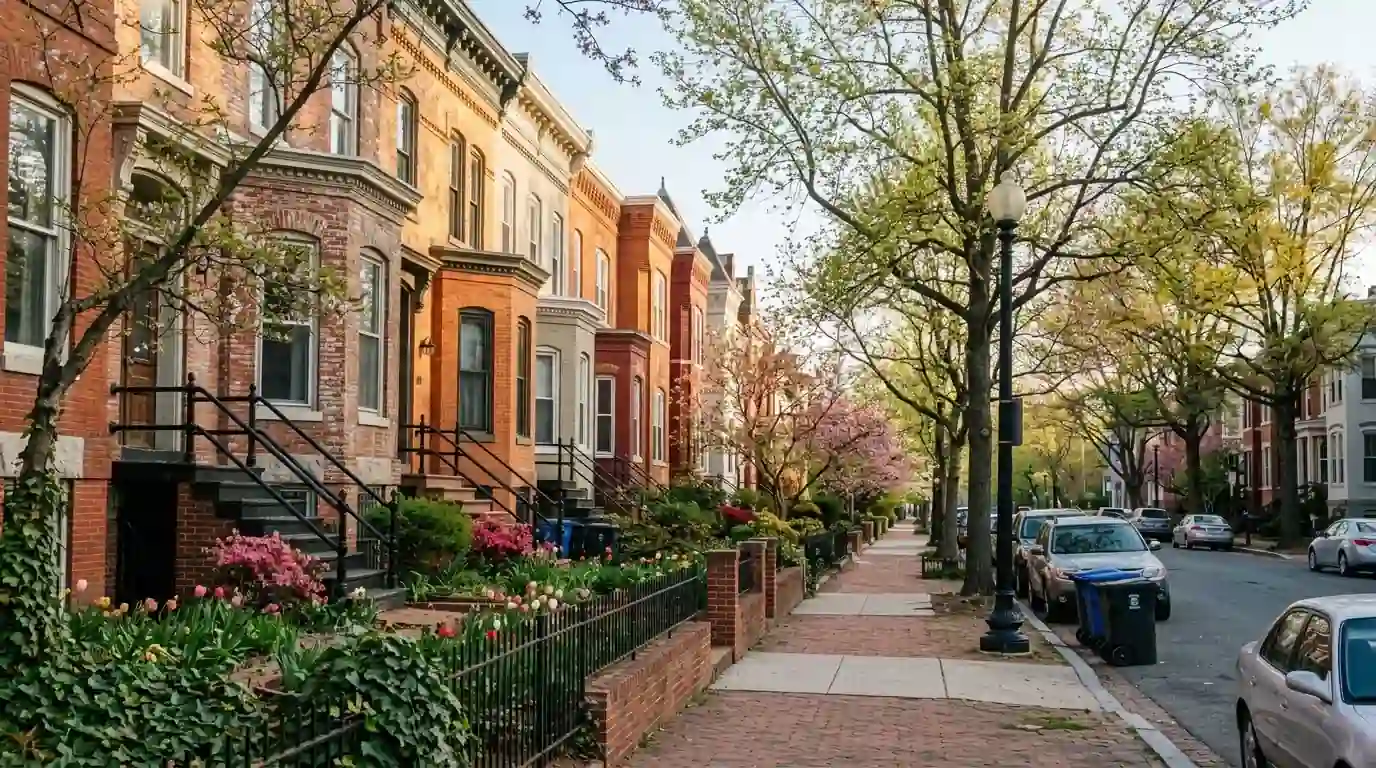
Owning a house on Capitol Hill, in Georgetown or in Kalorama does not rule out solar. It adds a review step. Here is who reviews what, which designs move through fastest, and how to prepare so the review is a formality rather than a fight.
About this article
- Written by
- Orville Merriweather
- Role
- Solar Guides Editor
- Updated
- October 2026
- Reading time
- 7 minutes
Article
By Orville Merriweather, Solar Guides Editor. Updated October 2026.
Short answer
Solar is allowed in DC's historic districts. The Historic Preservation Office says thousands of buildings in those districts already have it, and visible panels are not automatically prohibited. Arrays kept out of street view move fastest; Georgetown projects go to the Old Georgetown Board rather than the HPRB.
Solar is allowed
DC's Historic Preservation Office has said that thousands of buildings in the city's historic districts already have solar, and that panels being visible is not by itself grounds for refusal. The review looks at how the system affects the building and the block, not at whether solar belongs there at all.
That is a better starting point than many owners expect. The work is in choosing a layout that respects the building and documenting it clearly.
Who reviews what
Every solar install in the District needs a building permit and a Pepco interconnection agreement. Houses in historic districts add preservation review on top, through the Historic Preservation Office and, where needed, the Historic Preservation Review Board.
Georgetown is different: projects there go to the Old Georgetown Board rather than the HPRB, with its own schedule and expectations. We plan the timeline around whichever body applies.
Layouts that move fastest
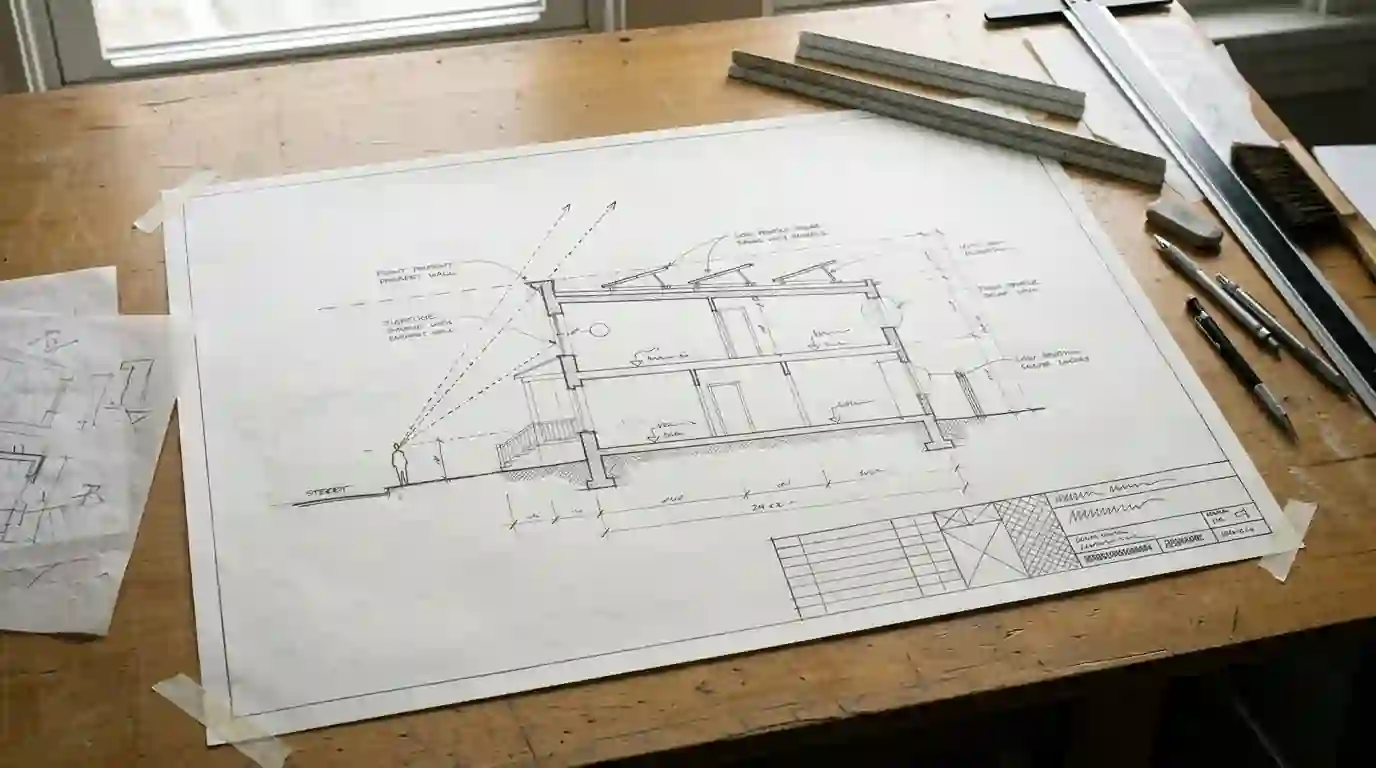
On a flat roof, the guidance quoted in an HPRB staff report from Anacostia is that panels should sit where the street cannot see them. A low rack set back behind the front parapet usually achieves that, and it is the layout we propose first on most rowhouses.
Rear roof slopes, garages and additions are the next best places on pitched-roof houses, since they face away from the street.
When panels will be visible
Some houses have no hidden roof surface, or the only sunny surface faces the street. Visible arrays can still be approved under the city's sustainability guidance when they are designed with care.
- All-black panels with black frames read as part of the roof.
- Low, flush mounting keeps the profile close to the roof plane.
- Simple rectangular layouts look calmer than scattered panels.
- Conduit runs inside or along hidden faces, not across the facade.
Pitched-roof houses in historic districts
Not every historic house is a flat-roof rowhouse. Detached and semi-detached houses often have pitched roofs, sometimes slate or metal. The rear slope is the natural place for panels, since it usually faces away from the street. Dormers, chimneys and roof shape decide how much of it is usable.
Slate needs particular care. Mounts have to be flashed through the slate without cracking the surrounding pieces, and replacement slates have to match. That adds labor, and on an old slate roof it is worth asking a roofer about its remaining life before anything goes on it.
What goes in the review package
- Roof plan showing the array, setbacks and equipment locations.
- Elevation drawings or sightline sections showing what is visible from the street.
- Photos of the house and the block from public viewpoints.
- Equipment spec sheets for panels, racking and inverters.
- The building permit application that goes with it.
A complete package reviewed in one pass saves weeks. Missing sightline information is the most common reason a submission comes back.
Why submissions come back
- No sightline drawings, so reviewers cannot tell what is visible.
- Panels placed close to the front edge of a flat roof.
- Conduit shown running down the street-facing facade.
- Equipment described vaguely, without spec sheets.
- Photos that do not show the house from public viewpoints.
Each of these is easy to fix before submission and slow to fix after.
Neighbors and the wider review
Projects that go to the full review board can draw comments from neighbors and from the local Advisory Neighborhood Commission. Designs that are hidden from the street rarely attract objections. For visible designs, talking to immediate neighbors early and showing them the drawings tends to make the review smoother.
Timing
Preservation review adds time to the permit stage, more for visible designs or Old Georgetown Board projects. The install itself takes no longer than anywhere else. We file the review with the permit so the two move together.
Sources
- DC Office of Planning: Solar in historic districts FAQ
- DC Office of Planning: HPRB staff report, Anacostia
- City Renewables: DC solar permit guide
- City Renewables: Solar panels on DC row houses
Figures are as published by the sources above in 2026 and can change. Call (202) 978-0232 to check how they apply to your address.
Related work
Jobs this article connects to
Historic District Solar
Layouts and review packages for protected blocks.
See this job about Historic District SolarRowhouse & Flat Roof Solar
Low racks behind the parapet, out of street view.
See this job about Rowhouse & Flat Roof SolarResidential Solar Panel Installation
Permits, Pepco and SRECs handled with the review.
See this job about Residential Solar Panel InstallationKeep reading
More from the blog
Rowhouse Roofs and Solar: Parapets, Hatches, Drains
Parapets, hatches, party walls and drains: what a flat rowhouse roof means for a solar layout.
Pricing a Solar System in Washington, DC This Year
Price per watt in DC, what pushes a quote up, and how SRECs change the payback after the federal credit.
Straight answers
Questions readers ask
Yes. Thousands of buildings in DC historic districts already have solar, and visible panels are not automatically prohibited.
The Old Georgetown Board, which advises the Commission of Fine Arts, rather than the HPRB.
It adds time to the permit stage. A complete package with clear sightline drawings keeps it short.
Visible arrays can still be approved with careful design: all-black panels, flush mounting and simple layouts.
Tell us what you want the system to do
Give us the address and the goal: lower bills, backup power, an EV charger or a fix. We will say plainly whether it fits and what the job involves.
Phones answered 24/7 from our 4702 14th St NW office.
Call us, or find the office
- Phone
- (202) 978-0232
- Hours
- Answered 24 hours a day, every day
- Service office
- 4702 14th St NW, Washington, DC 20011
- Head office
- 743 South Route 73, Berlin, NJ 08009
Map of our service office at 4702 14th St NW, Washington, DC. It loads only when you ask for it.