Keeping it running
Pigeons Nesting Under Panels: What Works
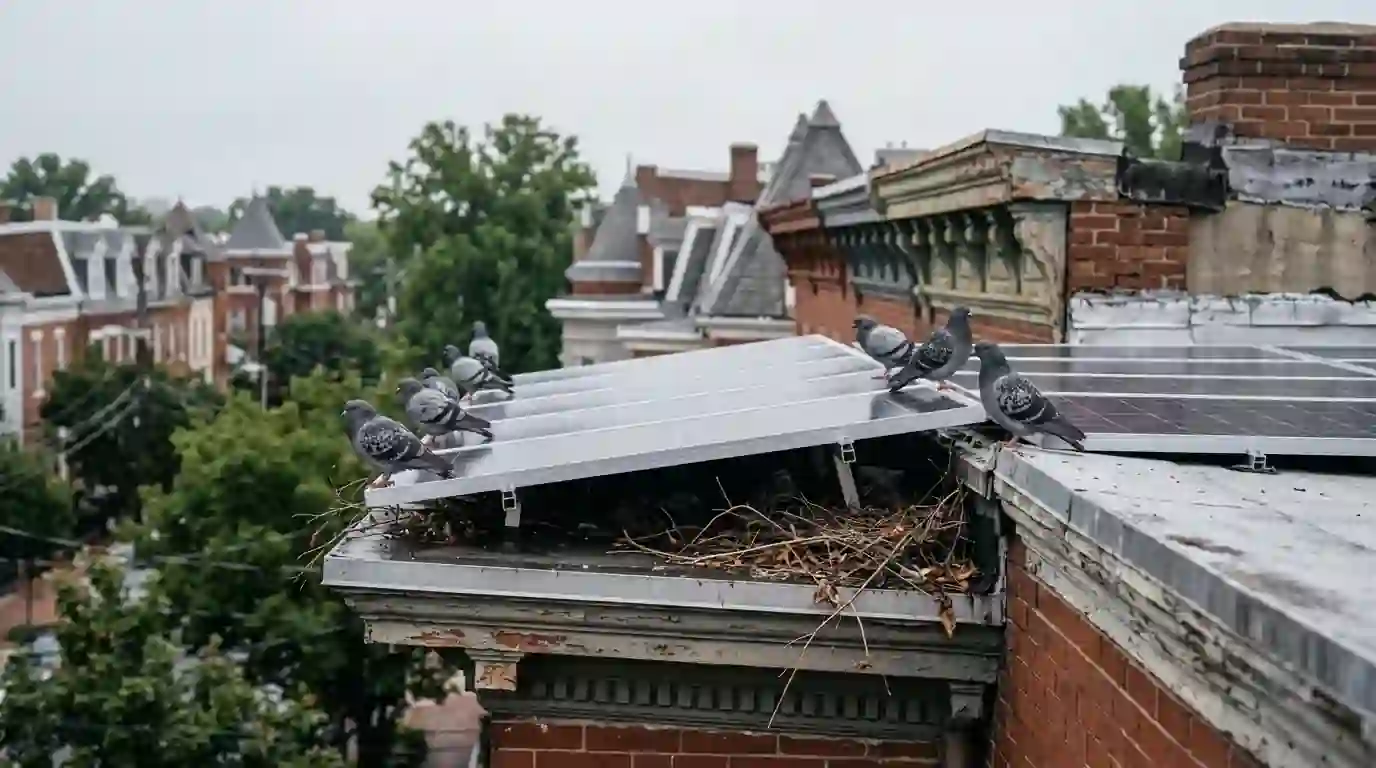
The gap under a rooftop array is warm, dry and hidden from hawks, which makes it prime pigeon real estate. Once a flock moves in, the mess and the damage add up fast. Here is what works, what does not, and the order to do it in.
About this article
- Written by
- Orville Merriweather
- Role
- Solar Guides Editor
- Updated
- October 2026
- Reading time
- 6 minutes
Article
By Orville Merriweather, Solar Guides Editor. Updated October 2026.
Short answer
Pigeons nest under solar panels because the gap is sheltered, warm and close to the roof. The fix that lasts is clearing the nests and fitting a mesh critter guard around the array's edges, which typically costs $500 to $1,500 installed, or $300 to $800 when added during a new install.
Why pigeons pick solar arrays
Pigeons nest on ledges and in sheltered gaps, and a rooftop array offers both: a roof under them, a panel over them and space between. Low racks on flat rowhouse roofs are especially inviting because they sit behind a parapet, out of the wind and out of sight.
Once one pair nests, others follow, and the colony grows every season.
Signs birds have moved in
- Cooing or scratching from the roof, especially at dawn.
- Twigs, feathers and debris sticking out from under the panels.
- Droppings on the panels, the roof or the sidewalk below.
- Birds landing on the array and disappearing underneath.
- A drop in production on panels near the nests.

What the damage looks like
Droppings on the glass shade individual cells and can create hot spots. Nesting material traps leaves and moisture against the roof, which on flat roofs can block drains. The most expensive damage is to wiring: birds and the squirrels that follow them chew insulation, which can cause ground faults and shut the system down.
Droppings are also a health nuisance on roof decks and around windows, which is often what prompts the call.
Squirrels and other visitors
Pigeons are the most common tenants, but squirrels cause more electrical damage. They chew wire insulation and connector housings, which can lead to ground faults that shut the system down. The same mesh guard that keeps pigeons out keeps squirrels out, provided it is fitted tightly at the corners and where conduit leaves the array.
If wiring has already been chewed, it has to be repaired before the guard goes on, or the guard simply locks the damage in.
What actually works
A mesh critter guard closes the gap between the panels and the roof around the whole array. The mesh clips to the panel frames rather than being drilled into them, so it does not affect the panel warranty, and it can be removed for service.
Typical cost is $500 to $1,500 installed on an existing array, or $300 to $800 when fitted during a new install. On a rowhouse roof it is one of the best value add-ons there is.
What does not work for long
Plastic owls, reflective tape and similar deterrents tend to work for a short time before birds get used to them. Spikes do not suit the edge of a glass panel, and foam or loose fillers degrade in the sun and can trap water. Closing the gap is the approach that holds.
Clearing a nest the right way
- Shut the system down before anyone works under the panels.
- Remove nests, debris and droppings, bagging the material.
- Clean and sanitize the roof surface and the panel undersides where reachable.
- Inspect wiring and connectors for chewing and repair any damage.
- Fit the guard around the full perimeter so the gap stays closed.
If the birds turn out to be a protected species rather than pigeons, different rules apply to active nests, so check what is nesting before removing anything.
When to deal with it
Feral pigeons breed through much of the year, so there is rarely a season when the problem solves itself. The best time to act is as soon as you notice birds going under the panels, before a colony builds up. On a new install, fitting the guard at the start avoids the problem entirely.
Keeping low racks clean
Low-tilt panels on flat roofs shed dirt and droppings more slowly than steep ones. After clearing a colony, a cleaning with soft brushes and pure water restores the glass, and a quick look each spring catches new attempts before they become nests.
Sources
Figures are as published by the sources above in 2026 and can change. Call (202) 978-0232 to check how they apply to your address.
Related work
Jobs this article connects to
Critter Guard & Pigeon Proofing
Nests cleared and mesh fitted around the whole array.
See this job about Critter Guard & Pigeon ProofingSolar Panel Cleaning
Droppings and film cleaned off with soft brushes.
See this job about Solar Panel CleaningSolar Panel Repair
Chewed wiring and damaged connectors repaired.
See this job about Solar Panel RepairKeep reading
More from the blog
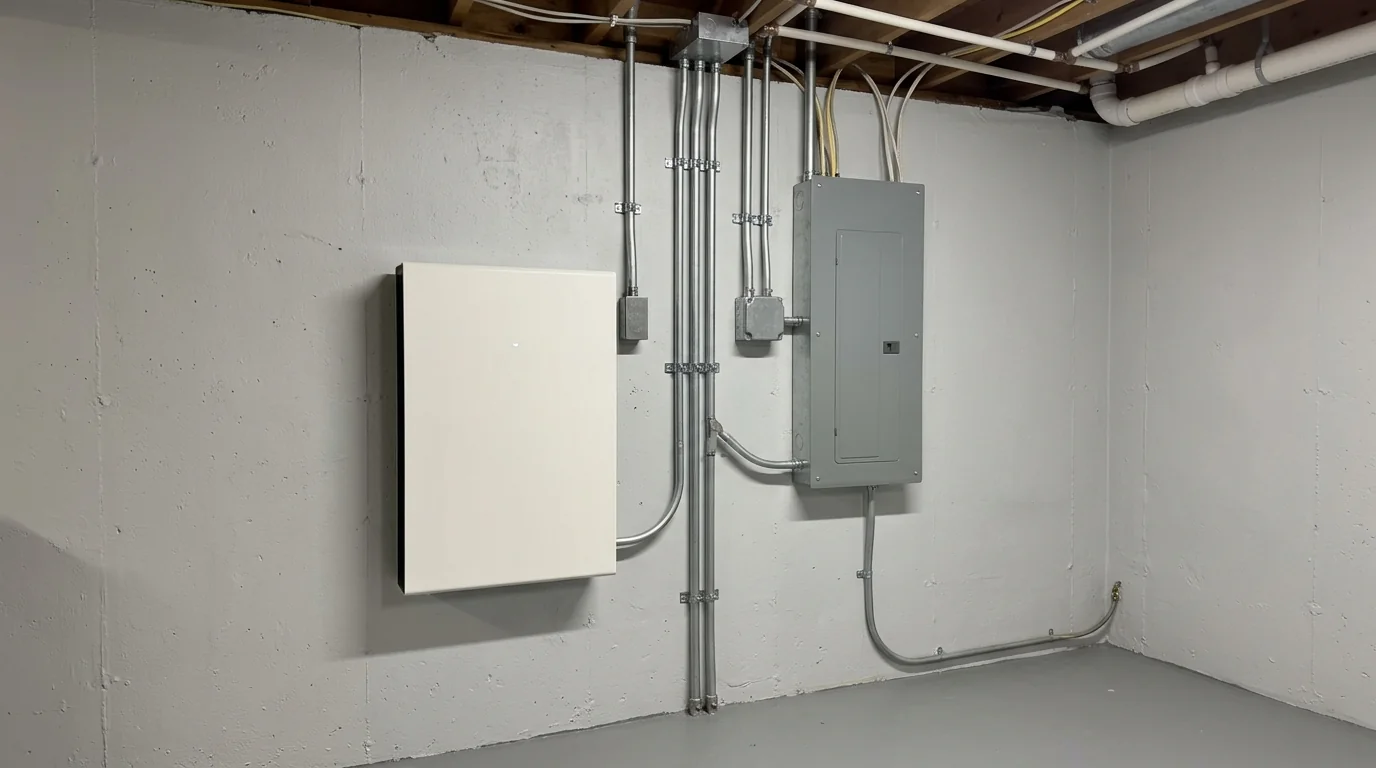
Rowhouse Roofs and Solar: Parapets, Hatches, Drains
Parapets, hatches, party walls and drains: what a flat rowhouse roof means for a solar layout.
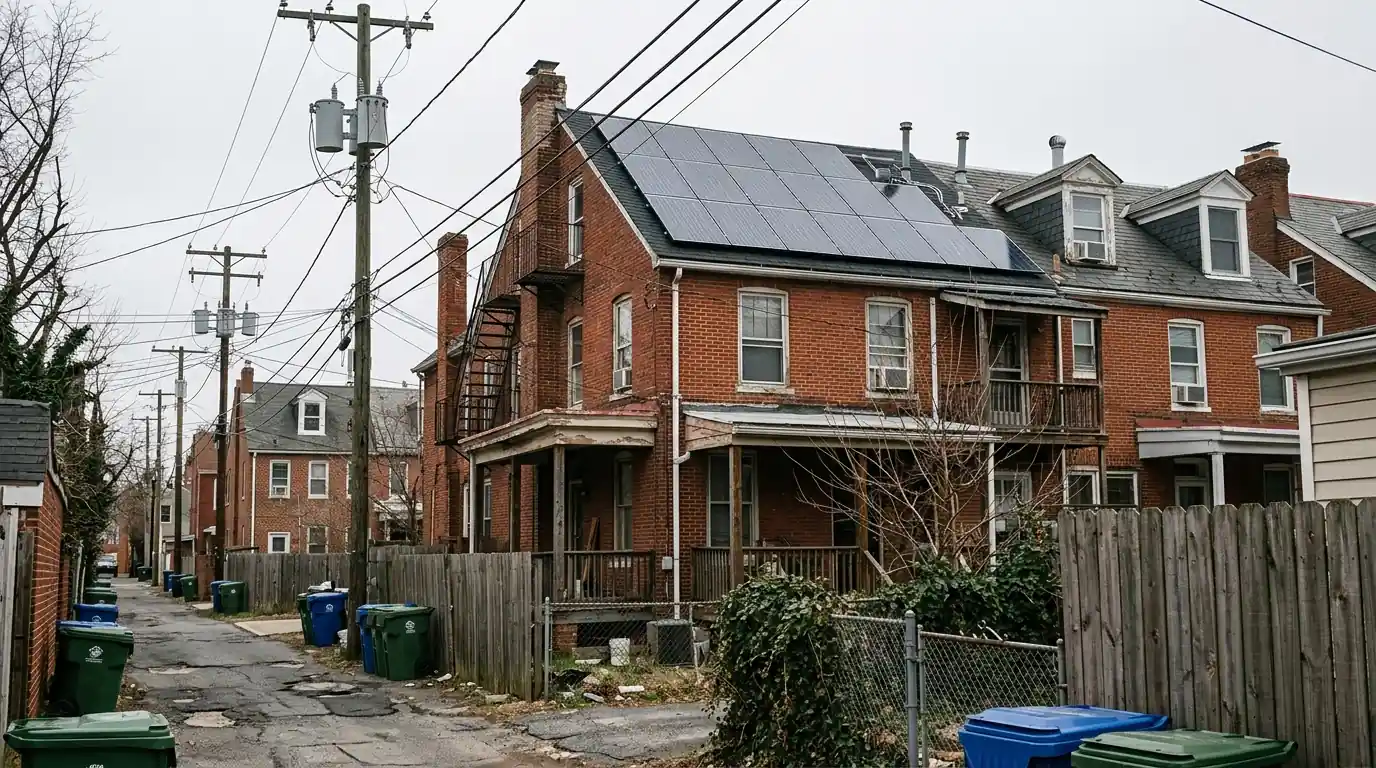
Production Dropped? Twelve Things to Check
Twelve checks, from the breaker to the shade, before you pay anyone to fix low production.
Straight answers
Questions readers ask
Clear any nests, then fit a mesh critter guard around the array so the gap under the panels stays closed.
Not when the mesh clips to the frames without drilling, which is how it is normally installed.
Typically $500 to $1,500 installed on an existing array, or $300 to $800 during a new install.
Their droppings shade cells, their nests trap moisture and debris, and birds or squirrels can chew the wiring.
Tell us what you want the system to do
Give us the address and the goal: lower bills, backup power, an EV charger or a fix. We will say plainly whether it fits and what the job involves.
Phones answered 24/7 from our 4702 14th St NW office.
Call us, or find the office
- Phone
- (202) 978-0232
- Hours
- Answered 24 hours a day, every day
- Service office
- 4702 14th St NW, Washington, DC 20011
- Head office
- 743 South Route 73, Berlin, NJ 08009
Map of our service office at 4702 14th St NW, Washington, DC. It loads only when you ask for it.